When XPeng took the stage at the Paris Motor Show, the executive pitch was stripped of traditional automotive rhetoric. Rather than trumpeting shipping manifests or aggressive unit sales targets for the European Union, the Guangzhou-based automaker outlined a deliberate pivot toward monetization through intangible assets. Chinese EV technology licensing has emerged as the latest strategic maneuver for domestic original equipment manufacturers (OEMs) facing mounting regulatory walls and prohibitive tariff regimes across the Atlantic. By repositioning proprietary software, zonal electrical/electronic architectures (EEA), and advanced driver-assistance systems (ADAS) as licensable white-label stacks, Chinese EV manufacturers are attempting to extract high-margin royalty streams from legacy Western competitors struggling with software-defined vehicle execution.
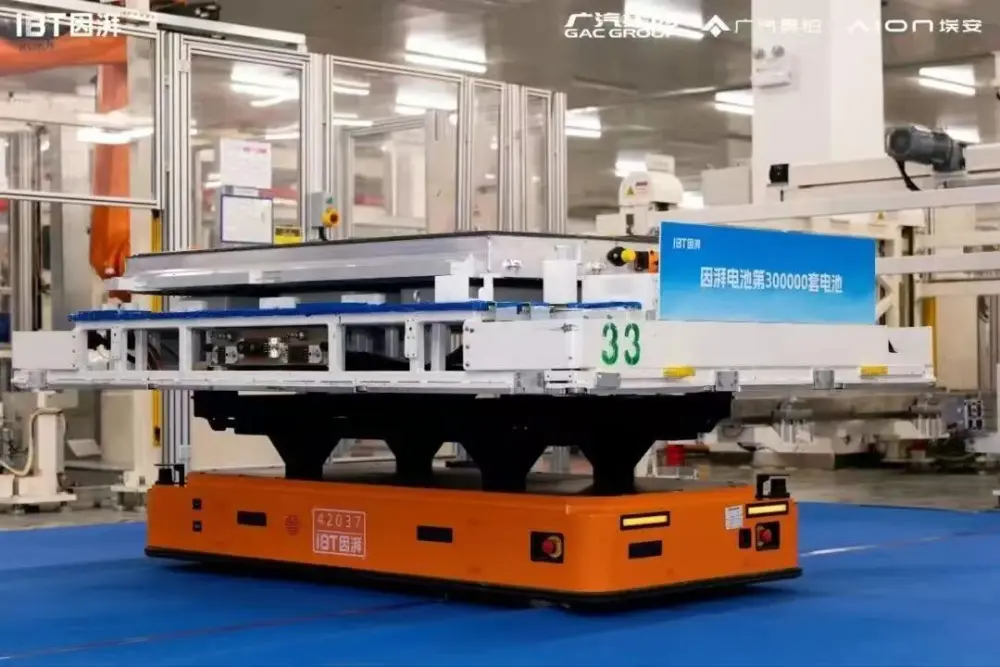
This strategic shift occurs against the backdrop of domestic market rationalization within China. Concurrently, state-backed manufacturing giants like GAC Group marked the rollout of their 300,000th self-developed Inpa battery pack—a reminder of the relentless domestic manufacturing capacity pushing the industry into margin-compression territory. The collision between domestic oversupply and Western trade barricades has forced a bifurcation of corporate strategy: while state-backed conglomerates double down on heavy industrial vertical integration to compress raw bill of materials (BOM) costs, nimble tech-centric disruptors are trying to morph into Tier-0.5 software suppliers to global legacy brands.
The Paris Pivot: Monetizing Code Over C-Suite Steel
The strategic logic behind XPeng's decision to commercialize its vehicle architecture at European auto shows reveals a tactical shift dictated by geopolitical realities. Under the European Commission's definitive countervailing duties on battery electric vehicles originating from China, direct vehicle imports face combined tariff rates reaching upwards of 35% to 45%. For digital-first automakers that operate on paper-thin or negative operating margins domestically, absorbing these duties or passing them along to European retail buyers makes physical vehicle exports economically unviable.
By reframing the corporate mission around licensing vehicle architectures—specifically its centralized domain compute platforms and Turing autonomous driving chip initiatives—XPeng is attempting to execute what automotive analysts describe as the 'Android model' of electric mobility. This approach mirrors the landmark $700 million equity and technology collaboration signed with the Volkswagen Group for the co-development of two B-class BEV models utilizing XPeng's G9 platform architecture and Electrical/Electronic Architecture (EEA). Expanding this licensing playbook to other global tier-1 players and struggling European legacy brands serves two existential corporate purposes: providing non-dilutive, high-margin cash flow to offset domestic cash burns, and sidestepping physical customs inspections entirely through cross-border IP licensing agreements.
However, this transition from automotive manufacturer to software vendor is fraught with friction. Automotive software licensing cannot be decoupled from physical silicon, wiring harnesses, and actuator integration. A Western OEM licensing a Chinese platform is not merely purchasing compiled source code; it is importing an entire technological philosophy anchored to Chinese digital ecosystems, high-density silicon carbide (SiC) power electronics, and localized hardware supply chains that do not map cleanly onto legacy European manufacturing facilities.
Inside the Silicon Architecture: Teardown of XPeng's Zonal Compute Stack
To comprehend why European automakers would entertain Chinese EV technology licensing, one must examine the stark architectural divergence between legacy distributed Electronic Control Unit (ECU) topologies and China's native centralized zonal architectures. XPeng's EEA 3.5 architecture, which underpins its recent product cadence and licensing framework, centralizes computing power from dozens of discrete microcontrollers into a consolidated system driven by unified high-performance compute clusters.
Where a typical European legacy vehicle carries between 70 and 110 distributed ECUs sourced from disparate Tier-1 suppliers like Bosch, Continental, and ZF—resulting in a complex, multi-kilometer wiring harness weighing over 60 kilograms—XPeng's zonal architecture consolidates these operations into three core domain controllers: Autonomous Driving (XPU), Cockpit (XPU), and Central Vehicle Body Control (VPU). This consolidation reduces harness mass by an estimated 35% to 40%, yields significant copper material cost savings, and dramatically simplifies automated manufacturing assembly lines.
| Metric / Architectural Spec | XPeng EEA 3.5 Licensing Stack | Volkswagen MEB / Cariad E3 1.1 | Tesla Hardware 4.0 / Zonal | Stellantis STLA Brain / Medium |
|---|---|---|---|---|
| Compute Topology | Central Zonal (Cockpit + ADAS + Central Body) | Distributed Domain (Multi-ECU Legacy) | Fully Centralized Integrated Compute | Zonal Hybrid (In Development) |
| High-Voltage Platform | 800V Silicon Carbide (SiC) | 400V Silicon IGBT Standard | 400V (Cybertruck 800V Native) | 400V Native / 800V Optional |
| Wiring Harness Reduction | ~35% to 40% vs. Legacy | Baseline Traditional Benchmark | ~50% vs. Traditional Benchmark | ~20% Targeted Reduction |
| ADAS Perception Model | End-to-End Neural Network (XNet 2.0) | Rule-Based Computer Vision (Mobileye/Bosch) | Full Self-Driving (Vision-Only E2E) | Rule-Based L2+ (Mobileye SuperVision) |
| Software Stack Portability | Modular API-Gated C/C++ & Linux/QNX | Highly Coupled Proprietary Firmware | Monolithic In-House Proprietary | Microservices Layered Platform |
| Target Silicon Agnosticism | Orin-X / Turing Chip Tailored | Infineon / NXP / Qualcomm Mix | Proprietary Tesla FSD Chips | Qualcomm Snapdragon Ride / STMicro |
At the silicon level, the integration of 800V SiC power inverters allows for switching efficiencies exceeding 98.5%, directly addressing thermal dissipation limitations inherent in traditional 400V IGBT setups. For European legacy OEMs that have spent billions of euros attempting to salvage troubled in-house software initiatives—such as Volkswagen's Cariad division—licensing an operational, road-tested 800V zonal platform provides an immediate three-to-five-year leap forward in product development cycles. It compresses the concept-to-production cadence from traditional 48-month German development gates down to the 18-to-24-month cycles demanded by the market.
Supply Chain Economics: From Capital-Intensive Metal Stamping to Software Royalties
The economic imperative driving Chinese EV technology licensing becomes obvious when evaluating the capital expenditure cycles of electric mobility. Building, tooling, and commissioning a greenfield automotive assembly facility in Europe costs between $1.2 billion and $1.8 billion, carrying persistent operating risks, union negotiations, and high localized labor and energy expenditures. Conversely, an architectural licensing contract converts sunk research and development costs into upfront technology access fees and recurring per-vehicle software royalty payments.
In the bilateral arrangement between XPeng and Volkswagen, financial disclosures indicate a multi-tiered monetization structure: an initial equity injection ($700 million for a 4.99% stake) paired with substantial engineering service contracts and subsequent per-unit licensing royalties for every vehicle produced under the joint platform. For XPeng, whose gross vehicle margins have hovered in volatile single-digit to low double-digit territory amid domestic price wars, software licensing revenues yield gross margins typically exceeding 80% to 85%.
Simultaneously, the broader Chinese automotive supply chain is pursuing its own parallel defensive maneuvers. GAC's milestone of producing 300,000 self-developed Inpa battery packs highlights the industrial reality on the ground in China: massive, state-supported capacity is driving pack-level costs below $75 per kilowatt-hour for lithium iron phosphate (LFP) formulations. Yet, because European import duties penalize these fully assembled packs, the strategic priority is shifting. OEMs are seeking to decouple their core technological IP—including cell-to-chassis (CTC) structural pack integration patents, battery management systems (BMS), and software calibration algorithms—from physical manufacturing.
However, the bill-of-materials analysis of a licensed vehicle reveals substantial hidden costs. Industry tear-downs suggest that while licensing an external EEA stack reduces upfront software R&D amortization by $400 to $600 per vehicle, the physical localization of specialized electronic control units, validation of European safety standards (ISO 26262 ASIL-D), and integration of local cloud compliance infrastructure can easily erode initial margin calculations during the first 24 months of production.
Competitive Impact Assessment: Who Wins in the IP Commercialization Era?
The widespread adoption of Chinese EV technology licensing creates deep structural shifts across the global automotive competitive landscape, producing clear operational winners, vulnerable incumbents, and strategically protected outliers.
Vulnerable Incumbents: Legacy European Mass-Market OEMs
Automakers like Renault, Stellantis, and Tier-2 legacy suppliers face an acute strategic dilemma. Adopting a licensed Chinese architecture dramatically lowers short-term capital expenditures and accelerates the delivery of competitive, software-defined electric vehicles to market. Yet, it functionally reduces the Western OEM to a sheet-metal fabricator and marketing distributor. By outsourcing the digital spine, battery management algorithms, and ADAS capabilities, legacy automakers risk hollowing out their core internal engineering competencies, establishing a structural dependence on Chinese engineering roadmaps that could prove irreversible.
The Tactical Winners: Agile Chinese Software Disruptors
For players like XPeng, NIO (through its battery-swapping consortium partnerships), and Leapmotor (via its joint venture with Stellantis), technology licensing offers a vital lifeline. It grants direct access to established global dealer networks, high-margin royalty streams, and regulatory compliance without requiring billions of dollars in foreign direct investment. Furthermore, it validates their proprietary engineering capabilities on the world stage, elevating their corporate valuations from capital-intensive manufacturing entities to intellectual property and software platforms.
The Decoupled Competitors: Vertically Integrated Global Operators
Automakers that have deliberately preserved distinct global supply chains—most notably the Hyundai Motor Group, alongside Tesla—stand in an advantageous competitive position. By commercializing dedicated, proprietary 800V architectures like the E-GMP platform independently while diversifying manufacturing hubs across South Korea, North America, and Europe, these decoupled entities avoid both the margin-destroying domestic Chinese price war and the structural IP entanglements of cross-border software licensing. They retain absolute sovereignty over their software stacks while remaining fully compliant with regional protectionist policies.
Inside the Physics: Why Zonal Licensing Faces Steep Production Hurdles
While XPeng's zonal architecture promises a 35% wiring harness reduction, mass production requires more than software portability; it demands physical retooling of legacy assembly lines. Integrating high-voltage SiC power electronics and centralized domain controllers into European OEMs' existing stamping dies and crash structures introduces significant engineering friction. The theoretical efficiency gains from reduced copper weight are negated by the cost of retrofitting thermal management systems designed for distributed IGBT architectures, creating a gap between lab demos and factory floor reality.
Beyond manufacturing, the silicon dependency presents a critical vulnerability. If Chinese compute chips face export restrictions or if Western OEMs cannot validate ISO 26262 ASIL-D standards on foreign hardware within certification timelines, the licensing model collapses into a stranded asset. Genuine breakthrough validation requires independent third-party testing of long-term thermal cycling and crash integrity for these hybrid architectures before they can be trusted as a viable SaaS revenue stream.
For Western incumbents like Volkswagen, the decision to license hinges on whether the 18-to-24-month integration lag is acceptable given their own software stagnation. While the IP monetization strategy bypasses tariffs, it risks hollowing out internal engineering competencies and exposes OEMs to geopolitical supply chain shocks that physical manufacturing does not.
Geopolitical and Regulatory Dimensions: Navigating EU Scrutiny via Intangible Assets
The migration toward Chinese EV technology licensing is not merely a commercial response to customer demand; it is a calculated structural adaptation to the Western trade policy perimeter. The European Union's foreign subsidy investigations and subsequent tariff determinations under Regulation (EU) 2016/1037 were specifically drafted to intercept subsidized physical commodities crossing customs boundaries. They possess limited jurisdictional mechanisms to penalize the cross-border licensing of intellectual property or the provision of pure engineering design services.
However, trade authorities in Brussels and Washington are already assessing the regulatory implications of technology transfers. In the United States, the Department of Commerce's Bureau of Industry and Security (BIS) has proposed sweeping rulemakings regarding 'Connected Vehicles,' specifically targeting vehicle software and hardware originating from 'foreign entities of concern' (FEOC). If implemented, these regulations would effectively prohibit the commercial sale or operation of any vehicle utilizing Chinese-developed automated driving systems, vehicle connectivity modules, or core EEA architectures within the United States, regardless of where the physical car is stamped or assembled.
While the European Union has not yet mirrored the outright software embargoes proposed by Washington, European policymakers face mounting pressure to evaluate sovereign data security risks. A vehicle powered by a centralized Chinese operating system that receives continuous over-the-air (OTA) updates from foreign server clusters presents genuine regulatory scrutiny points regarding cybersecurity and critical infrastructure vulnerability under the EU's Cyber Resilience Act and UNECE WP.29 regulations (R155 and R156). Consequently, successful technology licensing will demand complete data fencing, local code repository ownership, and third-party independent security audits to achieve commercial certification.
Strategic Outlook and Capital Allocation Scenarios
As the internationalization of the Chinese automotive sector pivots from physical vehicle logistics to intellectual property commercialization, institutional investors and automotive strategists must evaluate three distinct trajectories over the next three-to-five-year horizon.
Bull Case
Under this scenario, the asset-light licensing framework achieves rapid commercial validation. The XPeng-Volkswagen platform reaches start-of-production ahead of schedule in 2026, delivering market-competitive B-class EVs with best-in-class software performance and 800V charging speeds at profitable unit margins. Western legacy OEMs, conceding defeat in internal software initiatives, aggressively license Chinese zonal platforms across multiple vehicle classes. Chinese technology licensors transform into high-margin automotive software houses, trading at valuation multiples reflective of recurring SaaS business models while fully insulating themselves from physical customs tariffs.
Base Case
The rollout proceeds amidst significant technical friction and localized regulatory drag. While joint-venture models successfully launch, software adaptation and UNECE cybersecurity compliance validations cause mid-cycle development delays. The financial contributions from technology licensing provide a stabilizing cash-flow floor for Chinese OEMs, but integration complexities limit broad adoption to a handful of targeted, high-profile alliances. Physical vehicle sales remain restricted by European tariffs, while the technology licensing model delivers stable, mid-margin engineering service revenue rather than explosive software royalties.
Bear Case
Geopolitical tensions escalate beyond customs duties to encompass digital infrastructure and connected software assets. Western regulatory bodies, led by the US BIS and followed by targeted EU data-sovereignty mandates, introduce strict regulatory compliance walls on Chinese vehicle operating systems and autonomous driving platforms. Legacy Western OEMs, fearing severe cross-border compliance penalties or sudden supply chain ruptures, terminate active licensing partnerships and absorb massive write-downs on joint development programs. Chinese tech-first OEMs are forced back into hyper-competitive domestic price wars without foreign revenue relief, resulting in accelerated industry consolidation.
Strategic Takeaways for Executive Leadership
- Monetization Over Metal: The primary value capture in the electric mobility sector is decoupling from capital-intensive manufacturing assets toward centralized computing architectures, zonal topologies, and embedded software stacks that bypass direct physical border tariffs.
- The Integration Liability: Adopting third-party vehicle architectures offers immediate time-to-market advantages but permanently compromises an OEM's internal software competencies, creating high-switching-cost dependencies on foreign engineering cycles.
- Regulatory Risk Migration: The locus of geopolitical friction is moving rapidly from physical commodity tariffs to digital sovereignty, UNECE R155/R156 cybersecurity certification, and connected vehicle data restrictions.
- Decoupling as Competitive Strategy: Independent global manufacturers that maintain clean, self-directed supply chains and proprietary 800V platforms will retain superior pricing resilience and geopolitical agility compared to legacy players reliant on imported digital platforms.