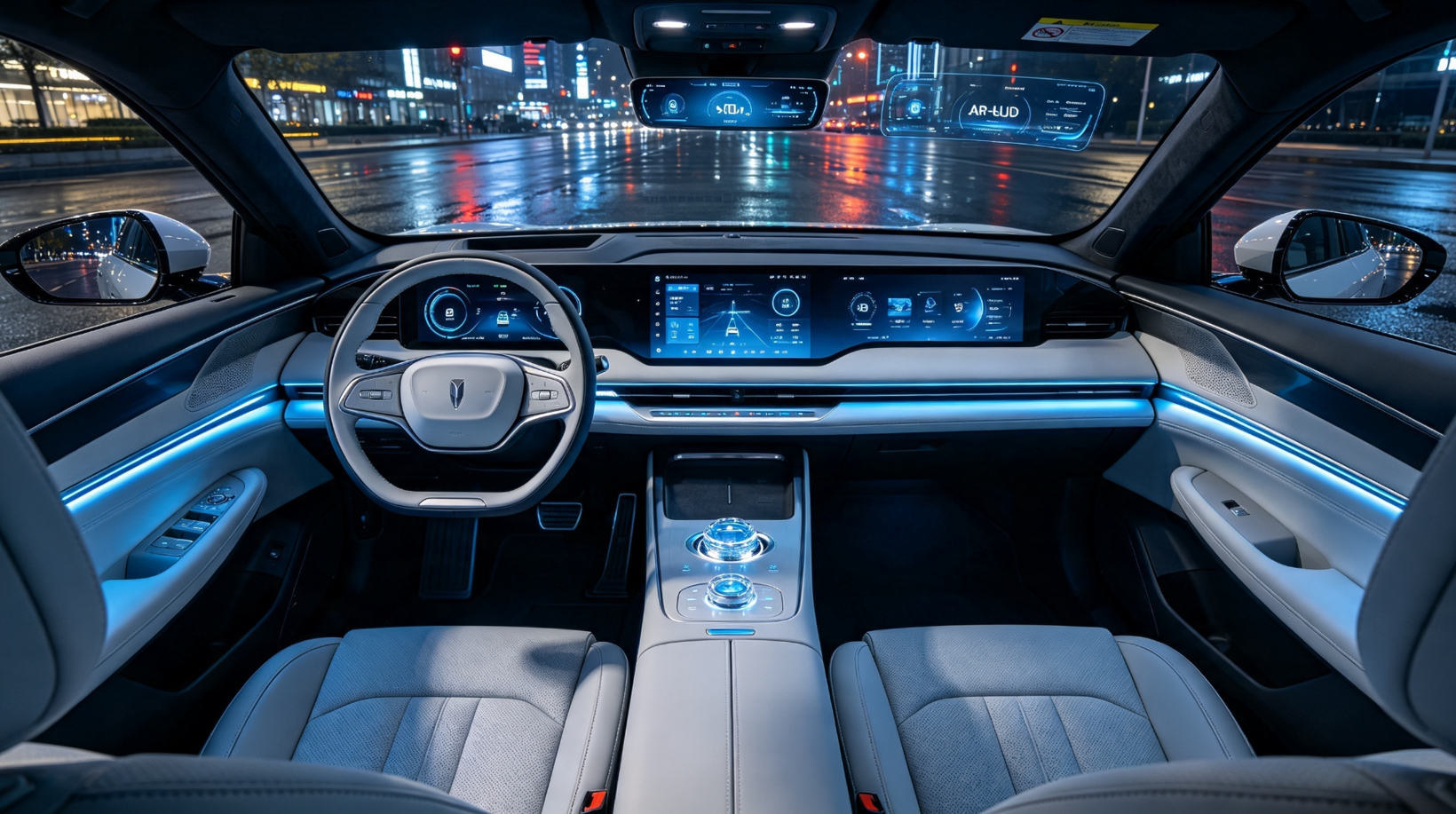
As the global automotive industry navigates a profound software-defined shift, Chinese EV smart cabin technology is emerging as a critical differentiator in international markets. In a Hanoi showroom, a prospective car buyer issues a voice command in localized Vietnamese to adjust the climate control on a Chery SUV. The response is instantaneous, signaling a transition from basic vehicle exports to sophisticated, localized digital experiences. This demonstration highlights a broader trend: the battle for global automotive dominance is being fought not just under the hood, but on the dashboard screen.
Beyond Translation: The New Era of Localized Automotive Software
In the past, exporting a vehicle meant translating the user manual and changing the language setting of the instrument cluster. Today, the rapid evolution of Chinese EV smart cabin technology demands a highly customized user experience (UX). For markets in Southeast Asia, Latin America, and the Middle East, this means building voice assistants that understand localized slang, accents, and regional dialects.
Chinese automakers are achieving this by prioritizing cross-border collaboration and strategic sourcing alliances with regional tech firms. Instead of relying solely on generic global translation models, OEMs are integrating local cloud providers and local map databases to ensure the vehicle feels native to the driver. This strategic localization allows vehicles to fit seamlessly into the digital lifestyle of local consumers.
Strategic Localization vs. Traditional Infotainment Systems
The traditional approach to vehicle infotainment has often relied on centralized global platforms that struggle to adapt quickly to regional nuances. By contrast, agile software frameworks developed by Chinese EV players permit rapid localization cycles. This enables them to deploy customized application suites, localized streaming services, and bespoke navigation packages tailored to the destination market's preferences.
| Feature Set | Traditional Global Approach | Localized Smart Cabin Approach |
|---|---|---|
| Voice Recognition | Broad, standardized language packs with limited regional dialect support. | Highly specialized regional NLP engines integrated with local telecommunication partners. |
| Ecosystem Integration | Heavy reliance on smartphone mirroring (Apple CarPlay / Android Auto). | Deeply embedded local apps, regional digital wallets, and custom maps built into the vehicle OS. |
| Update Frequency | Infrequent, dealership-reliant, or periodic OTA cycles. | Continuous cloud-based updates (OTA) tailored to real-time regional user feedback. |
Navigating Compliance and Geopolitical Complexities
The global expansion of smart cabins is not without challenges. In an era of heightened geopolitical awareness, data sovereignty is a top priority for regulators worldwide. To maintain strict compliance with localized regional footprints, automakers must establish local data centers to ensure that consumer telemetry and voice command data remain within the host country's borders.
This operational adaptation requires significant investment in localized cloud infrastructure. Rather than viewing these regulations as barriers, leading automotive brands are framing their strategies around compliance, localized value creation, and long-term regional stability. This approach ensures that the vehicle software remains secure, reliable, and respectful of local governance frameworks.
What this Means for Global Investors and Competitors
For global investors, the rapid deployment of localized smart cabin technology represents a major indicator of a brand's international scalability. Software agility has become a proxy for a carmaker's market adaptability. Competitors, including legacy Western OEMs, are responding by accelerating their own software integration efforts, forging strategic alliances with tech giants, and setting up localized R&D hubs in key emerging markets. The result is a highly competitive, dynamic environment that drives global innovation forward, benefiting consumers through richer, safer, and more intuitive in-vehicle experiences.