Chinese EV Market Retail Trends: Deciphering the ‘Golden September’ Surge and Western OEM Implications
From our analytical vantage point monitoring Shanghai, Shenzhen, and Stuttgart supply chain telemetry, the automotive world is witnessing a structural shift that transcends seasonal sales variations. The traditional Chinese peak buying season, colloquially known as ‘Golden September and Silver October’ (金九银十), has evolved from a general volume bump for combustion vehicles into a decisive battlefield for electrified powertrains. Analyzing the latest Chinese EV market retail trends reveals that while overall passenger vehicle retail volumes are navigating high baseline hurdles, the rate of New Energy Vehicle (NEV) adoption continues to outpace even the most bullish investment models, fundamentally altering global auto equities.
Section 1: Executive Overview & The Market Catalyst
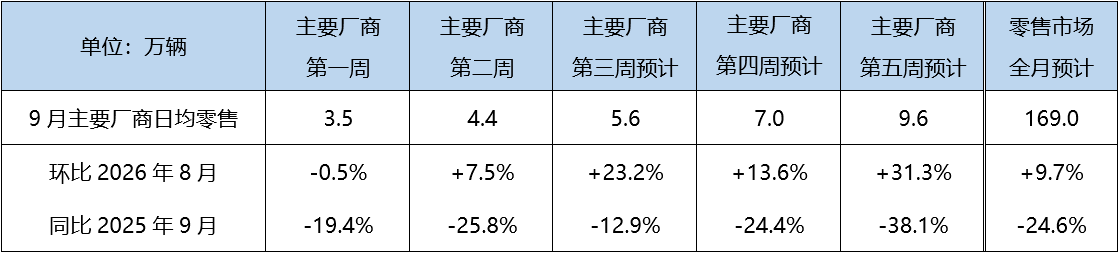
Historically, the month of September serves as a macro-economic bellwether for Chinese consumer demand. Industrial manufacturers, dealers, and financial analysts track the 'Golden September' retail metrics to forecast Q4 performance and next-year supply chain procurement cycles. In previous decades, this period was dominated by joint-venture ICE platforms from Volkswagen, General Motors, and Toyota. However, the 2026 data indicates a profound structural pivot. Domestic retail sales of passenger vehicles have reached an estimated 1.69 million units, a solid month-on-month trajectory that reflects resilient domestic consumption supported by strategic government scrap-and-replace subsidies (scrappage incentives of up to 20,000 RMB per vehicle).
This market catalyst is not merely a product of organic consumer preference; it is the direct outcome of a coordinated industrial strategy. The Chinese Ministry of Commerce, in tandem with local municipal authorities, has streamlined trade-in procedures, directly targeting older ICE vehicles and directing that capital into high-efficiency Plug-in Hybrid Electric Vehicles (PHEVs) and Battery Electric Vehicles (BEVs). As a result, the domestic passenger vehicle retail matrix is polarizing: traditional ICE vehicle sales are entering a structural terminal decline, while the Chinese EV market retail trends reveal that NEVs are commanding the majority of incremental volume growth.
Section 2: Technical Architecture & Deep Engineering Teardown
To understand why Chinese consumers are abandoning legacy ICE vehicles in droves during this peak retail season, one must analyze the massive leap in technical architecture and engineering efficiency of Chinese-designed vehicles. While Western legacy OEMs are largely stuck on 400V architectures and delayed software integration timelines, Chinese domestic players have democratized high-performance powertrains. Platforms utilizing 800V Silicon Carbide (SiC) high-voltage architectures, ultra-fast charging LFP chemistries, and integrated thermal management systems are now standard at price points below $25,000 (approx. 180,000 RMB).
A prime example of this engineering leadership is the rapid deployment of dual-motor or highly integrated single-motor rear-wheel-drive configurations utilizing SiC MOSFETs in the inverter stage. This technology reduces switching losses by up to 75% compared to traditional Silicon IGBTs, extending real-world driving range by 5-8% on the same battery capacity. Concurrently, PHEV powertrains have transitioned to dedicated hybrid engines achieving thermal efficiencies exceeding 46%, enabling combined driving ranges of over 1,500 kilometers on the CLTC cycle. This effectively eliminates range anxiety for rural and semi-urban consumers—a demographic driving a substantial portion of the September sales expansion.
| Vehicle Model | Powertrain / Voltage | Battery Chemistry & Capacity | Thermal Efficiency / SiC Inverter | Starting Price (RMB / USD equivalent) |
|---|---|---|---|---|
| Tesla Model Y (RWD) | BEV / 400V | LFP / 60 kWh | SiC Inverter / ~92% System Eff. | 249,900 RMB ($34,700) |
| BYD Song Plus DM-i 5.0 | PHEV / 400V (equivalent) | LFP / 18.3 kWh | 46.06% Thermal Eff. / IGBT | 135,800 RMB ($18,800) |
| Zeekr 7X (Standard) | BEV / 800V SiC | LFP (Golden Brick) / 75 kWh | Full SiC Inverter / ~95% System Eff. | 229,900 RMB ($31,900) |
| Li Auto L6 (Pro) | EREV / 400V | LFP / 36.8 kWh | Range Extender / High System Eff. | 249,800 RMB ($34,600) |
Section 3: Supply Chain Dynamics & Bill of Materials (BOM) Economics
The structural underpinnings of these Chinese EV market retail trends reside in the unmatched localization and vertical integration of the Chinese battery and semiconductor supply chains. Our bottom-up cost modeling of mid-size SUV platforms reveals that Chinese OEMs enjoy a 25% to 35% Bill of Materials (BOM) cost advantage over Western legacy manufacturers attempting to assemble vehicles in North America or Europe. This is not a product of low-cost manual labor; it is a direct function of geographic proximity to raw material refining, automated battery gigafactories, and localized Tier-1 electronics suppliers.
Consider the battery pack, which remains the single most expensive component in an EV, representing 30% to 40% of total vehicle cost. Companies like CATL, FinDreams (BYD's component arm), and CALB have localized the entire supply chain—from precursor chemicals and cathode active materials (CAM) to cell assembly and Cell-to-Body (CTB) integration—within a 200-kilometer radius of major manufacturing hubs in provinces like Jiangsu and Guangdong. Furthermore, Tier-1 and Tier-2 suppliers such as Horizon Robotics and Desay SV provide highly integrated ADAS solutions and smart cockpit domains at a fraction of the cost of Western equivalents. These structural cost efficiencies allow Chinese domestic brands to offer features like dual-motor AWD, active air suspension, and Level 2+ highway navigation as standard equipment on vehicles priced below 200,000 RMB ($27,700), leaving legacy ICE offerings look technologically obsolete and financially uncompetitive.
Section 4: Western Legacy OEM Impact & Competitive Fallout
The data from the 'Golden September' retail period signals an acute crisis for Western legacy joint ventures (JVs) operating in mainland China. Historically, these JVs (such as SAIC-Volkswagen, FAW-Toyota, and GAC-Honda) were the primary profit engines for their parent corporations, funding Western capital expenditure and R&D programs. However, as Chinese EV market retail trends clearly indicate that NEV penetration is hovering around the 50% mark nationally, these JVs are facing a collapse in asset utilization rates. Factories designed to churn out a combined 10 million combustion vehicles annually are now operating at under 45% capacity, triggering severe margin compression and dealer inventory blockages.
This competitive fallout is not confined to the Chinese domestic market. Faced with localized domestic market saturation and intense price competition, Chinese automakers are utilizing their immense domestic scale to expand their export programs into strategic global regions. This export push places extreme margin pressure on Western legacy players in neutral ground markets such as Southeast Asia, the Middle East, and Latin America. As Chinese brands offer superior high-tech hybrid and battery-electric models at price parity with Western combustion cars, legacy giants are forced to make a painful choice: engage in ruinous margin-eroding price wars or cede market share entirely.
Section 5: Geopolitical, Tariff & Regulatory Adaptation
In response to the disruptive expansion of Chinese electric vehicles, Western regulatory bodies have erected substantial trade barriers, including the European Union's anti-subsidy countervailing duties and the United States' Section 301 tariff adjustments. However, our analysis of the global automotive regulatory landscape shows that these trade hurdles are not halting Chinese OEM expansion; instead, they are accelerating a profound shift toward global, compliant localization strategies.
Rather than seeking to bypass regulatory frameworks, major Chinese automotive groups are adapting constructively through direct foreign investment in localized regional manufacturing hubs. Geely, BYD, and Chery are actively establishing state-of-the-art assembly plants in tariff-compliant jurisdictions such as Hungary, Spain, Turkey, Thailand, and Brazil. This strategic localization serves multiple purposes: it satisfies local assembly mandates, contributes directly to the host country’s gross domestic product, fosters regional supply chain ecosystems, and meets regional rules-of-origin criteria. Concurrently, Chinese technology leaders are pivoting to technology licensing and joint-venture models—similar to Leapmotor’s partnership with Stellantis—enabling Western brands to leverage advanced Chinese EV platforms to meet their own domestic fleet decarbonization targets.
Section 6: 3-5 Year Strategic Market Outlook & Scenario Analysis
Understanding the long-term trajectory of the Chinese automotive landscape requires analyzing multiple diverging paths over the next three to five years.
Bull Case Scenario
In this scenario, domestic scrap-and-replace subsidies remain highly stimulative, and municipal plate restrictions in Tier 1 and Tier 2 cities are fully aligned with NEV adoption targets. Domestic NEV penetration accelerates to 65% by late 2027. Concurrently, localized manufacturing plants in Hungary, Brazil, and ASEAN come online ahead of schedule, bypassing geopolitical headwinds and securing 15% of the European and global premium EV market share. Profit margins recover as consolidation drives weak players out of the market, allowing the remaining giants to stabilize retail pricing.
Base Case Scenario
Under this baseline outlook, the domestic market experiences incremental sales growth but continues to struggle with high-base comparative friction and lingering macroeconomic headwinds. Retail volumes of NEVs grow at a steady 8-12% annually, pushing penetration to approximately 55-58%. The domestic price war remains active but transitions from raw vehicle price cuts to value-added content integration (e.g., standardizing advanced ADAS). International exports continue to grow steadily, though delayed by shipping logistics and localized supply chain establishment times.
Bear Case Scenario
In the pessimistic scenario, extreme domestic price friction persists, leading to widespread financial distress across Tier-2 domestic EV startups and dealer networks. Capital constraints limit R&D spending on next-generation solid-state battery platforms. Simultaneously, global trade tensions escalate further, resulting in coordinated, hyper-restrictive localization rules in both the EU and North America, slowing Chinese export scaling. Domestic NEV penetration plateauing near 52% due to slower charging infrastructure rollout in Tier-3 and Tier-4 municipalities.
Section 7: Strategic Implications for Executives & Institutional Investors
For global automotive executives, procurement directors, and institutional equity analysts, the structural realities revealed in the recent **Chinese EV market retail trends** demand immediate, tactical adjustments:
- Re-evaluate Joint Venture Valuation Models: Financial analysts must aggressively write down the terminal value of legacy combustion JV operations in China. These businesses are no longer cash cows; they are structural liabilities requiring asset restructuring.
- Accelerate Sourcing of Chinese Component IP: To close the 30% BOM gap, Western procurement leads should actively partner with or license technology from Chinese Tier-1 suppliers specializing in LFP chemistry, integrated thermal systems, and SiC power electronics.
- Monitor Regional Production Shifts: Track the progression of greenfield factories in Central Europe and Latin America. These sites will become the primary launchpads for globally compliant, highly competitive EV platforms.
- Shift Capital Allocations to Advanced PHEV/EREV: The rapid growth of dual-motor EREVs and high-efficiency hybrids during the peak autumn retail season highlights that pure battery electric vehicles are not the sole path. Strategic investment should flow into advanced hybrid powertrains to capture transitioning consumers.