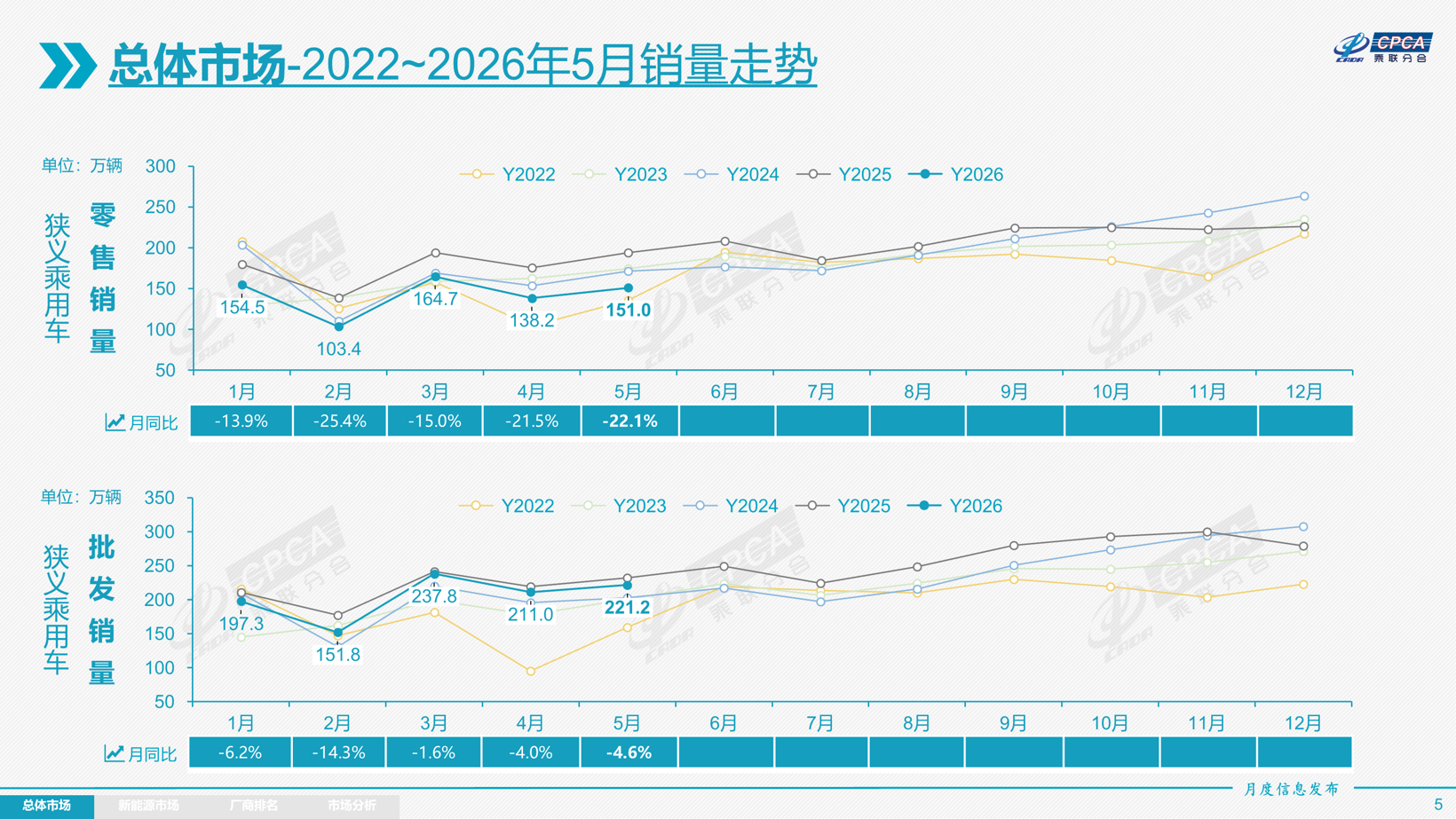
The Chinese automotive market is experiencing a significant shift, with new energy vehicles (NEVs) gaining unprecedented traction. According to the latest data from the China Passenger Car Association (CPCA), the penetration rate of NEVs in May reached a record high of 62.9%, while traditional fuel vehicle sales declined by 39% year-over-year.
Market Overview
In May 2026, the Chinese passenger car market saw a total retail volume of 151 million units, marking a 22.1% decline compared to the same period last year. However, this decline was partially offset by a 9.2% month-over-month growth, indicating that the market is not entirely stagnant.
Structural Changes in the Market
The most notable change is the rapid transition from traditional fuel vehicles to NEVs. The penetration rate of NEVs in May 2026 climbed to 62.9%, setting a new record. This shift is driven by several factors, including government policies, technological advancements, and changing consumer preferences.
Fuel Vehicle Decline
The decline in traditional fuel vehicle sales is a clear indicator of the market's transition. In May, the sales of fuel vehicles dropped by 39% year-over-year, reflecting the growing preference for more environmentally friendly and technologically advanced NEVs.
Rise of NEVs
The rise of NEVs is not just a trend but a strategic shift. Major Chinese automakers such as BYD, NIO, and XPeng are leading the charge, with their innovative models and robust production capabilities. The increasing penetration of NEVs is also supported by the Chinese government's aggressive push for green energy and sustainable transportation solutions.
Global Implications
The rapid adoption of NEVs in China has significant implications for the global automotive industry. Western OEMs, including Tesla, Ford, and Volkswagen, are closely monitoring these developments and are accelerating their own EV strategies to stay competitive. The shift towards NEVs in China is also influencing global investment trends, with more capital flowing into the EV sector.
Strategic Moves by Western OEMs
Western automakers are making strategic moves to tap into the Chinese EV market. For instance, Tesla has already established a strong presence in China with its Gigafactory in Shanghai, and other major players are following suit. These companies are investing heavily in R&D and partnerships to develop new EV models and technologies that can compete in the Chinese market.
Investment Opportunities
The growing NEV market in China presents substantial investment opportunities. Investors are increasingly looking at Chinese EV manufacturers and related supply chain companies as key targets. The high penetration rate of NEVs and the supportive policy environment make the Chinese EV market an attractive destination for both domestic and international investors.