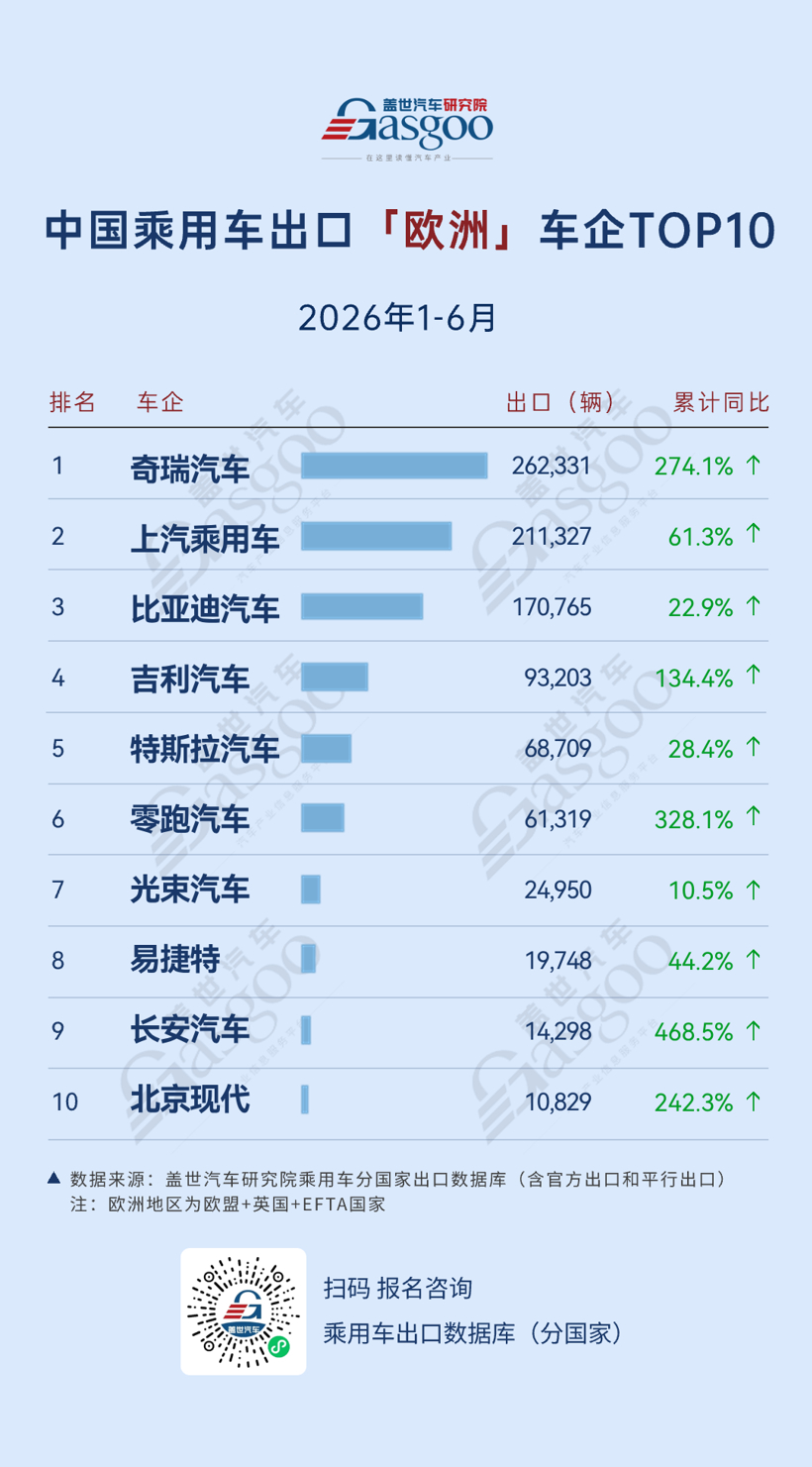
The global automotive landscape in the first half of 2026 has witnessed a profound structural shift. According to recent data from the Gasgoo Auto Research Institute, Chinese passenger car exports are diversifying rapidly, establishing a deeper localized regional footprint across emerging economies. As traditional Western markets adjust their import frameworks, leading Chinese OEMs are demonstrating remarkable trade adaptability by shifting their strategic focus toward Central and South America, as well as Southeast Asia. This tactical pivot is redefining the dynamics of the Chinese EV global market expansion.
The Pivotal Shift: Geely's Latin American Surge
As a veteran automotive market analyst tracking global supply chains, I view Geely's performance in Central and South America as a masterclass in market penetration. For H1 2026, Geely registered an astronomical 445.6% year-on-year growth rate in this region. This explosive rise is not merely a reflection of competitive pricing; it is the direct result of deliberate localized investments, dealer network expansion, and tailoring vehicle specifications to local infrastructure realities.
Central and South American markets present a highly receptive audience for hybrid and battery electric vehicles (BEVs) due to urban density and localized green energy initiatives. By deploying robust SUV portfolios and leveraging established regional partnerships, Geely has successfully established brand equity ahead of its key global competitors.
Southeast Asia: Leapmotor and the Stellantis Synergy
Equally compelling is Leapmotor's performance in Southeast Asia, where exports skyrocketed by 302.1% in the first half of 2026. This trajectory exemplifies how strategic cross-border collaborations can accelerate market entry while maintaining absolute supply chain compliance.
Leapmotor's rapid growth is highly integrated with Leapmotor International—its joint venture with Stellantis. This partnership is highly regarded in the industry as a benchmark for technology integration and strategic sourcing alliances. Rather than relying solely on direct exports, Leapmotor leverages Stellantis's extensive global distribution networks and localized assembly expertise. This collaborative model satisfies local manufacturing guidelines, fosters domestic job creation in ASEAN countries, and aligns perfectly with regional decarbonization goals.
Data-Driven Insights: Mapping the Export Shift
The structural transformation of Chinese auto exports in H1 2026 is clearly illustrated by the diverging growth trajectories of key OEMs in their respective target regions:
| OEM | Primary Growth Region | H1 2026 Growth Rate (%) | Strategic Focus |
|---|---|---|---|
| Geely | Central & South America | +445.6% | Localized distribution, SUV market entry |
| Leapmotor | Southeast Asia (ASEAN) | +302.1% | Stellantis JV synergy, CKD localized assembly |
| BYD | Global Multi-Region | Steady Expansion | Manufacturing footprint in Brazil & Thailand |
Strategic Implications for Western Investors and OEMs
For Western investors and legacy manufacturers, this regional pivot carries deep strategic implications. First, it demonstrates that the pace of Chinese EV global market expansion remains resilient despite regional trade barriers in North America and Europe. By diversifying into emerging economies, Chinese OEMs are building robust global hedges and scaling their production volume.
Second, the rise of collaborative ventures like Leapmotor International suggests that the future of the automotive sector lies in cross-border technological integration. Western legacy brands can leverage these partnerships to acquire state-of-the-art EV architectures and software capabilities, while Chinese firms gain accelerated access to mature logistics channels. It is a mutually beneficial evolution designed for long-term capital efficiency and ESG compliance.