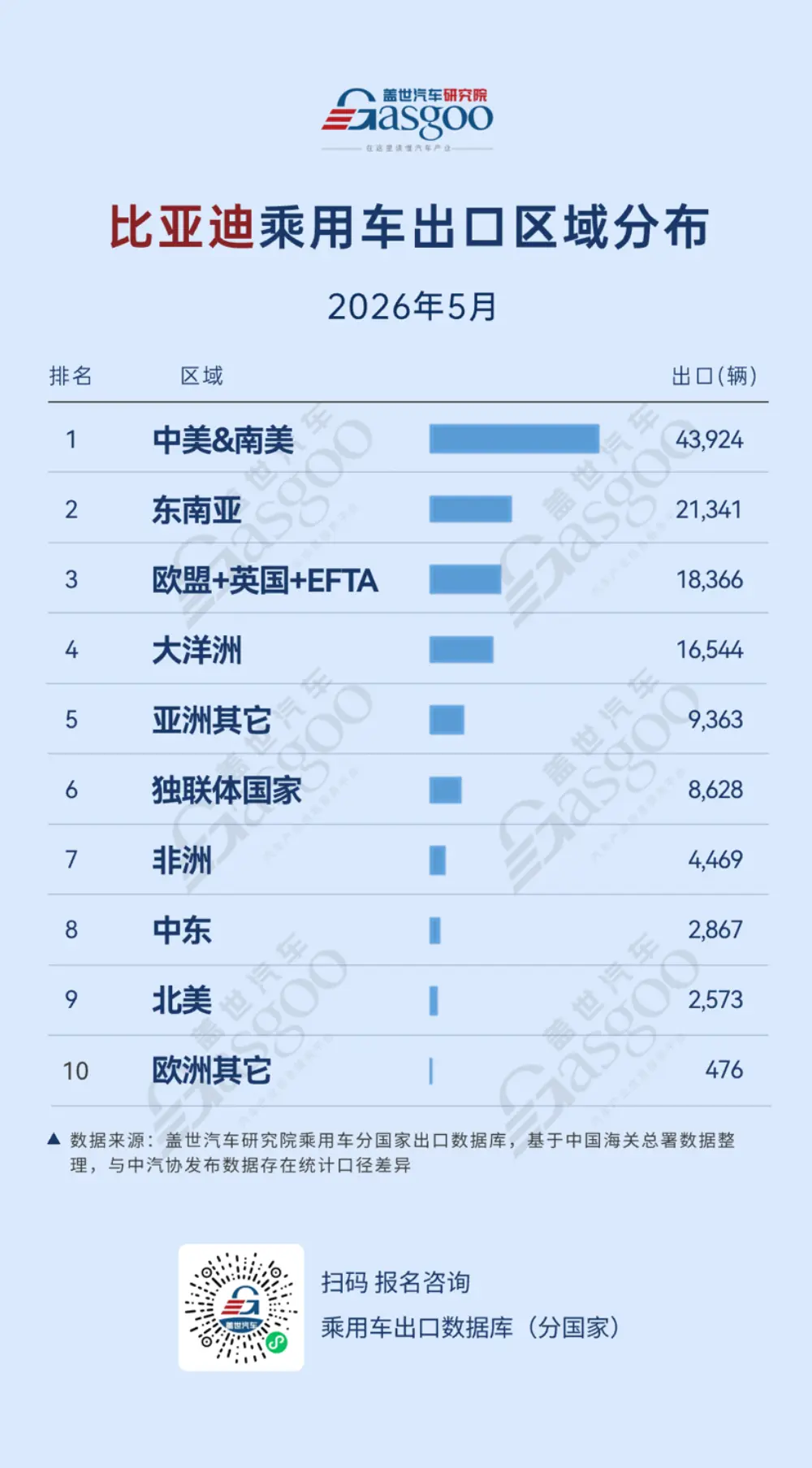
The narrative of the Chinese EV global expansion is undergoing a profound structural shift. While Washington and Brussels erect defensive tariff walls, May 2026 export data from the Gasgoo Research Institute reveals that leading Chinese automakers are successfully diversifying their footprints, bypassing trade barriers through aggressive localization and target market diversification.
The Changing Map of Chinese EV Global Expansion
For years, Western OEMs assumed tariffs would contain the threat of highly competitive Chinese electric vehicles. However, the latest May 2026 export data shows that instead of retreating, players like BYD, Chery, and Geely are executing sophisticated regional playbooks that leverage both localized production and strategic pivots to the Global South. As a Shanghai-based industry analyst tracking these supply chains, it is clear that the 'China Information Gap' is blinding Western investors to the speed at which these OEMs are adapting.
BYD's Latin American Dominance: Winning the Global South
In Latin America, BYD is currently operating without peer. By leveraging its dual-threat of highly affordable PHEVs and pure EVs (like the Dolphin and Seagull), BYD has captured critical market share in Brazil and Mexico. Crucially, BYD is not just shipping cars; its upcoming manufacturing hub in Camaçari, Brazil, transforms it from an exporter to a local industrial player, effectively bypassing future regional trade barriers. This is a classic 'China-speed' pivot that secures long-term market access.
Chery's European Resilience: Navigating Tariff Headwinds
Meanwhile, Chery Group is rewriting the playbook for Europe. Facing EU anti-subsidy duties, Chery has hit new export highs by leaning heavily into its multi-energy strategy (ICE, Hybrid, and EV) under the Omoda and Jaecoo brands, alongside local assembly partnerships in Spain (utilizing the former Nissan plant in Barcelona). This asset-light, localized assembly strategy allows Chery to dodge the heaviest impacts of EU tariffs while maintaining an active footprint in the European market.
Export Leaderboard: May 2026 Key Metrics
To understand the scale of this diversification, we can look at how these key players are dividing their global export strategies:
| OEM | Primary Target Region | Key Strategy | Tariff Mitigation Method |
|---|---|---|---|
| BYD | Latin America, Southeast Asia | Vertical integration & massive volume | Local manufacturing (Brazil, Thailand) |
| Chery | Europe, Middle East, Russia | Multi-energy portfolio (PHEV/ICE/BEV) | Joint ventures & Spanish assembly lines |
| Geely | Global (EU/Asia) | Multi-brand ecosystem (Volvo, Zeekr, Link & Co) | Existing global manufacturing assets |
Strategic Implications for Western Investors
From a strategic perspective, Western investors must look past the headline tariff numbers. The true alpha lies in identifying which Chinese OEMs can localize their supply chains fastest. BYD's vertical integration gives it unmatched margin cushions, allowing it to absorb tariff costs in the medium term, while Chery's collaborative JV model offers immense regulatory agility in Europe.
Western OEMs hoping that regulatory walls would buy them infinite time to catch up on battery technology must wake up to this reality: the Chinese EV global expansion is no longer just an export story—it is a localization story.