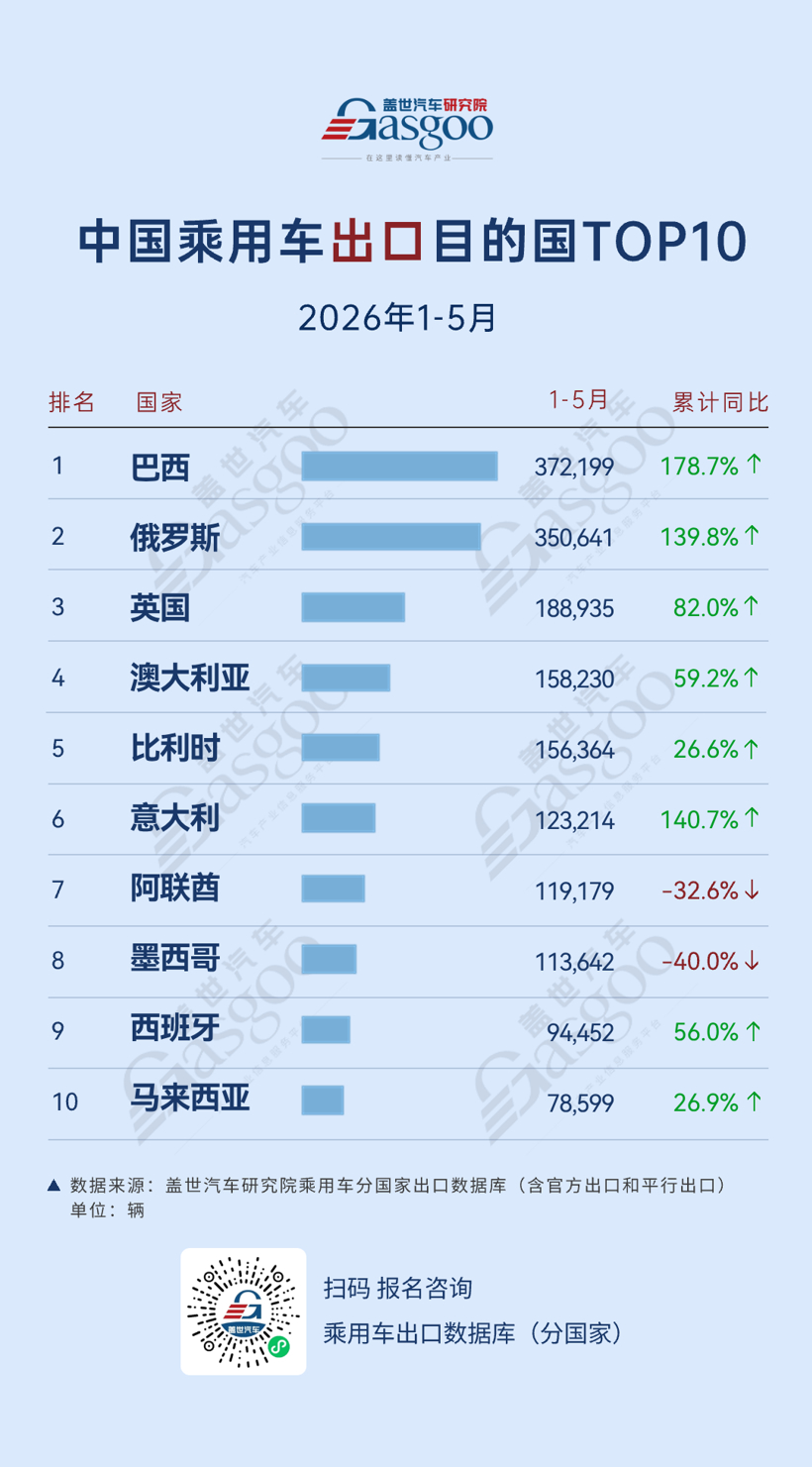
As global trade dynamics undergo rapid realignments, the flow of automotive capital is shifting south. From January to May 2026, Chinese EV exports to Latin America have demonstrated both explosive growth and a distinct regional polarization. While overall export volumes continue their upward trajectory, a closer look at the data from the Gasgoo Research Institute reveals that Brazil has emerged as the unchallenged leader in this regional expansion, driven not just by trade volume, but by a deeper pivot toward localized manufacturing.
The Polarization of the Latin American EV Market
According to the latest automotive intelligence data, the Latin American market is experiencing a profound polarization. While smaller economies show fluctuating or modest demand, Brazil is pulling ahead by a massive margin. This distinct leadership gap indicates that Brazil is no longer just a destination for finished vehicle imports; it has become the gravity center for Chinese automotive investment in the Southern Hemisphere.
This trend highlights a crucial market development. In previous years, Chinese OEMs relied heavily on shipping built-up units (CBUs). However, as regional economies adjust their industrial policies, the focus has shifted toward building resilient, localized supply chains.
Data Breakdown: Chinese Passenger Vehicle Exports (Jan-May 2026)
The table below outlines the strategic positioning of Chinese automakers across key Latin American hubs during the first five months of 2026:
| Market Hub | Export Volume Trend (Jan-May 2026) | Primary OEM Strategy |
|---|---|---|
| Brazil | Exponential Growth / Dominant Lead | Strategic localization, factory acquisitions, and local battery supply integration. |
| Mexico | Steady Growth | Localized regional footprint development for North and Central American logistics. |
| Chile & Colombia | Moderate/Stable | Niche marketing, fleet electrification programs, and public transport partnerships. |
Strategic Localization: Adapting to Regulatory Realities
Why are Chinese OEMs committing such significant resources to Brazil? The answer lies in proactive supply chain compliance and trade adaptability. With Latin American nations adjusting import duties to foster domestic industrial development, relying solely on direct exports poses long-term structural challenges.
The Transition to Local Manufacturing
- Industrial Hub Investments: Giants like BYD and Great Wall Motor (GWM) are actively transforming local facilities into high-tech manufacturing ecosystems.
- Tariff Compliance: By assembling vehicles locally, these manufacturers align with regional trade rules, ensuring competitive pricing while contributing to local value creation.
- Technology Integration: These investments are driving technology integration, helping train local workforces in high-voltage system maintenance and advanced EV assembly.
What This Means for Global Investors and Western OEMs
For Western automakers, the rapid rise of Chinese EV exports to Latin America signals a shifting competitive landscape. Traditionally, South American markets were dominated by European and North American legacy brands. The arrival of localized Chinese manufacturing platforms introduces a new level of competition based on highly integrated supply chains and advanced software features.
Rather than viewing this as a zero-sum game, forward-thinking industry analysts point to opportunities for cross-border collaboration and strategic sourcing alliances. Western OEMs can benefit by observing the speed of Chinese supply chain adaptability, while investment firms can seek alpha by identifying regional suppliers that integrate into these newly formed manufacturing hubs.