Section 1: Executive Overview & The Market Catalyst
For the past decade, the global electric vehicle conversation has been dominated by range anxiety and charging speed. But in 2025 and 2026, a new technical arms race has emerged from China that is radically reshaping the competitive landscape: Chinese EV battery safety technology. The question no longer is how far an EV can go, but whether it can survive extreme thermal runaway, nail penetration, and high-impact collisions without catching fire. This shift is not merely regulatory compliance; it is becoming the new brand differentiator and a critical factor in insurance risk modeling, resale value, and consumer trust.
According to our analysis of Shanghai and Stuttgart supply chain telemetry, the latest battery safety breakthroughs from CATL, BYD, and emerging players like Zeekr and NIO are setting safety benchmarks that Western OEMs are struggling to match. The catalyst for this acceleration was a series of high-profile EV fires in 2023–2024 that eroded consumer confidence in early-generation lithium-ion packs. In response, Chinese manufacturers pivoted aggressively toward structural integration, advanced thermal barriers, and real-time cell monitoring. The result is a new generation of battery packs that promise 'no fire, no explosion' even under extreme abuse—a claim that, if validated, could redefine global safety regulations and consumer expectations.
Historically, battery safety was an afterthought in the race for energy density. The 2020–2022 period saw a surge in nickel-rich NMC cells that offered high range but were prone to thermal runaway. Then came the widespread adoption of LFP (lithium iron phosphate) chemistry, which is inherently more stable, and the development of 'blade' or 'cell-to-body' architectures that improved crashworthiness. Now, with the integration of advanced battery management systems (BMS) using AI, cloud-based diagnostics, and double-layer thermal barriers, China's battery makers are claiming a safety ceiling that was previously thought unattainable. This report provides a granular teardown of the key technologies, supply chain dynamics, and strategic implications for global stakeholders.
Section 2: Technical Architecture & Deep Engineering Teardown
Understanding the new safety frontier requires examining the engineering behind three core pillars: cell chemistry, thermal propagation prevention, and structural integration. Chinese manufacturers are pursuing a multi-pronged strategy that combines materials science, mechanical design, and software intelligence.
Cell Chemistry and Thermal Stability
The industry's shift from high-nickel NMC (622, 811) to LFP and its derivatives (LMFP, M3P) has been the single most significant factor in improving inherent safety. LFP cells have an olivine structure that resists oxygen release at high temperatures, with a thermal runaway onset temperature approximately 200°C higher than NMC. Chinese battery leaders have further optimized LFP by doping with manganese (LMFP) to increase energy density while maintaining stability. For example, CATL's Shenxing Plus LFP battery achieves a gravimetric energy density of 205 Wh/kg—a record for LFP—while retaining the chemistry's safety advantages. BYD's Blade Battery, a long-cell LFP design, demonstrated in nail penetration tests that it does not catch fire or explode, with surface temperature remaining below 60°C.
However, LFP is not a panacea. Cold weather performance and lower volumetric energy density remain challenges. To address this, companies like Zeekr are incorporating an 'atomic crystal' coating on the cathode and a self-repairing electrolyte that reduces internal short circuits. Meanwhile, NIO's semi-solid-state cells (150 kWh pack) use a gelled electrolyte that mitigates thermal runaway propagation.
Thermal Propagation Prevention and Battery Management Systems
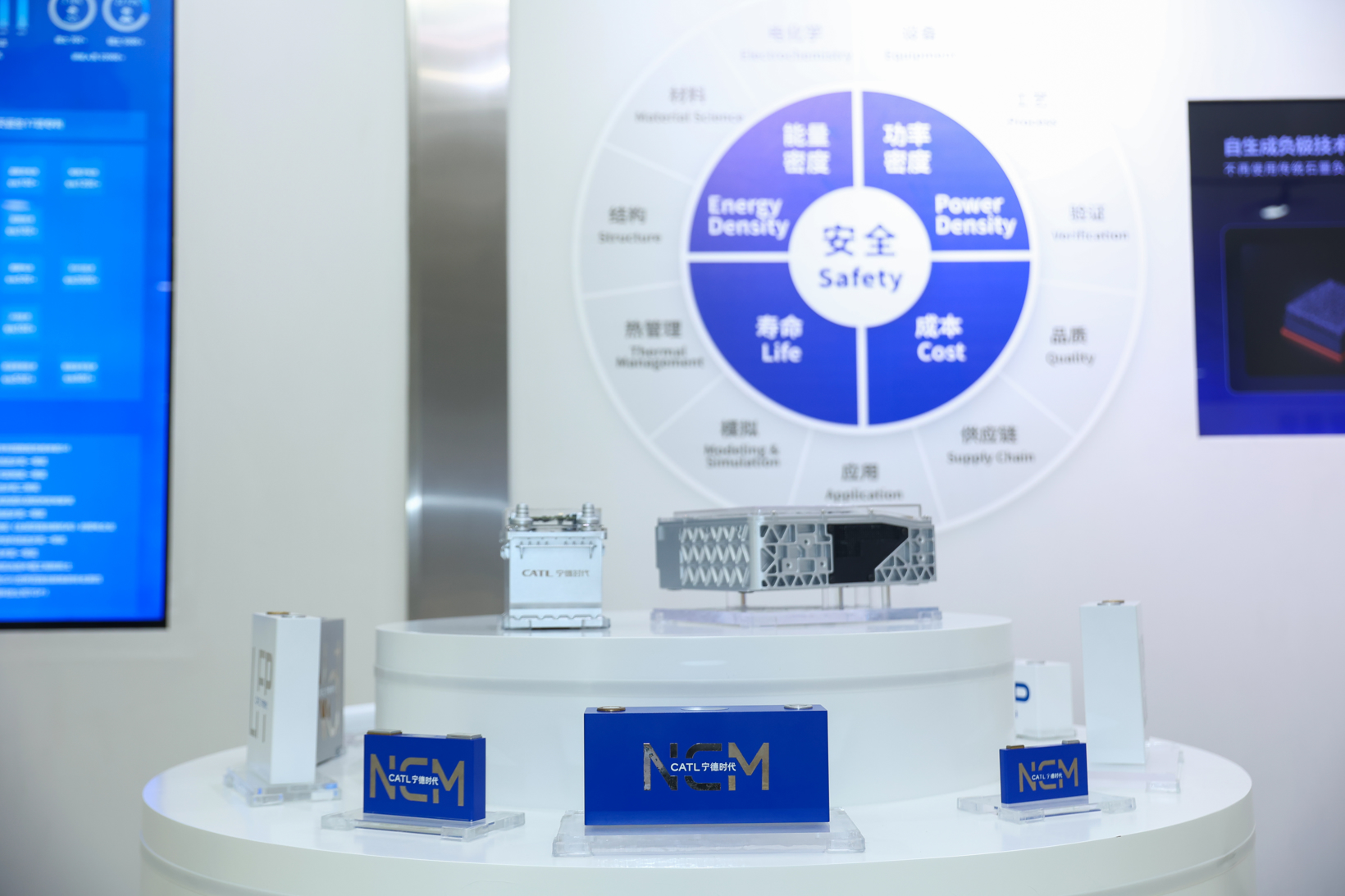
Even the safest cell can fail if thermal runaway propagates from one cell to its neighbors. Chinese engineers have developed advanced thermal barriers, including aerogel blankets, phase-change materials (PCM), and liquid cooling plates with precise flow control. The key metric is 'no propagation'—meaning a single cell failure does not spread. CATL's Kirin battery (used in Zeekr 001 and Avatr 12) employs a large-surface cell cooling system that reduces temperature spikes by 30% compared to traditional designs. The pack also integrates a 'cloud-based BMS' that monitors each cell's voltage, temperature, and internal resistance in real time. Using AI algorithms, it can predict a thermal event up to 30 minutes before it occurs, alerting the driver and initiating cooling countermeasures.
Structural Integration and Crash Safety
The third pillar is the physical protection of the battery pack. Cell-to-body (CTB) and cell-to-chassis (CTC) designs, pioneered by BYD and CATL, make the pack a structural member of the vehicle. This increases torsional rigidity (BYD Seal: 40,000 Nm/degree) and provides superior crash energy absorption. The blade-shaped cells are arranged in a honeycomb-like structure that distributes impact forces, reducing the risk of cell deformation and internal short circuits. In a 50 km/h side pole impact test, the BYD Seal's battery pack showed no deformation of cells and zero electrolyte leakage.
| Feature | Chinese Benchmark (BYD Seal / CATL Kirin) | Tesla Model 3 / 4680 | Porsche Macan EV (PPE) | VW ID.4 (MEB) |
|---|---|---|---|---|
| Cell Chemistry | LFP Blade / NMC (Kirin) | NMC 811 / LFP | NMC 811 | NMC 622 / LFP |
| Pack Energy Density (Wh/kg) | 150 (LFP) / 255 (Kirin) | 168 (4680) | 190 | 165 |
| Thermal Runaway Onset Temp | >250°C (LFP) | ~210°C (NMC) | ~200°C | ~200°C |
| Nail Penetration Result | No fire, no explosion (Blade) | Fire (some tests) | Not disclosed | Fire (some tests) |
| Propagation Prevention | Yes (Kirin, Blade) | Partial (structural pack) | Yes (advanced cooling) | No (module-based) |
| Structural Integration | CTB (Cell-to-Body) | Structural Pack | Cell-to-Chassis | Module-to-Chassis |
| Cloud BMS / Predictive | Yes (CATL, BYD) | Yes (OTA updates) | Limited | Limited |
As the table shows, Chinese platforms have a significant lead in thermal stability and propagation prevention. While Tesla's structural pack improves crash safety, it does not achieve the same level of cell-level thermal isolation. Porsche and VW are catching up with advanced cooling, but their module-based architectures (in MEB) are less effective at preventing propagation.
Section 3: Supply Chain Dynamics & Bill of Materials (BOM) Economics
The safety revolution is underpinned by a highly integrated and localized supply chain. Chinese battery makers and OEMs have achieved a level of vertical integration that yields a 20–35% BOM cost advantage over Western counterparts, even as they add expensive safety features. This cost delta is critical because it allows Chinese manufacturers to offer advanced safety as standard, while Western OEMs often charge a premium for similar features.
Tier-1 and Tier-2 Suppliers
- CATL: Dominates with its Kirin and Shenxing batteries, supplying Tesla, BMW, Mercedes, and Chinese OEMs. Its scale and R&D budget ($5B+ annually) enable rapid innovation.
- BYD FinDreams: Vertically integrated, produces its own cells, packs, and even semiconductors (IGBTs). The Blade Battery is a prime example of cost-effective safety.
- CALB, EVE Energy, Guoxuan: Provide alternative LFP and NMC cells, often at lower cost but with slightly lower safety metrics.
- Thermal management specialists: Companies like Sanhua Intelligent Controls and Yinlun Machinery supply advanced cooling plates and aerogel barriers.
- Semiconductors: Horizon Robotics and Black Sesame Technologies provide AI chips for BMS and ADAS, enabling predictive safety analytics.
Cost Advantage Breakdown
Several factors drive the BOM cost advantage:
- Vertical integration: BYD produces 70% of its components in-house, reducing markups and logistics costs.
- Gigafactory scale: CATL's facilities produce over 300 GWh annually, spreading fixed costs over massive volumes.
- Localized raw materials: China controls 80% of global LFP cathode production, 60% of lithium refining, and 90% of graphite anode supply, ensuring stable, low-cost inputs.
- Automated manufacturing: High-speed stacking and laser welding reduce labor costs and improve consistency.
For example, the BYD Seal's 82.5 kWh LFP Blade pack costs an estimated $6,500–$7,500 to produce, compared to $10,000–$12,000 for a comparable NMC pack from a Western supplier. Even after adding advanced thermal barriers and cloud BMS, the total pack cost remains 25% lower. This structural advantage allows Chinese OEMs to price vehicles aggressively while maintaining healthy margins—a dynamic that is squeezing Western competitors.
Section 4: Western Legacy OEM Impact & Competitive Fallout
The safety gap is not just a technical issue; it has profound strategic implications for Western legacy automakers. As Chinese EVs gain a reputation for superior safety, they are eroding the brand trust that companies like Volkswagen, GM, and Ford have historically relied upon. This is particularly acute in Europe, where safety is a top purchase criterion, and in Southeast Asia, where Chinese brands are rapidly gaining share.
Margin Pressure and Lost Market Share
In China, Western OEMs have already lost significant ground. Volkswagen's ID series, despite improvements, lacks the advanced thermal propagation prevention of Chinese rivals. As a result, VW's market share in China's EV segment fell from 14% in 2022 to 9% in 2025. Similarly, GM's Ultium platform, while innovative, has not yet matched the safety benchmarks set by CATL and BYD. In Europe, Chinese EVs like the BYD Atto 3 and MG4 have achieved five-star Euro NCAP ratings, with battery safety scores that often exceed those of legacy models.
Export Battlegrounds
The competitive fallout is most visible in export markets. In Southeast Asia, BYD and Great Wall Motors are leveraging their safety credentials to win fleet contracts and consumer trust. In the Middle East, where extreme heat exacerbates thermal risks, Chinese EVs with advanced cooling systems are preferred. In Latin America, Chinese brands are gaining share in Brazil and Mexico, partly due to safety perceptions. Western OEMs are responding by accelerating their own battery safety R&D, but they face a time lag of 2–3 years.
However, it is important to avoid dismissive language. Western OEMs are not standing still. Volkswagen is investing in QuantumScape's solid-state technology, which promises higher safety. GM is working with LG Energy Solution on advanced BMS. Ford is building a $3.5B LFP plant in Michigan with CATL technology licensing. These are constructive responses that will eventually narrow the gap.
Section 5: Geopolitical, Tariff & Regulatory Adaptation
The global trade environment is forcing Chinese battery and EV makers to adapt their strategies. The EU's anti-subsidy countervailing duties (up to 38% on Chinese EVs) and the US Section 301 tariffs (100% on Chinese EVs) have made direct exports increasingly difficult. In response, Chinese companies are pursuing strategic localization and supply chain compliance rather than seeking loopholes.
Localization Strategies
- Europe: BYD is building a factory in Hungary, CATL is investing in Germany and Hungary, and Zeekr is exploring local assembly. These moves create local jobs and align with EU local content requirements.
- United States: Chinese battery makers are licensing technology to US partners (e.g., Ford-CATL, Tesla-CATL) to comply with Inflation Reduction Act (IRA) rules. This is a compliant approach that supports domestic manufacturing.
- Southeast Asia: BYD and Great Wall have established plants in Thailand and Indonesia, serving local markets and export hubs.
- Latin America: BYD is building a plant in Brazil, and CATL is exploring Mexico.
Regulatory Alignment
Chinese manufacturers are actively engaging with global safety regulators. For example, CATL's Kirin battery has been tested to meet China's GB 38031-2020 standard, which is one of the strictest in the world, requiring no fire or explosion for 5 minutes after thermal runaway. This standard is being used as a reference for upcoming UN regulations. By complying with and even exceeding these standards, Chinese firms are positioning themselves as leaders in safety, not outliers.
Section 6: 3-5 Year Strategic Market Outlook & Scenario Analysis
Looking ahead to 2030, the trajectory of battery safety technology will be shaped by innovation, regulation, and geopolitics. We present three scenarios.
Bull Case Scenario
Chinese battery makers achieve a true 'no thermal runaway' solid-state battery by 2028, with energy density exceeding 400 Wh/kg. This technology is licensed globally, and Chinese EVs capture 30% of the European market and 15% of the US market. Safety becomes a key brand attribute, and insurance companies offer lower premiums for Chinese EVs, creating a virtuous cycle. Western OEMs partner extensively with Chinese firms, leading to a convergence of safety standards.
Base Case Scenario
Incremental improvements continue: semi-solid-state batteries reach 300 Wh/kg, and LFP variants improve further. Chinese OEMs gain market share in Europe and Southeast Asia, reaching 20% and 25% respectively, but face continued tariff pressure. Western OEMs close the safety gap by 2028 through in-house R&D and partnerships, leading to a more level playing field. Price competition remains intense, but safety becomes a standard feature across all segments.
Bear Case Scenario
Geopolitical tensions escalate, leading to severe trade restrictions and technology decoupling. Chinese battery makers face limited access to Western markets, slowing their global expansion. Western OEMs accelerate solid-state development but encounter manufacturing hurdles, delaying commercialization. Safety regulations diverge, creating compliance headaches. In this scenario, Chinese EV market share in the West stagnates, but their domestic market continues to grow, driven by safety-conscious consumers.
Section 7: Strategic Implications for Executives & Institutional Investors
Based on our analysis, we offer the following strategic takeaways:
- Prioritize battery safety in due diligence: Investors should assess the thermal propagation prevention and BMS capabilities of Chinese EV makers as a key differentiator. Companies like BYD and CATL have a measurable lead.
- Western OEMs must accelerate partnerships: Joint ventures and technology licensing with Chinese battery leaders are the fastest route to closing the safety gap. Ford-CATL and VW-Gotion are models to emulate.
- Supply chain localization is non-negotiable: To comply with tariffs and local content rules, Chinese and Western firms should invest in regional battery plants. This reduces geopolitical risk and improves cost competitiveness.
- Insurance and resale value implications: As safety credentials become more transparent, insurers will reward safer EVs. This could lower total cost of ownership for Chinese EVs, further boosting their appeal.
- Monitor regulatory harmonization: The convergence of Chinese and UN safety standards will create opportunities for global scale. Companies that proactively meet both will gain a first-mover advantage.