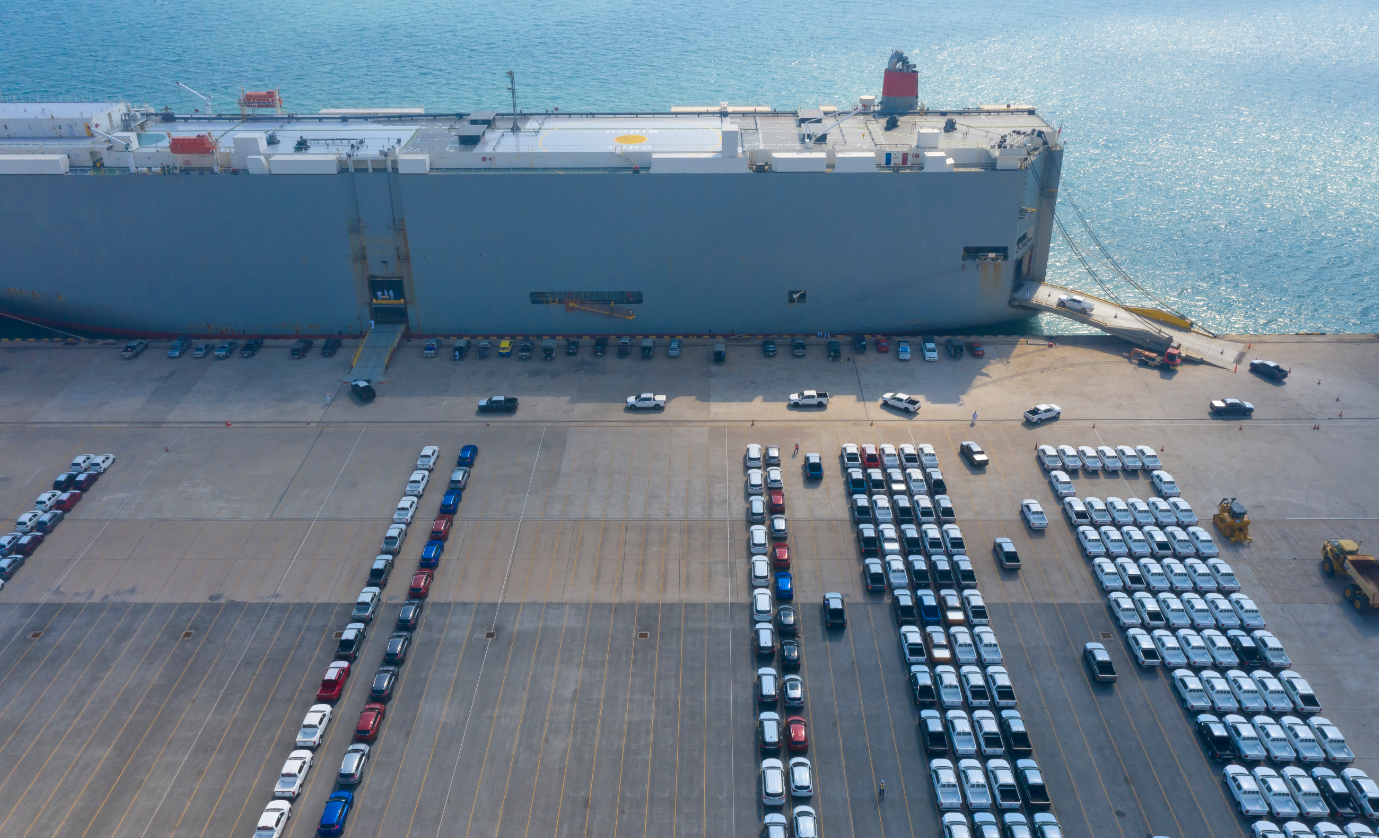
The global automotive landscape is undergoing an unprecedented paradigm shift, driven by the exponential trajectory of Chinese automotive export growth. In 2021, China's full-year automotive exports stood at $34.5 billion. Fast forward to the first half of 2026, and that figure has skyrocketed to an astonishing $91.8 billion—rapidly closing in on the $100 billion milestone in just six months. This rapid expansion highlights how Chinese automotive manufacturers are successfully establishing global footholds through technological innovation and robust supply chain integration.
Analyzing the Velocity: From $34.5 Billion to Near-$100 Billion
To comprehend the sheer scale of this growth, one must look at the structural shift in the types of vehicles being exported. Five years ago, Chinese exports were primarily driven by low-cost internal combustion engine (ICE) passenger cars shipped to developing markets. Today, the driver is high-value New Energy Vehicles (NEVs) equipped with advanced driver assistance systems (ADAS) and high-density Lithium Iron Phosphate (LFP) battery technologies.
The table below highlights this staggering growth trajectory:
| Metric Period | Total Export Value (USD) | Primary Structural Drivers |
|---|---|---|
| 2021 Full Year | $34.5 Billion | Entry-level ICE passenger cars, emerging market expansion |
| 2026 First Half (H1) | $91.8 Billion | High-tech NEVs, global premium branding, localized assembly |
This macro-level data indicates that Chinese automotive export growth is not merely a volume play; it is a value-up shift. Higher average selling prices (ASPs) in global markets like Europe, the Middle East, and Southeast Asia have significantly boosted export revenues.
Strategic Localization: Adapting to Global Trade Dynamics
As Western markets adjust import frameworks, Chinese OEMs are rapidly transitioning from pure export models to sophisticated, localized regional footprints. This shift towards localized manufacturing is designed to ensure strict supply chain compliance and long-term trade adaptability.
- European Manufacturing Hubs: Key players are establishing production footprints in Hungary, Spain, and Poland. These facilities enable OEMs to align with European ESG (environmental, social, and governance) initiatives and contribute to local value creation.
- Southeast Asian Hubs: Thailand and Indonesia have emerged as strategic nodes for right-hand-drive (RHD) EV production, positioning OEMs to serve regional ASEAN markets directly.
- Latin American Investments: Massive investment projects in Brazil and Mexico aim to build resilient local supply chains, integrating regional component suppliers rather than relying solely on imported parts.
What This Means for Western Investors and Competitors
For Western institutional investors and legacy automakers, the rapid rise in Chinese automotive export growth presents both competitive challenges and lucrative opportunities. Rather than viewing this as a zero-sum game, forward-looking industry leaders are increasingly focusing on strategic sourcing alliances and cross-border technology integration.
Joint ventures such as those between multinational auto groups and agile Chinese EV manufacturers show that leveraging global supplier expertise is becoming the standard playbook. Western OEMs can accelerate their own development cycles by integrating proven Chinese battery systems and smart-cabin technologies, while Chinese manufacturers gain invaluable regulatory and dealership distribution expertise in mature markets.