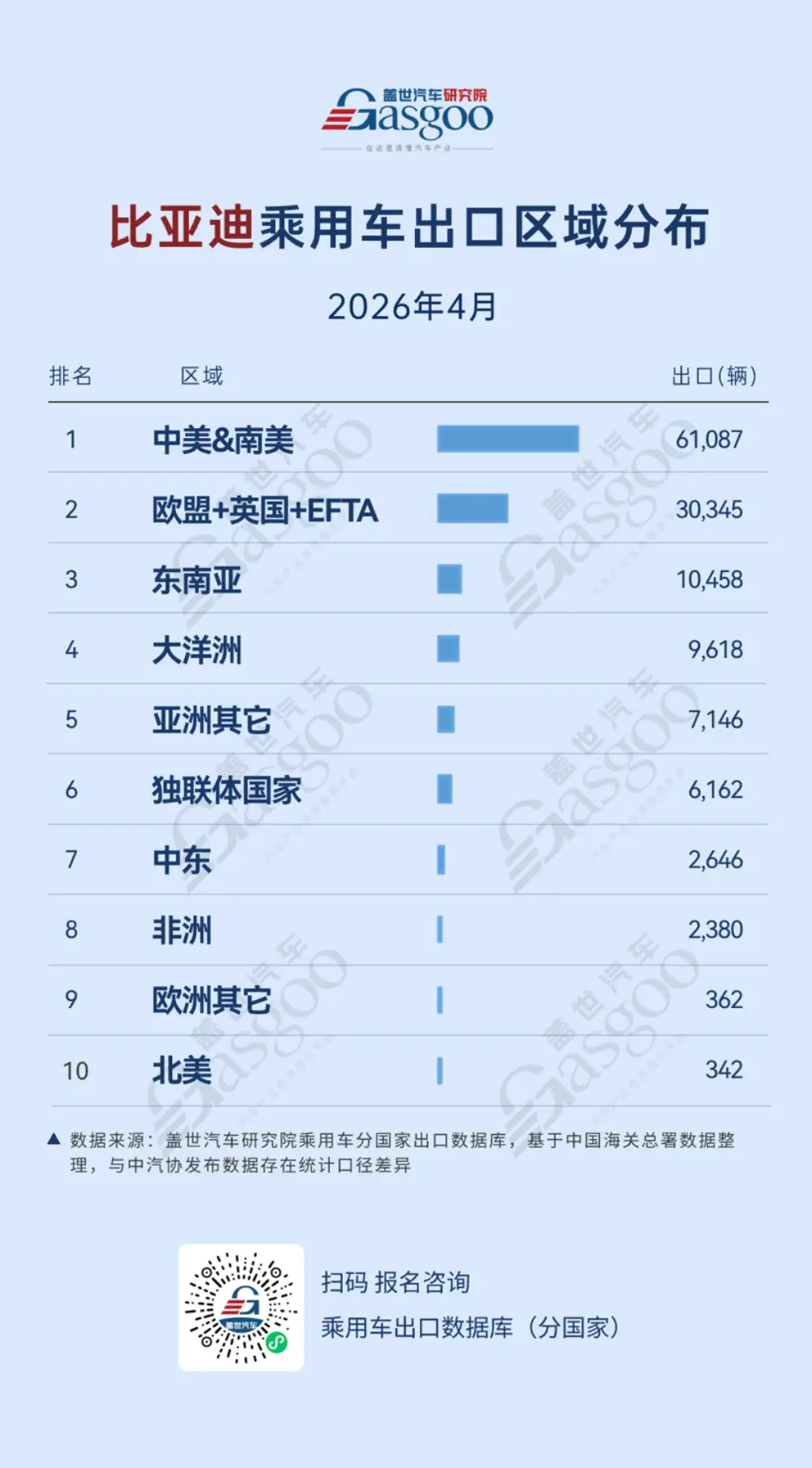
As the global automotive landscape undergoes its most radical transformation in a century, the pace of Chinese automaker global expansion continues to outpace Western market forecasts. Fresh data from the Gasgoo Research Institute reveals a critical strategic shift: China's leading independent OEMs—BYD, Geely, and Chery—are no longer exporting monolithically. Instead, they have pivoted to highly specialized, regional hedging strategies to bypass rising geopolitical barriers and capture unique market segments.
The Three-Way Split: Export Footprints Demystified
The latest export database reveals that the 'China Information Gap' is narrowing for those who watch the primary data. Rather than competing head-to-head in every territory, China's big three independent auto groups are utilizing localized advantages to entrench themselves globally, bypassing traditional Western media channels to establish direct-to-market pipelines.
1. BYD's Dual-Core Volume Engine
BYD's approach is highly concentrated and volume-driven. The OEM has built its massive export foundation on two main pillars: Central & South America, and the high-value EU + UK + EFTA region. By dominating the Latin American market (particularly with its plug-in hybrid and battery-electric models like the Dolphin and Song series), BYD secures a high-volume base. Simultaneously, its premium push into Europe targets tech-forward consumers looking for advanced ADAS and LFP battery capabilities, preparing a soft landing for its upcoming localized factories in Hungary and Brazil.
2. Geely's Resilient Tri-Polar Layout
Unlike BYD's concentrated strategy, Geely utilizes a balanced, tri-polar risk-mitigation framework. Geely's exports are distributed relatively evenly across three key pillars: the CIS (Commonwealth of Independent States) region, Central & South America, and mature European markets. This diversification shields Geely from unilateral tariff actions (such as the EU's anti-subsidy duties) and ensures steady cash flow from less-regulated regions while maintaining a technological foothold in Western Europe through its multi-brand ecosystem (Lynk & Co, Zeekr, and Volvo synergies).
3. Chery's EU-First Blitzkrieg
Chery remains an export titan but with a distinct twist in 2026: it is aggressively leading the charge in the highly competitive EU, UK, and EFTA corridor. Chery has systematically adapted its ICE, PHEV, and EV portfolio to meet stringent European safety and environmental standards, proving that Chinese legacy platforms can successfully scale the regulatory walls of Western Europe.
Strategic Breakdown: OEM Export Profiles
The following structured data highlights how these three OEMs have divided their strategic priorities globally:
| OEM | Primary Strategic Region | Core Edge & Product Focus | Geopolitical Risk Profile |
|---|---|---|---|
| BYD | LATAM & EU/UK (Dual-Core) | Vertical integration, LFP battery cost leadership, PHEVs & BEVs. | Moderate (Highly exposed to European policy shifts, offset by LATAM dominance). |
| Geely | CIS, LATAM, & Western Europe (Tri-Polar) | Multi-brand synergy, premium EV technology (Zeekr), global compliance. | Low (Highly diversified; policy shifts in one region can be easily absorbed). |
| Chery | EU + UK + EFTA & Broad Emerging Markets | Rapid localization, versatile ICE/PHEV/EV drivetrains, strong dealer networks. | High (Directly contesting Western OEMs on their home turf with premium-market ambitions). |
Geopolitical Hedges: How Chinese OEMs Bypass Western Tariffs
For Western auto executives and investment portfolio managers, this multi-faceted export data signals a profound reality: 'China-speed' expansion is adaptive, not static. When the US and EU raised tariff barriers, Chinese OEMs did not retreat; they restructured their logistical networks.
BYD's massive investments in manufacturing hubs in Brazil and Hungary, coupled with Geely's existing European footprints through Volvo and Polestar, highlight that these companies are transitionally shifting from 'exporting units' to 'exporting localized industrial capacity'. This evolution guarantees that Chinese technological innovations in ADAS, connectivity, and power battery chemistry will continue to penetrate the global market, regardless of local import duties.
The Investor Outlook
For global asset managers aiming to capture alpha in the automotive transition, keeping a close eye on these divergent models is vital. Chery's European focus represents high-beta growth, while Geely offers a more defensive, diversified play. BYD remains the volume-driven juggernaut whose vertical integration continues to set the global baseline for EV viability. Navigating this space requires moving past superficial headlines to track where these vehicles are actually landing, and how localized production will permanently alter the competitive landscape.