As the mid-year promotional rush of June subsides, the world's largest automotive market is experiencing its traditional mid-summer cooling. However, beneath the surface of this seasonal sales dip lies a profound structural shift: China EV market penetration is projected to reach an unprecedented historic high in July, according to the latest forecast from the China Passenger Car Association (CPCA) branch.
The July Contraction: Why Volume is Down but Share is Up
Historically, July represents a cyclical low point for Chinese automotive retail. Following the aggressive sales campaigns and regional subsidies deployed by manufacturers to meet Q2 and half-year targets in June, consumer demand naturally moderates. Elevated summer temperatures also contribute to lower dealership foot traffic across major tier-cities.
Yet, the resilience of the New Energy Vehicle (NEV) sector remains the defining story of this period. While total passenger car retail volumes are expected to decline month-over-month, the proportion of battery electric vehicles (BEVs) and plug-in hybrid electric vehicles (PHEVs) is scaling new heights. This divergence emphasizes that the transition is no longer merely subsidy-driven but represents a fundamental preference shift among Chinese consumers.
Key July Projections: By the Numbers
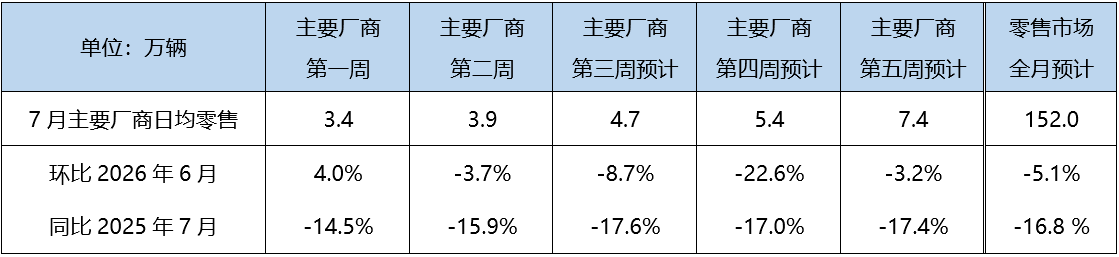
To understand the depth of this transition, we can analyze the projected retail figures compiled by the CPCA's analytical division:
| Metric | Estimated July Volume / Rate | Month-over-Month Trend | Year-over-Year Trend |
|---|---|---|---|
| Narrow Passenger Vehicles Retail | ~1.50 Million Units | Decline (Seasonal Pullback) | Stabilizing |
| NEV Retail Volume | ~720,000 Units | Mild Seasonal Dip | Double-digit Growth |
| China EV Market Penetration | >48% - 50%+ (Projected) | Increase | Historic High |
Strategic Implications for Global OEMs
For Western legacy automakers operating through long-standing joint ventures in China, this accelerated China EV market penetration serves as an urgent call for trade adaptability and strategic localization. Historically reliant on traditional internal combustion engine (ICE) portfolios, these global manufacturers are now actively adjusting their playbooks to maintain market relevance.
Rather than retreating, leading international brands are embracing cross-border collaboration and strategic sourcing alliances to close the technology gap. By integrating advanced Chinese battery technologies, localized ADAS software, and leveraging global supplier expertise, joint ventures are positioning themselves to deliver highly competitive, localized electric vehicles tailored to Chinese consumer expectations.
Conclusion: A Structural Point of No Return
The projected record-high in market penetration during a seasonal slump underscores a critical reality: the electrification of the Chinese domestic market has achieved self-sustaining velocity. For global automotive analysts and investors tracking the EV value chain, this development confirms that the structural decline of ICE dominance is occurring faster than mid-term planning cycles initially anticipated, driving the need for rapid, proactive technological integration.