China's September Export Blitz: A 73.7 Percent Surge That Demands Scrutiny
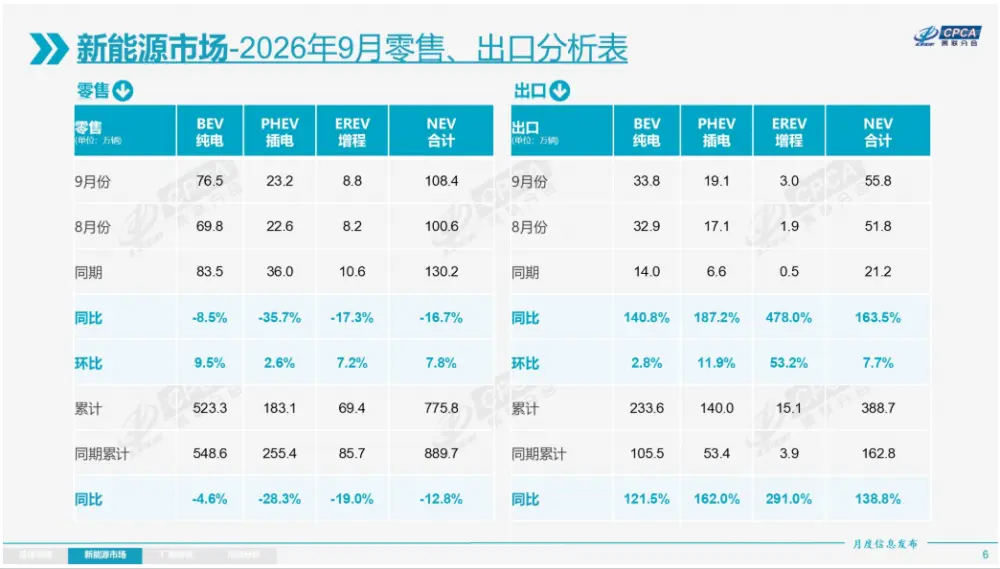
In September 2026, China's passenger vehicle exports—including completely built units and CKD kits—hit 917,000 units, a staggering 73.7% year-on-year leap. The China Passenger Car Association (CPCA) attributes this surge largely to new energy vehicles (NEVs). On the surface, this looks like an unstoppable Chinese export machine. But as any seasoned supply chain strategist knows, headline volume growth in China's auto sector is rarely a simple story of success. It is a tale of overcapacity, price wars, and a desperate search for external markets to absorb domestic excess.
This export explosion comes amid escalating trade tensions. The European Union has imposed countervailing duties on Chinese EVs, the United States maintains its Section 301 tariffs, and emerging markets from Brazil to Turkey are erecting their own barriers. Yet Chinese OEMs keep shipping. The question is not whether they can sell abroad—it's whether they can do so profitably, and for how long.
Inside the Export Engine: NEVs, Battery Chemistry, and Cost Structures
The CPCA report does not break down export volumes by powertrain, but industry data from Gasgoo and other sources indicate that NEVs—comprising battery electric vehicles (BEVs) and plug-in hybrids (PHEVs)—accounted for roughly 45-50% of September exports, up from around 35% a year earlier. This shift is not accidental. Chinese OEMs like BYD, SAIC, and Tesla's Shanghai plant are pushing exports to offset slowing domestic NEV sales growth, which fell to single digits in 2025 after years of triple-digit expansion.
Battery: The LFP Advantage and Its Limits
Most Chinese NEV exports rely on lithium iron phosphate (LFP) batteries. LFP offers lower cost—approximately $60-$70 per kWh at the cell level versus $90-$110 for high-nickel ternary (NCM) cells—but lower energy density (around 160-180 Wh/kg vs. 250-300 Wh/kg for NCM). This makes them ideal for mass-market city cars and mid-range sedans, but less competitive for premium, long-range, or cold-weather markets. BYD's Blade LFP battery, for instance, delivers a claimed range of 400-500 km in models like the Atto 3, but real-world highway range drops to 300-350 km, and cold-weather performance in Nordic markets remains a question mark.
For exports to developed markets like Europe, Chinese OEMs are increasingly forced to use NCM cells or source non-Chinese components to comply with local content rules. This erodes their cost advantage. The LFP trap—dominance in low-cost chemistry but weakness in high-performance—could cap export margins in premium segments.
Charging Infrastructure: The 800V Race
Chinese OEMs are rapidly adopting 800V architectures to enable faster charging. Models like the BYD Seal, XPeng G6, and Zeekr 001 offer peak charging rates of 150-250 kW, translating to 10-80% charge in 18-30 minutes. This is competitive with Western rivals like the Hyundai Ioniq 5 (18 minutes) and Tesla Model Y (27 minutes). However, these rates depend on high-power DC chargers, which are far from ubiquitous even in China, let alone in export markets. In Europe, the average charging station delivers 50-150 kW, limiting real-world charging speeds.
| Model | Battery Chemistry | Capacity (kWh) | Peak Charging (kW) | 10-80% Charge Time | Starting Price (USD) |
|---|---|---|---|---|---|
| BYD Atto 3 (Export) | LFP | 60.5 | 88 | ~45 min | ~$35,000 |
| XPeng G6 | LFP/NCM | 66-87 | 280 | ~20 min | ~$40,000 |
| Tesla Model Y (Shanghai) | LFP/NCM | 60-82 | 250 | ~27 min | ~$45,000 |
| Hyundai Ioniq 5 (Global) | NCM | 58-77 | 350 | ~18 min | ~$45,000 |
| Volkswagen ID.4 (EU) | NCM | 52-77 | 135 | ~30 min | ~$45,000 |
Note: Specifications are manufacturer claims and may vary by market. Charging times assume optimal conditions.
Supply Chain Realities: Who Actually Profits from the Export Boom?
The export surge is not a uniform win for all Chinese OEMs. It is concentrated among a few large players with established global distribution and logistics. BYD, SAIC (including MG), and Tesla's Shanghai plant account for over 60% of NEV exports. Tier-1 suppliers like CATL, Gotion High-Tech, and Eve Energy supply batteries, while companies like Huayu Automotive and Ningbo Joyson provide components. But margins are razor-thin.
Industry estimates suggest that for a mass-market LFP EV exported to Europe, the bill of materials (BOM) cost is approximately $18,000-$22,000, with battery accounting for 30-40%. Add logistics, tariffs (10-25% in the EU), and dealer margins, and the total landed cost approaches $30,000-$35,000. At a retail price of $35,000-$40,000, net margins are often in the low single digits or even negative when domestic price wars are factored in. The domestic price war in China has seen average EV prices fall by 15-20% over the past two years, squeezing profits at home and forcing OEMs to seek higher-margin export markets.
However, export margins are also under pressure. In Europe, Chinese EVs sold for an average of €30,000-€40,000 in 2025, but EU tariffs have added €3,000-€6,000 per vehicle, forcing OEMs to either absorb the cost or raise prices. In Southeast Asia and Latin America, Chinese EVs compete fiercely with Japanese and Korean incumbents, often on price. The profitability paradox is stark: volumes are rising, but profits are not keeping pace.
Competitive Impact: Who Gains, Who Loses, and Who Is Unscathed
The competitive landscape is shifting rapidly. Chinese OEMs are gaining share in Southeast Asia, Latin America, and the Middle East, where they face less regulatory resistance and where affordability is key. In Europe, they are making inroads but at a slower pace due to tariffs and brand perception. In the US, they are effectively locked out by 100% tariffs on Chinese-made EVs.
Western OEMs like Volkswagen, Stellantis, and Renault are feeling the heat in their home markets and in China, where their market share has plummeted. Volkswagen's China sales fell 15% in 2025, and its EV sales are a fraction of BYD's. However, these OEMs are not standing still. They are forming partnerships with Chinese tech companies (e.g., Volkswagen with Horizon Robotics, Stellantis with Leapmotor) and localizing production to reduce costs. But these partnerships risk creating dependency on Chinese technology.
Chinese competitors are also feeling the squeeze. The domestic price war has left many smaller players struggling. NIO, XPeng, and Li Auto have all reported losses, and consolidation is inevitable. The export boom benefits the strongest players—BYD, Geely, and SAIC—while weaker ones lack the scale and capital to expand abroad.
Unaffected players include Hyundai-Kia, which has deliberately reduced its exposure to the Chinese domestic market and focused on North America, Europe, and India. Its E-GMP platform and 800V architecture are competitive, and its margins are healthier than most. Similarly, Toyota and Honda have been slow to embrace EVs but are now accelerating, leveraging their global manufacturing footprint and brand loyalty.
The Reality Check: What the Export Numbers Don't Tell You
The headline 73.7% export growth is impressive, but it masks several inconvenient truths. First, the base effect: September 2025 exports were relatively low due to COVID-related disruptions and chip shortages. Second, a significant portion of these exports are from Tesla's Shanghai plant and other foreign brands, not just Chinese OEMs. Third, many exports are destined for markets with weak regulatory oversight, where safety and environmental standards are lower. Fourth, and most critically, the profitability of these exports is questionable.
The domestic price war has conditioned Chinese OEMs to operate on thin margins, but export markets require investments in distribution,售后服务, and brand building. These costs are substantial and often underestimated. Moreover, the battery chemistry and charging infrastructure limitations mean that Chinese EVs are not yet competitive in all segments. The LFP trap persists: while LFP is cheap, it is not ideal for premium or cold-weather markets. Solid-state batteries, which could leapfrog this limitation, are still years away from mass production.
Furthermore, the assumption that China can simply shift its overcapacity abroad ignores the reality of rising protectionism. The EU is actively investigating Chinese EVs for subsidy violations, and other countries are following suit. The risk of a full-blown trade war is real, and it could severely disrupt Chinese export plans.
Regulatory and Geopolitical Headwinds: A Shrinking Window
The regulatory environment is becoming increasingly hostile to Chinese EV exports. The EU's countervailing duties, ranging from 10% to 25% on top of the standard 10% tariff, are already in effect. The US has imposed a 100% tariff, effectively closing its market. Other countries, including Turkey, Brazil, and India, are considering or have implemented tariffs to protect local industries. These measures are not just about trade balances; they are about strategic autonomy and national security.
Chinese OEMs are responding with strategic localization. BYD is building a plant in Hungary, and other OEMs are expanding production in Thailand, Indonesia, and Brazil. This approach can mitigate tariff risks but requires significant capital expenditure and time. In the meantime, exports from China face an uncertain future. The window for tariff-free or low-tariff exports is closing, and OEMs must adapt quickly.
Geopolitically, the EV supply chain is becoming a battleground. The US Inflation Reduction Act (IRA) and its foreign entity of concern (FEOC) rules restrict subsidies for vehicles containing Chinese battery components. This has forced global OEMs to diversify their supply chains, benefiting non-Chinese battery makers like LG Energy Solution, Samsung SDI, and SK On. Chinese battery makers are responding by licensing technology and building plants overseas, but they face scrutiny and restrictions.
Strategic Outlook: Three Scenarios for China's EV Export Machine
Bull Case
Chinese OEMs successfully localize production in key markets, bypassing tariffs and building brand loyalty. They continue to improve battery technology, closing the gap with NCM and solid-state rivals. Export volumes grow at 20-30% annually, and margins improve as scale and local sourcing reduce costs. Western OEMs fail to catch up, and Chinese brands capture 20-30% of the global EV market by 2030.
Base Case
Export growth slows to 10-15% annually as tariffs and regulatory hurdles bite. Chinese OEMs gain share in emerging markets but struggle in Europe and North America. Profit margins remain thin, and consolidation among Chinese OEMs accelerates. Western OEMs improve their cost competitiveness through partnerships and local sourcing, but Chinese brands remain a potent threat in the mass-market segment.
Bear Case
A full-blown trade war erupts, with the EU and other markets imposing prohibitive tariffs. Chinese exports stall, leading to massive overcapacity at home and a wave of bankruptcies. The Chinese government is forced to intervene with subsidies, further distorting the market. Western OEMs regain some share but at a high cost to consumers and innovation.
- For investors: Scrutinize the profitability of Chinese EV exports, not just volume. Look for companies with strong balance sheets and local production strategies.
- For Western OEMs: Accelerate cost reduction and technology development. Partnerships with Chinese tech firms can help, but avoid over-dependence.
- For policymakers: Balance protectionism with the need for affordable EVs. Overly restrictive tariffs may slow the transition and hurt consumers.
- For suppliers: Diversify geographically and invest in next-generation battery chemistries beyond LFP.
- For all stakeholders: Monitor regulatory developments closely. The window for strategic adaptation is narrowing.