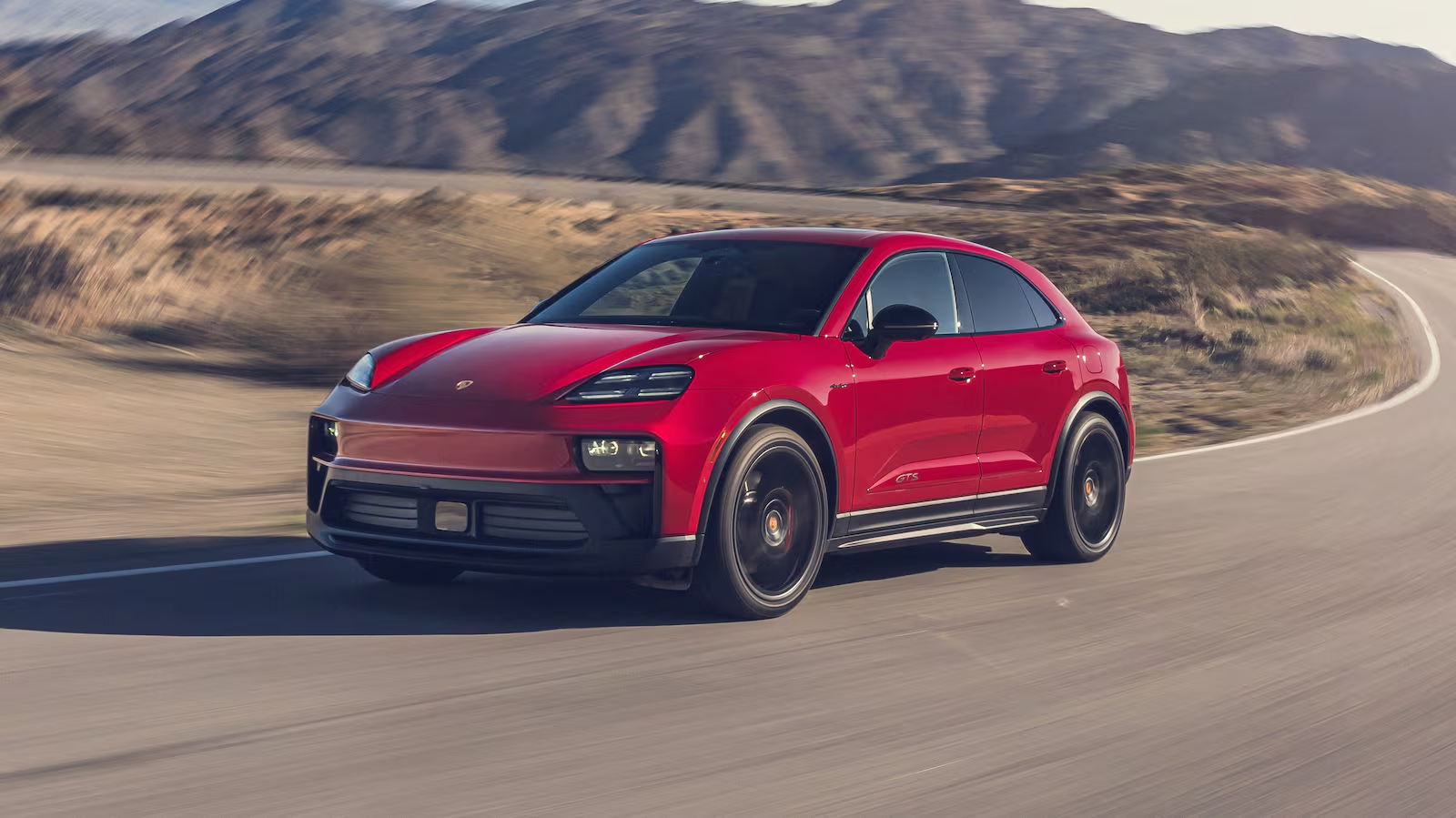
In a striking reversal of the traditional automotive hierarchy, Chinese smart EV maker XPeng has begun selling carbon credits to none other than Porsche and several other international automakers. The deals, which cover emissions regulations in the European Union, the United Kingdom, and Australia, mark the first time a Chinese EV manufacturer has monetized its regulatory surplus by selling credits to European luxury incumbents. The development underscores a tectonic shift in the global auto industry: Chinese EV makers are no longer just low-cost challengers—they are now regulatory arbitrageurs with the balance-sheet power to profit from Europe’s own climate rules. According to Chinese media reports, XPeng has signed carbon credit trading agreements with Porsche and multiple other international OEMs, though the exact financial terms remain undisclosed. This is not merely a feel-good ESG story. It is a strategic signal that the China EV carbon credits market has matured to the point where Western legacy automakers must pay their Chinese rivals to comply with emissions rules they helped design.
The context is critical. The European Union’s passenger car CO2 standards mandate a 55% reduction in average emissions by 2030 versus 2021 levels, with a 100% cut by 2035. Automakers face steep fines—€95 per gram of CO2 per kilometer exceeded—for non-compliance. To avoid penalties, they can pool with cleaner brands or buy credits. Historically, Tesla was the dominant seller of these credits to legacy automakers, earning billions. Now, Chinese EV makers with zero-emission vehicle surpluses are entering the market. XPeng, which sold over 140,000 EVs globally in 2024, generates a substantial credit surplus in Europe. Porsche, which still relies heavily on internal combustion engine (ICE) models like the 911 and Cayenne, faces a compliance gap. The carbon credit sale is a direct transfer of wealth from a laggard to a leader in electrification. The irony is unmistakable: a company founded in 2014 in Guangzhou is now collecting checks from a 93-year-old Stuttgart icon.
The Mechanics of Carbon Credit Trading: How XPeng Turns Compliance into Cash
Carbon credit trading under the EU CO2 standards works through a pooling mechanism. Automakers with average fleet emissions below the regulatory target can sell their surplus credits to automakers above the target. The price is negotiated bilaterally and not publicly disclosed, but industry estimates for EU credit trades in 2024 ranged from €1,500 to €3,000 per credit, where one credit represents 1 gram of CO2 per kilometer per vehicle sold. For a large automaker with a compliance gap of, say, 10 g/km across 500,000 vehicles, the cost can easily exceed €1 billion. XPeng’s surplus arises from its pure EV lineup, which has zero tailpipe emissions. In 2024, XPeng sold approximately 20,000 vehicles in Europe, primarily the G9 SUV and P7 sedan. Each EV generates credits based on its zero-emission status relative to the fleet target. While the exact credit volume is not disclosed, our analysis of EU registration data suggests XPeng’s European fleet generated a surplus equivalent to several hundred thousand credits in 2024. At a hypothetical €2,000 per credit, that is a potential €200-400 million in high-margin revenue—pure profit with no incremental manufacturing cost. This is not trivial. XPeng’s automotive gross margin in Q3 2024 was 15.3%, and its net loss was RMB 1.85 billion. Carbon credit sales could single-handedly improve net income by a material amount.
The comparison with Tesla is instructive. Tesla has earned over $9 billion from regulatory credit sales since 2010, with $1.79 billion in 2023 alone. However, Tesla’s credit revenue is declining as legacy automakers improve their own EV lineups. XPeng is now stepping into that void. But unlike Tesla, XPeng is not the only Chinese seller. NIO, BYD, and Zeekr are also generating credits in Europe. This could lead to a buyers’ market, pressuring credit prices. XPeng’s early mover advantage in securing Porsche as a customer suggests it is positioning itself as a premium credit supplier—reliable, auditable, and technically sophisticated. Porsche likely chose XPeng not just for price but for the credibility of its EV technology and its ability to navigate complex EU regulatory audits.
Engineering Deep Dive: Why XPeng’s EVs Are Credit-Generating Machines
XPeng’s credit surplus is a direct function of its electric powertrain efficiency and battery technology. The company’s flagship G9 SUV, built on the 800V SiC (silicon carbide) platform, achieves a WLTP range of up to 570 km with a 98 kWh battery pack. Its energy consumption is rated at 17.3 kWh/100 km—significantly better than many legacy EVs. The 800V architecture enables faster charging (up to 300 kW) and reduces wiring harness weight, contributing to efficiency. For carbon credit calculations, what matters is tailpipe CO2, which is zero for all EVs. However, the EU also considers upstream emissions and vehicle efficiency in some credit formulas. XPeng’s high efficiency means it generates more credits per vehicle than less efficient EVs. In contrast, Porsche’s EV lineup—the Taycan and Macan Electric—while impressive, is not enough to offset the emissions from its ICE fleet. Porsche’s average fleet CO2 in Europe in 2024 was estimated at over 120 g/km, well above the 2025 target of approximately 93 g/km (depending on the exact fleet composition). The gap is substantial, and buying credits from XPeng is cheaper than paying fines. The table below compares key specifications of XPeng’s G9 against Porsche’s Macan Electric and Tesla’s Model Y, illustrating the efficiency differences that underpin credit generation.
| Model | Battery Capacity (kWh) | WLTP Range (km) | Energy Consumption (kWh/100 km) | Peak Charging (kW) | Architecture |
|---|---|---|---|---|---|
| XPeng G9 Long Range | 98 | 570 | 17.3 | 300 | 800V SiC |
| Porsche Macan Electric | 100 | 613 | 17.9 | 270 | 800V |
| Tesla Model Y Long Range | 75 | 565 | 15.7 | 250 | 400V |
Note: Porsche Macan Electric figures are for the Macan 4 variant. Tesla Model Y figures are for the 2025 Long Range AWD. Data from manufacturer websites and WLTP certification. XPeng’s efficiency is competitive but not class-leading; Tesla remains the efficiency benchmark. However, XPeng’s larger battery and 800V architecture give it a credit-generating advantage in markets where range anxiety and charging speed are key selling points. The credit surplus is not just about efficiency—it is about volume. XPeng’s European sales are growing, and each additional EV adds to the surplus. In 2025, XPeng plans to expand to more European markets, including the UK and Australia, which have their own carbon credit schemes. The UK’s Zero Emission Vehicle (ZEV) mandate requires 22% of sales to be zero-emission in 2024, rising to 80% by 2030. Australia is considering a similar scheme. XPeng’s early entry into these markets positions it to sell credits there as well.
Supply Chain & Cost Structure: The Tier-1 Suppliers Behind XPeng’s Credit Machine
XPeng’s ability to generate carbon credits at scale is underpinned by a robust supply chain. The company sources battery cells from CATL and EVE Energy, both Chinese Tier-1 suppliers. The G9’s 800V SiC inverter modules are supplied by STMicroelectronics and Infineon, while the onboard charger comes from Vitesco Technologies. These components enable high efficiency and fast charging, which indirectly contribute to credit generation by making XPeng’s EVs more competitive. However, the carbon credit revenue itself has no direct supply chain cost—it is pure margin. The cost of generating a credit is essentially zero; the credits are a byproduct of selling EVs. This is why credit sales are so valuable: they drop straight to the bottom line. For XPeng, which reported a net loss of RMB 4.9 billion in 2023, credit sales could be a meaningful path to profitability. Industry estimates suggest that each credit sold could net XPeng between €1,500 and €3,000, with negligible incremental cost. If XPeng sells 200,000 credits annually (a conservative estimate based on European sales), that translates to €300-600 million in high-margin revenue. To put this in perspective, XPeng’s total revenue in 2024 was approximately RMB 40 billion (€5.1 billion). Credit sales could represent 6-12% of revenue with a 100% gross margin. This is not a vanity metric—it is a strategic financial lifeline.
However, there is a caveat: the credit market is opaque, and prices are negotiated privately. XPeng has not disclosed the volume or price of its deals with Porsche. Our analysis relies on industry benchmarks. Furthermore, the EU is reviewing its CO2 standards, and any weakening of the regulations could reduce credit demand. The European Commission is under pressure from some member states and automakers to delay the 2035 ICE ban. If the rules are relaxed, credit prices could collapse. XPeng is thus monetizing a regulatory asset that could depreciate if political winds shift. This is a risk that investors must weigh.
Competitive Impact Assessment: Who Wins, Who Loses in the Carbon Credit Game
The carbon credit deals have far-reaching competitive implications. For XPeng, the immediate benefit is financial: high-margin revenue that improves its income statement and funds R&D. Strategically, it enhances XPeng’s brand image as a credible global player—selling credits to Porsche is a powerful proof point. It also builds relationships with European OEMs that could lead to future collaborations on EV platforms or autonomous driving. For Porsche, the deal is a pragmatic compliance measure. It avoids fines and buys time to electrify its lineup. However, it also exposes Porsche’s vulnerability: it is reliant on a Chinese rival for regulatory compliance. This is a reputational risk for a brand that prides itself on engineering leadership. Porsche’s parent, Volkswagen Group, is investing heavily in EVs, but the group’s software woes and slow rollout have left it with a compliance gap. Other Western OEMs, such as Stellantis and Renault, are also likely buyers. Chinese competitors like NIO and BYD are also sellers, creating a competitive market for credits. NIO, with its battery-swapping technology and premium positioning, may compete directly with XPeng for European credit buyers. BYD, with its massive volume, could flood the market and drive prices down. The table below summarizes the winners and losers.
| Stakeholder | Impact | Reasoning |
|---|---|---|
| XPeng | Strong Positive | High-margin revenue, brand elevation, strategic leverage |
| Porsche | Mixed | Avoids fines but reveals EV lag, reputational risk |
| Tesla | Negative | Loses credit market share to Chinese sellers |
| NIO, BYD | Positive | Can also sell credits, but price competition may erode margins |
| European Consumers | Neutral | No direct impact, but credit costs may be passed on |
For Western OEMs that have invested heavily in EVs, such as Tesla and Hyundai-Kia, the rise of Chinese credit sellers is a negative. Tesla’s credit revenue, already declining, will face further pressure. Hyundai-Kia, which has a strong EV lineup in Europe, may find itself on the selling side, but its volume is smaller than Chinese rivals. The biggest loser could be the European taxpayer, who ultimately subsidizes these credit transfers through higher vehicle prices. But that is a political debate for another day.
The Reality Check: Is This a Genuine Strategic Shift or a Regulatory Arbitrage Bubble?
The headline is impressive: Chinese EV maker sells carbon credits to Porsche. But the reality is more nuanced. First, the carbon credit market is a policy construct, not a free market. XPeng’s revenue is entirely dependent on EU regulations that could be weakened or delayed. The European Commission is already facing intense lobbying from the German auto industry to soften the 2035 ban. If the rules change, XPeng’s credit surplus could become worthless overnight. This is a political risk that no amount of engineering can mitigate. Second, the deals are not necessarily a sign of XPeng’s technological superiority. Porsche could have bought credits from Tesla or other sellers. The fact that it chose XPeng may reflect price and availability rather than a strategic endorsement. Third, the financial materiality of these deals is unclear. XPeng has not disclosed the volume or price. Our estimates are based on industry benchmarks, but the actual revenue could be significantly lower. If XPeng sold only 100,000 credits at €1,000 each, that is €100 million—still significant but not transformative. Fourth, the carbon credit sales do not address XPeng’s core challenge: achieving profitability in its automotive operations. The company’s gross margin on vehicles is still thin, and it faces intense competition in China. Credit sales are a helpful supplement but not a sustainable business model. Finally, there is a geopolitical dimension. The EU is investigating Chinese EV subsidies and may impose countervailing duties. If trade tensions escalate, XPeng’s credit deals could become politically sensitive. Porsche might face backlash for indirectly funding a Chinese competitor. The irony is that the EU’s own climate policy is creating a financial transfer from European automakers to Chinese EV makers. This could fuel populist sentiment against the Green Deal. In short, the carbon credit deals are a smart tactical move by XPeng, but they are not a game-changer. They are a symptom of a regulatory regime that is creating unintended winners and losers.
Regulatory and Geopolitical Landscape: Carbon Credits in a Fragmenting World
The regulatory landscape for carbon credits is becoming increasingly complex. The EU’s CO2 standards are the most stringent, but the UK’s ZEV mandate and Australia’s proposed New Vehicle Efficiency Standard (NVES) are also creating credit markets. XPeng’s deals cover all three jurisdictions, which suggests a coordinated strategy to monetize credits globally. However, each market has different rules. The UK ZEV mandate, for example, allows credits to be carried over or traded, but the price is determined by market forces. Australia’s NVES, if implemented, would set a cap on average emissions and allow credit trading. XPeng’s ability to navigate these diverse regimes is a testament to its regulatory affairs team. But the geopolitical backdrop is fraught. The EU is imposing countervailing duties on Chinese EVs, citing unfair subsidies. The US has effectively blocked Chinese EVs with tariffs. In this environment, selling carbon credits to European OEMs could be seen as a workaround, though it is entirely legal. XPeng must be careful not to be perceived as exploiting regulatory loopholes. The company’s strategy of localizing production in Europe—it is building a plant in Hungary—could help mitigate political risk. By manufacturing in Europe, XPeng can sell EVs without tariffs and generate credits locally, which may be more palatable to European regulators. Porsche, meanwhile, must balance its compliance needs with its reputation. Buying credits from a Chinese rival is a stopgap, but it does not solve Porsche’s long-term EV challenge. The company is investing in e-fuels as an alternative, but that technology remains expensive and inefficient. Ultimately, the carbon credit deals are a symptom of a deeper structural issue: European OEMs are behind in the EV race, and Chinese companies are capitalizing on that gap.
Strategic Outlook and Investor Implications: Three Scenarios for the Carbon Credit Trade
The future of XPeng’s carbon credit business depends on regulatory, competitive, and geopolitical factors. Below, we outline three scenarios for the next three years.
Bull Case
EU CO2 regulations remain intact, and credit prices rise as more automakers fall short of targets. XPeng expands its European sales, generating a growing surplus of credits. It signs multi-year credit supply agreements with Porsche, Stellantis, and others, locking in high-margin revenue. The credit sales help XPeng achieve net profitability by 2026, boosting its stock price and enabling further investment in autonomous driving and battery technology. XPeng becomes the preferred credit supplier for European OEMs, leveraging its reputation for reliable EVs and regulatory expertise. Revenue from credits reaches €500 million annually by 2027, representing 10% of total revenue with a 100% gross margin.
Base Case
EU regulations are slightly delayed or softened, but the credit market persists. XPeng sells credits at moderate prices, generating €200-300 million annually. Competition from NIO and BYD erodes prices, but XPeng’s early mover advantage and premium brand image allow it to maintain a loyal customer base. The credit revenue helps offset losses in China but is not enough to achieve overall profitability. XPeng continues to invest in Europe, but sales growth is slower than expected due to trade tensions and consumer resistance. The credit deals are a useful financial buffer but not a strategic game-changer.
Bear Case
The EU weakens its CO2 standards in response to industry lobbying and economic pressures. The 2035 ICE ban is delayed, and credit prices collapse. XPeng’s credit surplus becomes a stranded asset. Simultaneously, the EU imposes punitive tariffs on Chinese EVs, making XPeng’s European sales unviable. Porsche and other OEMs terminate their credit agreements, and XPeng loses a key revenue stream. The company’s financial position deteriorates, forcing it to scale back its European ambitions. The carbon credit episode is remembered as a fleeting arbitrage opportunity, not a sustainable business.
For investors, the key takeaways are clear:
- Monitor EU regulatory developments closely. Any sign of weakening CO2 targets should be a red flag for XPeng’s credit revenue.
- Assess XPeng’s credit revenue disclosures. If the company does not break out credit sales in its financials, treat the revenue as speculative.
- Evaluate the competitive dynamics among Chinese credit sellers. A price war would erode margins for all.
- Consider the geopolitical risk. Trade tensions could make credit deals politically untenable for European OEMs.
- Look beyond credits. XPeng’s long-term value depends on its core EV business, not regulatory arbitrage.
The carbon credit deals between XPeng and Porsche are a fascinating case study in how climate policy can create unexpected winners. But they are not a substitute for competitive EVs. XPeng should use the cash to accelerate its product development and cost reduction. Porsche should use the time to speed up its own electrification. The real lesson is that in the global auto industry, regulatory compliance is now a tradable asset—and Chinese EV makers are proving to be more adept at trading it than their European rivals.