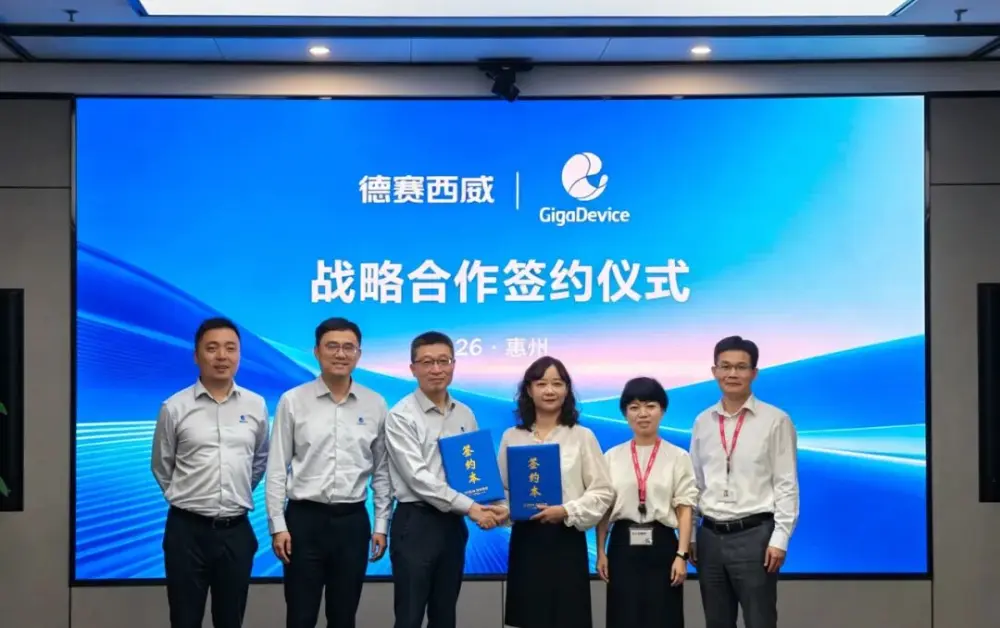
The geopolitical race to secure semiconductor supply chains has entered a critical new phase. While Western media remains hyper-focused on high-end GPU restrictions, a massive structural shift is occurring quietly at the foundation of the automotive supply chain. The strategic alliance between GigaDevice (兆易创新) and Desay SV (德赛西威) marks a watershed moment in China automotive chip localization, signaling a accelerated decoupling from Western microcontrollers and memory architectures.
The Strategic Playmakers: GigaDevice Meets Desay SV
To understand the weight of this partnership, we must look at the profiles of both players. Desay SV is the undisputed titan of intelligent cockpits and ADAS controllers in China, widely known as NVIDIA's primary system integration partner for the high-compute DRIVE Orin platform. GigaDevice is China's premier designer of Flash memory and general-purpose 32-bit MCUs (microcontrollers).
By joining forces, the two companies are addressing a critical vulnerability: the 'long tail' of the automotive supply chain. While autonomous driving systems rely on high-profile SoC processors, thousands of secondary functions—from door locks and power seats to sensor fusion prep—depend entirely on humble automotive-grade MCUs and storage solutions.
Why This Accelerates China Automotive Chip Localization
For years, global Tier-1s and Chinese OEMs relied on European and American legacy semiconductor giants. However, the post-pandemic supply chain crisis, coupled with expanding US technology curbs, transformed semiconductor sourcing from a cost calculation to a geopolitical risk mitigation strategy.
The GigaDevice-Desay SV alliance provides several strategic benefits:
- De-risking the Supply Chain: By certifying and integrating GigaDevice's GD32A series automotive MCUs, Desay SV shields its domestic OEM clients (including BYD, Geely, and Li Auto) from foreign sanction vulnerabilities.
- Synergy of Storage and Compute: GigaDevice's SPI NOR Flash is increasingly paired with Desay's advanced Domain Controllers, offering a fully localized, pre-integrated reference design.
- Cost Optimization at Scale: Domestic Chinese silicon offers competitive pricing, allowing Chinese OEMs to maintain their aggressive pricing strategies in the global EV market.
A Shift in Market Dynamics: Western Giants on Notice
Historically, Western auto industry analysts dismissed domestic Chinese MCUs as low-quality alternatives. That paradigm is officially dead. GigaDevice’s automotive-grade chips comply with rigorous international standards, including AEC-Q100 and ISO 26262 ASIL-B / ASIL-D functional safety standards.
| Product Category | Legacy Global Supplier | Localized Chinese Alternative | Primary EV Application |
|---|---|---|---|
| Automotive MCU | STMicroelectronics (SPC5), NXP (S32K) | GigaDevice (GD32A Series) | Body Control, Cockpit Systems, Lighting |
| Automotive Flash | Infineon (Cypress), Micron | GigaDevice (GD25/GD55 SPI NOR) | ADAS Data Storage, Infotainment Booting |
The Global Investor Takeaway
As an analyst monitoring global supply chains, the signal here is clear: China's 'dual-track' automotive ecosystem is hardening. Chinese OEMs exporting to Europe and Southeast Asia are shifting to highly localized, vertically integrated architectures. Western semiconductor giants who historically derived 20-30% of their revenues from Chinese automotive buyers must prepare for structural market share erosion in the region.
For global investors, tracking partnerships like GigaDevice and Desay SV provides the real alpha in assessing which companies will thrive in the era of supply chain decoupling.