China ADAS Supply Chain Vertical Integration: The New Threat to Western Tier-1 Suppliers
What happens when the world’s largest drone manufacturer teams up with a precision manufacturing giant to build the brains for autonomous vehicles? You get a supply chain earthquake that threatens to upend the $300 billion advanced driver-assistance systems (ADAS) market. The recent China ADAS supply chain vertical integration move between Zhuoyu Technology and Lisheng Technology signals a decisive shift in how Chinese EV makers are decoupling from Western Tier-1 suppliers—and Western investors need to understand the implications immediately.
The Alliance: DJI’s Automotive Ambitions Meet Manufacturing Scale
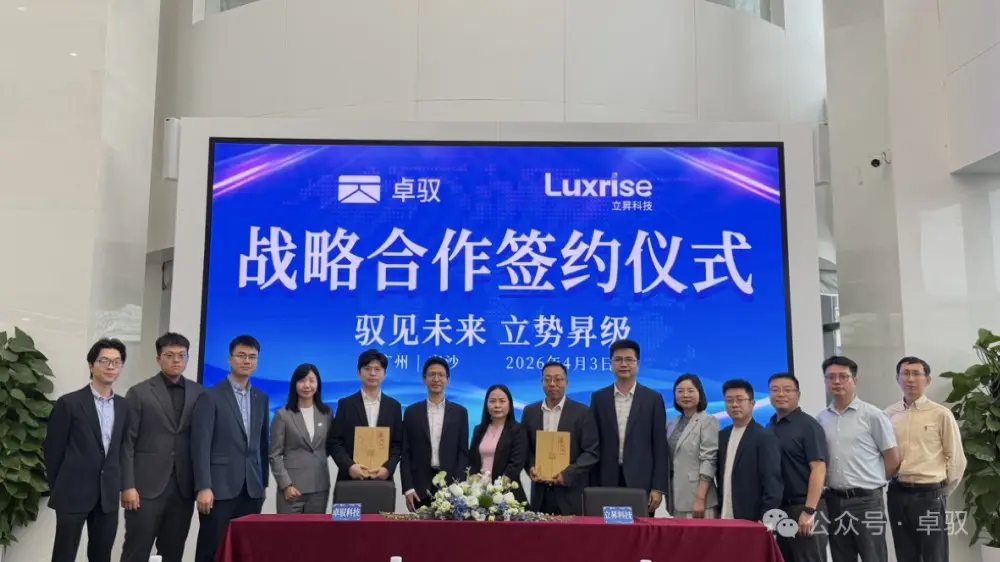
On April 3, 2026, Zhuoyu Technology—spun off from drone giant DJI’s automotive division—signed a strategic partnership with Lisheng Technology, a major Tier-1 manufacturing supplier. This collaboration represents more than a simple vendor agreement; it embodies the aggressive China ADAS supply chain consolidation that is rapidly replacing Bosch, Continental, and Mobileye in the world’s largest auto market.
According to Reuters analysis of Chinese automotive partnerships, Zhuoyu brings its Mobile Intelligence Base—encompassing perception algorithms, middleware, and system integration—while Lisheng contributes precision manufacturing capabilities and established supply chain networks. Together, they form a full-stack domestic alternative to foreign intelligent driving solutions.
Why Vertical Integration Now?
- Cost Pressure: Chinese EV makers demand L2+ capabilities at L1 prices, margins Western suppliers cannot match
- Chip Security: Reducing dependence on Nvidia and Mobileye amid geopolitical tensions
- Speed to Market: Integrated teams can iterate faster than fragmented Western supply chains
Breaking the Silicon Monopoly: The Multi-Chip Strategy
The partnership’s most significant technical aspect involves joint development across multiple vehicle-grade chip platforms simultaneously. Rather than relying on a single supplier like Nvidia Orin or Mobileye EyeQ, the alliance is creating adapter layers for diverse domestic and international chip architectures.
This multi-platform approach, detailed in Bloomberg’s coverage of Chinese autonomous driving strategies, allows automakers to switch silicon suppliers without redesigning their perception stacks—a flexibility critical for supply chain resilience.
Key technical synergies include:
- Joint chip adaptation teams working quarterly on customer projects
- Shared manufacturing quality systems leveraging Lisheng’s scale
- Unified procurement to reduce component costs by an estimated 15-20%
The Global Expansion Threat
Beyond domestic consolidation, this alliance targets export markets with alarming precision for Western incumbents. The partners are establishing localized support capabilities in target regions—effectively replicating the Bosch model but at 40% lower cost structures.
See our analysis on Huawei’s intelligent driving ecosystem to understand how this fits into broader Chinese ADAS export strategies.
For European and American automakers, this creates a dilemma: adopt these cost-effective Chinese solutions and risk political backlash, or stick with expensive Western suppliers and lose price competitiveness in the global EV transition.
Beyond Vehicles: The Embodied Intelligence Pivot
Crucially, the collaboration extends beyond passenger vehicles into embodied intelligence—humanoid robots and industrial automation. By applying their joint automotive-grade perception systems to robotics, Zhuoyu and Lisheng are positioning themselves at the intersection of two transformative technologies.
This diversification matters because automotive ADAS margins are compressing rapidly. As Financial Times reporting on Chinese EV price wars indicates, component suppliers must either achieve massive scale or pivot to adjacent markets.
Investment Implications and Risks
For Western investors, the Zhuoyu-Lisheng alliance represents both opportunity and existential risk:
- Short Qualcomm/Mobileye: Exposure to Chinese OEMs is becoming a liability as domestic substitution accelerates
- Watch Tier-1 Consolidation: Continental and Bosch may need desperate M&A to maintain relevance
- Supply Chain Bifurcation: Expect parallel tech stacks—Chinese standards vs. Western standards
The core challenge for the alliance remains execution: managing multi-platform R&D resource allocation while simultaneously building overseas support infrastructure. However, if successful, this model will likely be replicated by other Chinese ADAS players, accelerating the fragmentation of global automotive electronics.
Recommended Reading
To understand the algorithmic and geopolitical forces driving these partnerships, we recommend AI Superpowers: China, Silicon Valley, and the New World Order by Kai-Fu Lee. Lee’s analysis of China’s data-driven AI advantages provides essential context for why Zhuoyu’s algorithmic capabilities—honed in DJI’s drone empire—translate so effectively to automotive perception systems.
Alternatively, for supply chain-specific analysis, The Power of Mobility: How the Chinese Auto Industry is Transforming Global Competition by Gregor Sebastian offers detailed insights into exactly this type of vertical integration strategy.