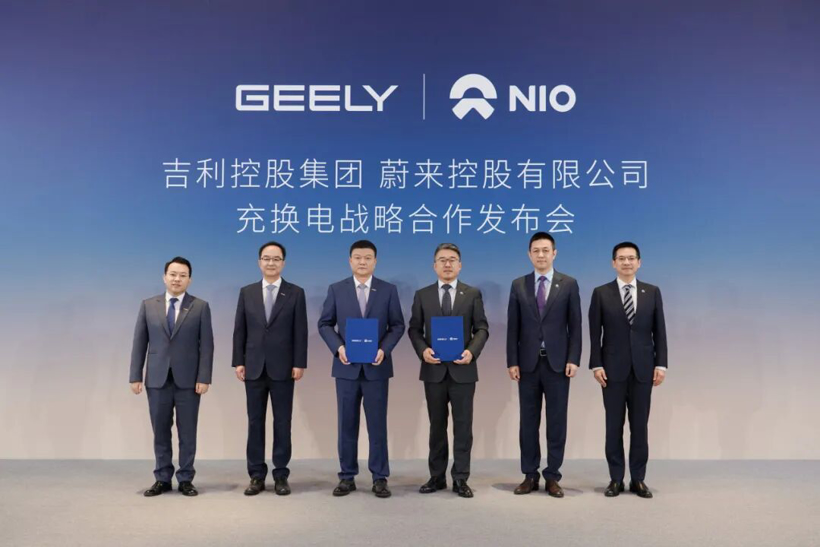
China's industrial planning machine has formally locked in its next technological horizon. In a coordinated multi-ministry directive, seven core government bodies—led by the Ministry of Industry and Information Technology (MIIT)—have promulgated the 15th Five-Year Plan guidelines for advanced battery architectures, formally decreeing that commercial-scale manufacturing of all-solid-state batteries (ASSBs) must be operational by 2030. Simultaneously, capital markets witnessed unprecedented consolidation as Zhejiang Geely Holding Group finalized an equity stake in NIO Power, anchoring a national interoperable charging and battery-swapping consortium alongside expanding commercial alliances between Huawei and Seres.
To Western institutional investors and tier-1 original equipment manufacturers (OEMs), these developments signal a pivotal transition. China is moving from subsidizing pure volumetric delivery records in lithium iron phosphate (LFP) chemistry toward underwriting the next fundamental leap in electrochemistry and battery replenishment infrastructure. Yet, behind the triumphant state communiqués and bilateral corporate signing ceremonies lies a brutal technological and financial reality. The industry faces structural interface degradation, micro-crack proliferation under continuous fast-charging, and capital expenditure barriers that could easily stall the promised solid-state timeline.
The Solid-State Battery Mandate: Beijing's 15th Five-Year Horizon
The joint circular issued by MIIT, the National Development and Reform Commission (NDRC), and the Ministry of Science and Technology outlines rigorous performance parameters for all-solid-state cells. The blueprint targets an engineering cell-level gravimetric energy density exceeding 500 Wh/kg and volumetric energy density surpassing 1,000 Wh/L by 2030, coupled with sustained 4C fast-charging tolerances and cycle lives exceeding 1,200 iterations under a 100% Depth-of-Discharge (DoD) regime. This strategic mobilization is designed to prevent Western legacy competitors—specifically Toyota, BMW, and QuantumScape—from leapfrogging China's current dominance in liquid-electrolyte LFP and nickel-cobalt-manganese (NCM) battery manufacturing.
Simultaneously, the domestic consolidation of energy delivery infrastructure took a structural leap forward. Geely's formal equity investment into NIO Power validates William Li's long-questioned capital outlay on battery swapping. By bringing Geely's extensive brand portfolio—encompassing Zeekr, Polestar, Lynk & Co, and Galaxy—into shared infrastructure standards, the domestic ecosystem is constructing a formidable economic moat. The strategic pairing of state policy targeting solid-state chemistry alongside standardized, modular swapping platforms points toward a future where expensive next-generation battery packs can be decoupled from the chassis via Battery-as-a-Service (BaaS) asset management entities, partially mitigating initial retail sticker shock.
| Metric / Architecture | Current Liquid Ternary (NCM 811) | Semi-Solid Electrolyte (WeLion / NIO 150 kWh) | Target 2030 All-Solid-State (Sulfide/Halide) | Global Benchmark: Toyota Solid-State (Target) |
|---|---|---|---|---|
| Cell Gravimetric Density (Wh/kg) | 250 - 300 Wh/kg | 360 Wh/kg | 500+ Wh/kg | 450 - 500 Wh/kg |
| Volumetric Energy Density (Wh/L) | 600 - 700 Wh/L | 750 - 800 Wh/L | 1,000+ Wh/L | 900 - 1,000 Wh/L |
| Electrolyte Composition | Liquid organic carbonates (LiPF6) | Hybrid gel polymer + liquid (5-10% vol) | 100% Solid (Sulfide Li10GeP2S12 / Halide) | Sulfidic solid-state electrolyte |
| C-Rate Fast Charging Ceiling | 3C - 4C (Continuous) | 2C - 3C (Peak limited) | 4C (Unverified mass production) | Targeting 10-minute 10-80% (~4C-5C) |
| Estimated Pack Cost ($/kWh) | $75 - $95 / kWh | $220 - $280 / kWh | $350 - $450 / kWh (Initial pilot) | $300+ / kWh (Projected pilot) |
| Commercialization Timeline | Mature Mass Production | Low-volume Commercial Pilot | 2027-2030 Niche Deployment | 2027-2028 Limited Batch Production |
Deconstructing the Chemistries: Sulfides, Halides, and Interface Impedance
The state directive explicitly prioritizes three major solid-state electrolyte routes: sulfides, oxides, and halides, while largely deprecating pure polymer matrices due to their poor room-temperature ionic conductivity (typically sub-10^-4 S/cm without external heating jackets). Sulfide-based solid electrolytes—primarily lithium phosphorus sulfide architectures incorporating germanium or tin (such as LGPS)—display high ionic conductivities approaching 1.2 x 10^-2 S/cm, rivaling conventional liquid electrolytes. However, their critical vulnerability remains their chemical hyper-reactivity with ambient moisture, hydrolyzing into lethal hydrogen sulfide (H2S) gas upon atmospheric exposure, necessitating ultra-dry dry-room manufacturing environments with dew points below -60°C.
Halide electrolytes, while offering superior oxidative stability exceeding 4.5V vs. Li/Li+ (enabling high-voltage cathode pairings like lithium-rich manganese-based oxides), exhibit severe mechanical brittleness and prohibitively expensive precursor costs, notably involving rare Earth and zirconium salts. From an engineering teardown perspective, the primary failure mode of solid-state architecture remains the chemo-mechanical degradation at the solid-solid interface between the high-nickel cathode and the solid electrolyte separator, alongside catastrophic dendrite propagation through ceramic grain boundaries when subjected to high-current lithium plating.
The Cathode-Electrolyte Interphase (CEI) Mechanical Mismatch
During successive lithiation and delithiation cycles, high-nickel layered oxide particles undergo anisotropic volume fluctuations of up to 5-8%. In a liquid electrolyte system, the fluid matrix maintains continuous microscopic wetting contact with expanding and contracting particles. In an all-solid-state cell, this physical breathing causes micro-void formation and interfacial delamination. Once mechanical contact is lost, local interfacial resistance spikes, creating current bottlenecks that trigger localized hot spots and rapid capacity degradation. To mitigate this, Chinese developers are forced to engineer specialized external mechanical compression jigs delivering continuous pressures of 5 to 10 MPa across the cell pack—adding severe structural mass and packaging complexity that erodes the intrinsic gravimetric advantages of solid-state technology.
Supply Chain Realities and the Bill of Materials Disconnect
Analyzing the supply chain telemetry reveals the immense capital outlay required to translate these laboratory blueprints into high-volume pilot lines. Key domestic suppliers involved in Beijing's development consortium—including WeLion New Energy Technology, QingTao Energy, Contemporary Amperex Technology Co. Limited (CATL), and BYD's FinDreams division—face extreme raw material cost premiums. Pure lithium metal foil anodes (thickness < 30 microns), which are mandatory to hit the 500 Wh/kg threshold, currently cost between $180 and $240 per square meter, compared to less than $1.20 per square meter for conventional artificial graphite anodes coated on copper foil.
Furthermore, specialized manufacturing tooling remains at a prototype stage. Continuous roll-to-roll dry electrode coating processes and isostatic press machinery capable of producing sub-20-micron sulfide separator films without pinhole defects command capital expenditure metrics five to seven times higher than standard wet-coating slurry lines. Current industry estimates derived from pilot installations suggest that complete all-solid-state battery packs will carry a production Bill of Materials (BOM) cost ranging from $350 to $450 per kilowatt-hour between 2027 and 2030. In stark contrast, Chinese mass-market LFP packs have broken below $65 per kilowatt-hour at the factory gate, creating a 500% cost premium that restricts pure solid-state units exclusively to ultra-luxury flagship vehicles and specialized aerospace niches.
Ecosystem Consolidation: The Geely-NIO Infrastructure Pact
Against this backdrop of expensive next-generation battery development, the commercial tie-up between Geely and NIO assumes profound strategic importance. NIO's historical cash burn has been weighed down by its infrastructure network: over 2,400 battery swapping stations and 21,000 public chargers requiring substantial capital expenditure and utility demand charges. By bringing Geely—a multi-brand automotive conglomerate delivering millions of vehicles globally—into the NIO Power consortium, both entities achieve vital economies of scale.
The strategic synergy addresses the core economic bottleneck of high-capital EV infrastructure: utilization rate. An individual NIO swap station requires roughly 50 to 60 battery swaps per day to reach operational breakeven, a threshold that standalone single-brand networks struggle to sustain across tier-3 and tier-4 Chinese municipalities. Opening the network to Geely, Zeekr, and Lynk & Co models built on standardized chassis platforms immediately broadens the addressable fleet. More importantly, it creates a risk-sharing hedge against solid-state chemistry costs: automakers can distribute the expensive replacement cost of advanced packs across centralized battery asset management consortia rather than pricing vehicles out of consumer reach.
The Reality Check: Interrogating the 2030 Horizon
The state-driven narrative suggests a seamless leap toward a 500 Wh/kg solid-state future, but rigorous engineering analysis exposes severe commercial discrepancies. The timeline announced by MIIT must be parsed with strict skepticism: 'initial scale production' is regulatory lexicon for low-volume, subsidized commercial validation runs, not widespread mass-market penetration.
First, consider the thermal physics and cycle degradation under ultra-fast charging. Press releases routinely tout charging rates up to 4C or 5C for solid-state prototypes. Yet, under high current densities (>10 mA/cm²), localized lithium flux across ceramic electrolyte grain boundaries inevitably induces shear stress, precipitating metallic lithium dendrites that penetrate the solid separator and trigger catastrophic internal micro-shorts. In published academic testing under ambient laboratory conditions without external pressure, cycle life at 2C drops below 400 cycles before 80% capacity retention is breached. Claims of rapid 10-minute charging coupled with 10-year lifespans remain confined to specialized pressurized test jigs, requiring independent operational validation at scale.
Second, the utility and grid constraints are frequently ignored in equity narratives. Pairing ultra-fast charging with solid-state packs capable of absorbing 480 kW to 600 kW input requires local substation capacity that municipal grids cannot support without multimillion-dollar dedicated Battery Energy Storage Systems (BESS). The capital expenditure needed to retrofit public highway corridors with these micro-grid installations across China, Europe, or North America dwarfs the cost of cell chemistry optimization. Swapping stations offer an effective buffer against grid peaks, but only if standard pack form factors achieve industry-wide compliance—a feat that sovereign OEMs historically resist to protect proprietary thermal management architectures.
Third, the 'semi-solid' compromise highlights the engineering friction. The currently commercialized 150 kWh packs from WeLion and NIO are not all-solid-state systems; they contain an estimated 5% to 10% liquid electrolyte by volume to wet the internal interfaces and maintain acceptable impedance levels. These hybrid packs command retail price tags exceeding $40,000 for the pack alone—comparable to the complete retail price of an executive sedan. Crossing the chasm from hybrid gel solutions to zero-liquid all-solid-state systems involves overcoming solid-solid contact physics that have defied global electrochemists for three decades.
Geopolitical Trade Frictions and Standards Sovereignty
The technological battle for solid-state dominance is inseparable from escalating trade fragmentation. Under the United States Inflation Reduction Act (IRA) Foreign Entity of Concern (FEOC) guidance and escalating Section 301 tariff structures, Chinese solid-state cells and precursor materials will face outright exclusion from North American consumer subsidy regimes. Even if Chinese Tier-1 suppliers achieve manufacturing yield breakthroughs by 2028, export access to Western jurisdictions will be heavily contested.
Similarly, the European Union's countervailing duties on Chinese-manufactured battery electric vehicles and the rigorous enforcement of the EU Battery Regulation—mandating detailed carbon footprint declarations, supply chain due diligence, and recycled content minimums—create formidable non-tariff barriers. Beijing's push to codify national standards for solid-state interface testing, drop-test protocols, and thermal runaway thresholds through the National Technical Committee of Auto Standardization (NTCAS) is a direct bid to establish global technical standards hegemony. Western OEMs who fail to develop parallel domestic supply chains risk being compelled to license Chinese intellectual property or face structural exclusion from the world's largest automotive proving ground.
Strategic Outlook: Three Scenarios for Executives and Investors
Bull Case
Driven by state-directed capital subsidies and intensive research cross-pollination between national laboratories and tier-1 giants like CATL and WeLion, dry-electrode sulfide processing breakthroughs occur ahead of schedule by 2027. Production scrap rates decline from current estimates of 40% to under 8%, driving pack costs down toward $180/kWh by 2029. NIO and Geely successfully establish the de facto national standard for swappable solid-state modules, exporting the standardized architecture across Southeast Asia and the Middle East, while cementing a dominant market share in global battery IP licensing.
Base Case
Progress remains incremental and cost-constrained. Semi-solid architectures (5% liquid) expand incrementally within premium EV segments priced above RMB 350,000 ($48,000), capturing 3% to 5% of China's domestic new energy vehicle fleet by 2030. True all-solid-state cells enter initial pilot testing in niche, high-performance vehicle lines by late 2029, plagued by high initial BOM costs ($300+/kWh) and challenging dry-room economics. The Geely-NIO alliance standardizes charging and swapping logistics domestically, driving network utilization toward profitability, while Western OEMs sustain independent multi-billion-dollar R&D hedge programs with Toyota and North American startups.
Bear Case
Severe electro-chemo-mechanical interface delamination and dendrite propagation under operational road conditions continue to degrade cell cycle life below commercial automotive warranties. High precursor materials costs and yield bottlenecks keep all-solid-state pack manufacturing costs stubbornly above $400/kWh through 2030, rendering the chemistry commercially unviable for volume production. Meanwhile, hyper-optimized, silicon-doped liquid LFP and high-nickel liquid cells continue their trajectory toward sub-$50/kWh pricing and 5C charging tolerances, leaving all-solid-state batteries permanently marginalized as an over-hyped, laboratory-confined technology.
- Asset Decoupling is Essential: Capital allocation must focus on Battery-as-a-Service (BaaS) and asset management platforms to absorb the massive BOM cost gap between liquid LFP and next-generation solid-state architectures.
- Beware PR Timelines: Institutional equity analysts must rigorously distinguish between hybrid 'semi-solid' deployments and authentic, zero-liquid all-solid-state cells when evaluating OEM technological roadmaps.
- Geopolitical Standards Bifurcation: Western supply chain planners must prepare for bifurcated technical standards across North America, Europe, and China, preventing seamless transfer of battery cell IP and manufacturing toolsets.
- Infrastructure Breakeven Drives Alliances: The Geely-NIO investment confirms that charging and swapping networks cannot survive as isolated walled gardens; massive fleet aggregation is mandatory to cover grid connection costs and operational overhead.