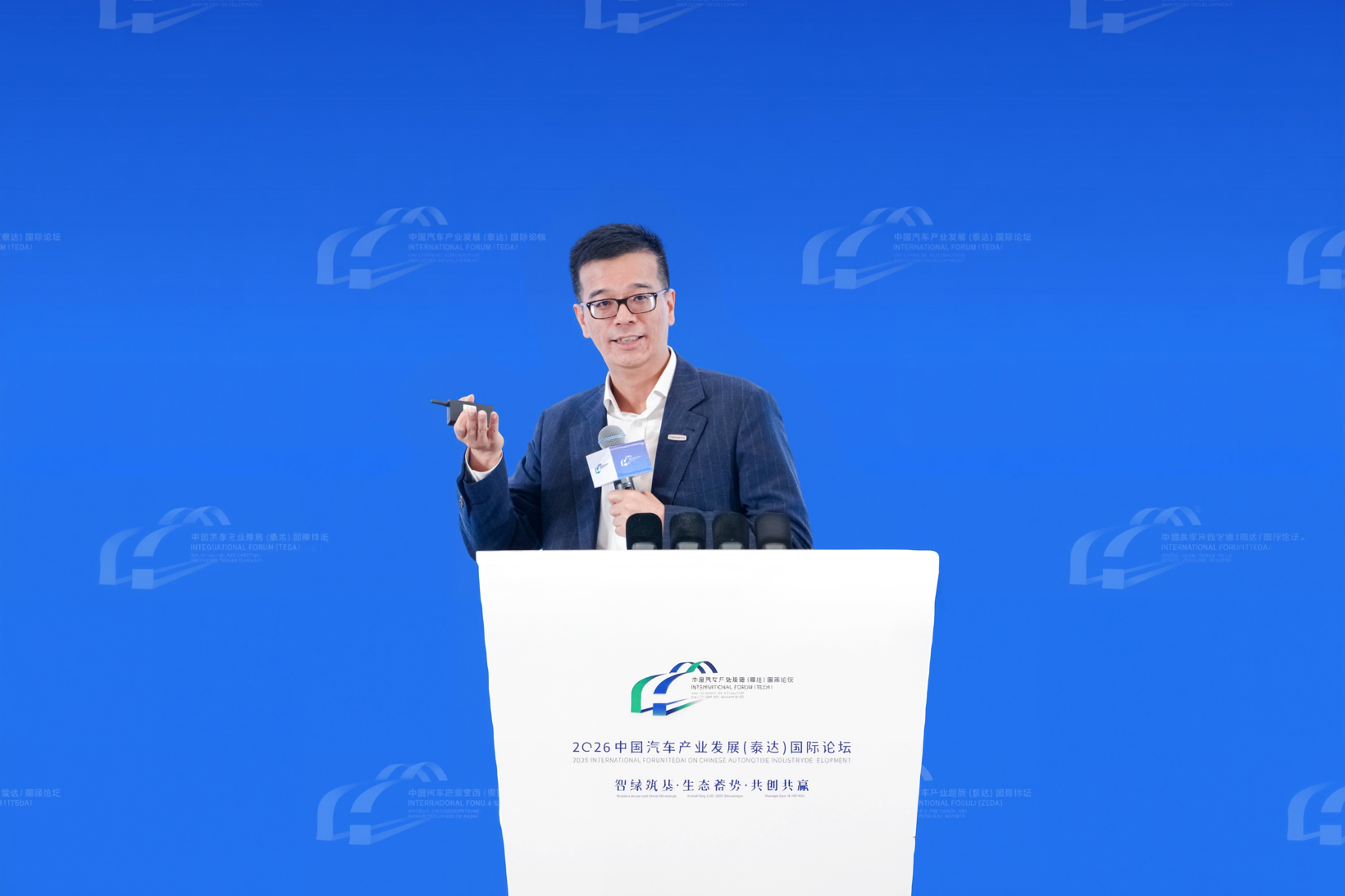
At the 2026 China Automotive Industry Development (TEDA) International Forum on September 19, Changan Automobile Group's Chief Scientist Zhang Xiaoyu delivered a definitive roadmap that should reset every Western OEM's autonomy timeline: L3 autonomous driving will enter mass production in 2027, and L4 commercial operations will begin in 2028. This is not a concept car promise or a regulatory sandbox pilot. It is a state-owned Chinese automaker with 2024 revenues exceeding RMB 150 billion ($20.7 billion) and annual sales of over 2.5 million vehicles committing to a production schedule.
For Western auto executives and institutional investors, the announcement carries immediate strategic weight. While Tesla continues to refine its FSD supervision model and Mercedes-Benz maintains the only certified L3 system in Europe (Drive Pilot, limited to 95 km/h on specific highways), Changan is signaling that China's regulatory and engineering apparatus is preparing to leapfrog from advanced driver assistance to true conditional automation at scale. The question is no longer whether Chinese OEMs will commercialize L3 and L4. It is whether Western legacy automakers can match the pace.
Section 1: Executive Overview & The Market Catalyst
Changan's announcement at the TEDA forum did not emerge in a vacuum. It is the culmination of a multi-year sequence of regulatory, technological, and industrial policy developments that have systematically lowered barriers to autonomous driving commercialization in China.
In 2023, China's Ministry of Industry and Information Technology (MIIT) issued the Guidelines for the Pilot Program of Access and Road Access for Intelligent Connected Vehicles (ICVs), creating a legal pathway for L3 and L4 vehicles to operate on public roads. By 2024, cities including Beijing, Shanghai, Shenzhen, and Guangzhou had designated hundreds of square kilometers of test zones. In early 2025, the MIIT expanded the pilot to include commercial robotaxi operations without safety drivers in specific districts of Wuhan and Beijing.
Changan itself has been an active participant. Its Shenlan (Deep Blue) NEV brand and Avatr premium EV brand (developed jointly with Huawei and CATL) have accumulated millions of kilometers of autonomous driving data. In 2024, Changan became one of the first automakers to receive L3 test licenses in Chongqing, its home base. The company's Beidou Tianzhu intelligent driving platform, developed with Tier-1 suppliers including Horizon Robotics and Huawei, forms the technical foundation for the 2027-2028 roadmap.
Globally, the contrast is stark. In the United States, Tesla's FSD remains a Level 2+ system requiring driver supervision. GM's Cruise has faced regulatory setbacks and scaled back operations. In Europe, Mercedes-Benz Drive Pilot is certified for L3 but only under 95 km/h on traffic-jam highways, and BMW's Personal Pilot L3 is limited to 60 km/h. Changan's plan to mass-produce L3 by 2027—and L4 by 2028—represents a two-to-three-year lead over most Western equivalents if executed.
Section 2: Technical Architecture & Deep Engineering Teardown
Changan's L3/L4 roadmap rests on a modular architecture that combines redundant sensing, high-compute domain controllers, and vehicle-to-everything (V2X) connectivity. Based on the company's patent filings and supplier announcements, here is the granular engineering breakdown.
Sensor Suite and Redundancy
The production L3 system, expected to debut on the Avatr 12 and a next-generation Changan NEV flagship, will feature a 360-degree perception stack:
- LiDAR: Three solid-state units (likely from Hesai or RoboSense), providing 200-meter range and 120-degree horizontal field of view each. Redundant coverage ensures fail-operational capability.
- Cameras: 11 high-resolution (8MP) cameras, including a front trifocal array and four fisheye units for close-range detection.
- Radar: Five millimeter-wave radar units (77 GHz) for long-range and blind-spot detection.
- Ultrasonics: 12 ultrasonic sensors for low-speed maneuvering.
- V2X: 5G-V2X module (C-V2X) enabling communication with infrastructure, other vehicles, and pedestrian devices.
Compute Platform and Silicon
The L3 domain controller is expected to deliver 500+ TOPS (INT8) using a dual-chip configuration. Changan has not officially confirmed the supplier, but industry sources point to Horizon Robotics' Journey 6P (560 TOPS) paired with a Huawei Ascend 610 or a Qualcomm Snapdragon Ride Flex SA8775P. For L4, Changan will likely scale to 1,000+ TOPS via dual Journey 6P or Huawei's MDC 810 platform.
Critically, the architecture includes redundant power and communication paths—dual power supplies, dual communication buses (CAN FD and Ethernet), and a fail-operational braking and steering system supplied by Bosch or ZF. This redundancy is mandatory for L3 certification under UN-R157 and China's own GB/T standards.
Software Stack and OTA
Changan's software strategy is hybrid: in-house development for perception and fusion algorithms, combined with Huawei's ADS (Autonomous Driving Solution) for planning and control in Avatr models. The company has committed to monthly OTA updates, with a dedicated fleet of shadow-mode vehicles collecting edge-case data. The L3 feature set will initially be geofenced to highways and urban expressways, expanding to complex urban roads by 2028.
Comparison Table: Changan L3/L4 vs. Global Rivals
| Feature | Changan (2027-2028) | Tesla FSD (2025) | Mercedes Drive Pilot (2025) | BMW Personal Pilot (2025) |
|---|---|---|---|---|
| Autonomy Level | L3 (2027), L4 (2028) | L2+ (supervised) | L3 (certified) | L3 (certified) |
| Max Operating Speed | 130 km/h (L3) | N/A (supervised) | 95 km/h | 60 km/h |
| Compute (TOPS) | 500+ (L3), 1,000+ (L4) | ~144 (HW4) | ~100 (NVIDIA) | ~100 (Mobileye) |
| LiDAR | 3x solid-state | No (camera-only) | Yes (1x) | Yes (1x) |
| V2X | 5G-V2X standard | No | No | No |
| Geographic Coverage | China (initial), global later | North America (beta) | Germany, Nevada (limited) | Germany (limited) |
| Commercial L4 | 2028 (robotaxi) | Not announced | Not announced | Not announced |
Section 3: Supply Chain Dynamics & Bill of Materials (BOM) Economics
Changan's autonomy push is underpinned by a domestic supply chain that has achieved scale and cost leadership in key components. The BOM for an L3-equipped vehicle is estimated at $3,500-$5,000 above a comparable L2+ model, but Changan's vertical integration and local sourcing reduce this premium by 25-35% versus Western OEMs.
Key Tier-1 and Tier-2 Suppliers
- Compute: Horizon Robotics (Journey 6P), Huawei (Ascend, MDC), Qualcomm (Snapdragon Ride, for export models). Horizon Robotics is China's leading ADAS chip designer with over 30% domestic market share in 2024.
- LiDAR: Hesai Group and RoboSense. Both have slashed solid-state LiDAR prices to below $500 per unit (versus $1,000+ for Western equivalents like Luminar or Innoviz).
- Radar and Ultrasonics: Bosch, Continental, and Chinese suppliers including Veoneer (now Qualcomm) and Senstech.
- Braking and Steering: Bosch iBooster and ZF redundant steering systems. Changan also sources from Chinese Tier-1s like Bethel Automotive (brake-by-wire) and NASN (steering).
- V2X Modules: Huawei and Datang Telecom. China has deployed over 8,000 km of V2X-equipped highways, a critical enabler for L3/L4.
Cost Advantage Breakdown
Changan's structural cost advantage stems from four factors:
- Localized battery and chip production: CATL and BYD's FinDreams supply LFP and NMC cells at 20-30% below Western prices. Changan's joint venture with CATL (Avatr) ensures priority allocation.
- Vertical integration in software: Changan develops its own operating system (SDA architecture) and middleware, reducing licensing fees to Tier-1 suppliers.
- Government subsidies and infrastructure: Chinese municipalities have invested over RMB 50 billion ($6.9 billion) in smart road infrastructure since 2020, lowering the effective cost of V2X deployment.
- Scale: Changan sold 2.55 million vehicles in 2024, with NEVs accounting for 30%. High volume amortizes R&D and tooling costs.
By contrast, a Western OEM sourcing equivalent L3 hardware from Bosch, Continental, or Valeo faces a BOM premium of 30-40%, plus higher software integration costs. This cost gap explains why Mercedes and BMW have limited L3 to flagship models, while Changan plans to deploy L3 across multiple NEV brands.
Section 4: Western Legacy OEM Impact & Competitive Fallout
Changan's L3/L4 timeline accelerates competitive pressure on Western legacy automakers already struggling in the Chinese market. Volkswagen Group, Stellantis, Ford, and GM have all seen their market share erode in China over the past five years. Now they face a new dimension: technological leadership in autonomy.
Volkswagen Group has invested $700 million in XPeng and $2.6 billion in Horizon Robotics through its CARIAD software unit. However, its own L3 program, developed with Bosch and Qualcomm, targets 2026 for Audi and Porsche models in Europe—potentially a year behind Changan. In China, VW's ID. series relies on L2+ systems from Horizon, not L3.
Tesla remains the global benchmark for L2+ autonomy, but its camera-only approach and lack of LiDAR redundancy may hinder L3 certification in Europe and China. Tesla has not announced a production L3 system, though its FSD V12 neural network demonstrates industry-leading end-to-end learning.
Mercedes-Benz holds the first international L3 certification (UN-R157) and has launched Drive Pilot in Germany and Nevada. However, its 95 km/h speed limit and fair-weather restrictions limit utility. The company plans to increase speed to 130 km/h by 2026, but Chinese OEMs will likely match that by 2027.
Ford and GM have deprioritized L3 in favor of L2+ systems (BlueCruise and Super Cruise). Both companies face capital constraints and are redirecting investment toward EV production. Their L3 timelines remain vague.
The fallout is not limited to technology. If Changan delivers L3 at scale by 2027, it will set a new benchmark for Chinese consumers, who increasingly expect advanced autonomy as standard. Western brands that cannot match this will lose pricing power and market share in the world's largest EV market. In export markets, Chinese L3-equipped vehicles could command a premium, challenging European and Japanese incumbents.
Section 5: Geopolitical, Tariff & Regulatory Adaptation
Changan's autonomy roadmap intersects with a complex global trade environment. The European Union has imposed countervailing duties of up to 38.1% on Chinese EVs, and the United States maintains Section 301 tariffs of 25% on Chinese vehicles. These measures raise the cost of exporting vehicles from China, but they also incentivize strategic localization.
Changan has responded by accelerating its international manufacturing footprint. The company is building a plant in Thailand (annual capacity 100,000 units) and has announced plans for a European facility, with Hungary and Spain under consideration. Local assembly allows Changan to comply with rules of origin and reduce tariff exposure, while also creating local jobs and aligning with EU industrial policy.
On the regulatory front, China's L3/L4 framework is ahead of most jurisdictions. The MIIT's pilot program provides a clear path to commercial deployment, whereas Europe's UN-R157 remains restrictive and the U.S. lacks a federal framework. This regulatory divergence gives Chinese OEMs a first-mover advantage in accumulating real-world L3/L4 data.
For Western governments, the response has been a mix of tariffs and industrial policy. The U.S. Inflation Reduction Act (IRA) restricts EV tax credits for vehicles with Chinese battery components, while the EU is investigating Chinese ADAS subsidies. However, these measures do not address the underlying technology gap. A more constructive approach would be to encourage cross-border collaboration, joint ventures, and technology licensing—areas where Changan has shown openness, as demonstrated by its partnerships with Huawei, CATL, and Ford (Changan Ford).
Section 6: 3-5 Year Strategic Market Outlook & Scenario Analysis
Bull Case Scenario
Changan successfully launches L3 in 2027 on time, with regulatory approval in multiple Chinese cities. Consumer adoption exceeds expectations, and the company exports L3-equipped vehicles to Southeast Asia, the Middle East, and Europe (from its Hungary plant). By 2030, Changan captures 15% of the global L3 market, generating $5 billion in incremental revenue. Western OEMs are forced to accelerate their own programs, leading to a wave of consolidation and partnerships.
Base Case Scenario
Changan achieves L3 production in 2027 but with limited geographic coverage and initial software issues. L4 commercialization slips to 2029. Domestic competition from BYD, NIO, and XPeng intensifies, pressuring margins. Changan maintains 10% global L3 share by 2030, while Western OEMs close the gap with L3 systems of their own. The market becomes fragmented, with regional leaders in China, Europe, and North America.
Bear Case Scenario
Regulatory delays or technical setbacks push Changan's L3 launch to 2028 and L4 to 2030. A high-profile safety incident erodes consumer trust. Western governments tighten restrictions on Chinese ADAS technology, limiting export opportunities. Changan's autonomy program becomes a financial drain, forcing the company to delay or cancel L4. Western OEMs retain leadership in premium autonomy, while Chinese players compete on cost rather than technology.
Section 7: Strategic Implications for Executives & Institutional Investors
- Reassess autonomy timelines: Western OEMs should assume Chinese competitors will achieve L3 mass production by 2027-2028. Any internal roadmap that targets 2030 or later is now a competitive liability. Accelerate L3 programs or partner with Chinese technology providers.
- Invest in supply chain resilience: The cost gap in LiDAR, compute, and V2X modules favors Chinese suppliers. Western Tier-1s must innovate on cost or risk losing share. Consider strategic partnerships with Horizon Robotics, Hesai, or Huawei for access to cutting-edge, cost-effective components.
- Monitor regulatory divergence: China's permissive L3/L4 framework will generate vast datasets that improve AI models. Western regulators should create adaptive frameworks that allow safe deployment without stifling innovation. Investors should track MIIT approvals and city-level pilot expansions as leading indicators.
- Evaluate localization strategies: Tariffs and rules of origin make local assembly essential for market access. Changan's Thailand and Hungary plants are templates. Western OEMs should assess their own localization plans in Southeast Asia, Europe, and Latin America to remain cost-competitive.
- Position for consolidation: The autonomy race will require massive R&D spending. Smaller OEMs and Tier-1s may struggle. Institutional investors should identify potential acquisition targets or partnership opportunities in ADAS software, sensor fusion, and V2X infrastructure.
Changan's L3/L4 roadmap is a wake-up call. The China Information Gap is closing—not because Western media is covering it better, but because Chinese OEMs are setting the pace. The companies that act on this intelligence today will define the autonomous driving landscape of 2030.