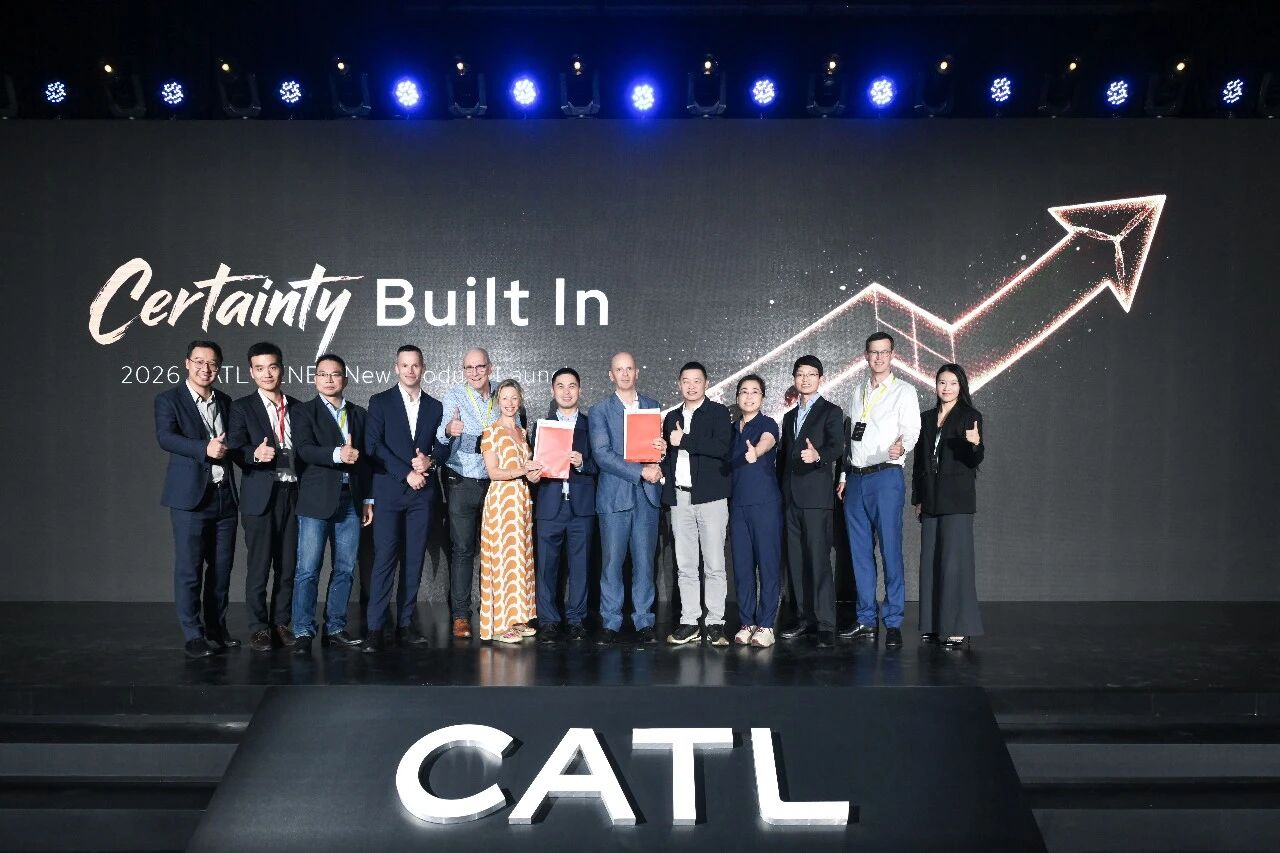
The global energy transition is witnessing a critical shift as alternative battery chemistries move from laboratory validation to massive commercial deployment. In a major milestone for utility-scale energy storage, Contemporary Amperex Technology Co., Limited (CATL) recently signed a Memorandum of Understanding (MoU) with Alfen N.V., a leading Dutch energy solutions integrator, to supply 5GWh of CATL sodium-ion battery storage systems starting in 2027. This alliance represents one of the largest public commitments to sodium-ion technology in the Western grid market to date.
Strategic Significance of the 5GWh Sodium-Ion Agreement
For years, sodium-ion (Na-ion) technology has been heralded as the ultimate hedge against volatile lithium prices. However, skeptics questioned whether it could scale fast enough to meet the stringent demands of utility grid operators. The CATL-Alfen agreement provides a clear answer: institutional trust is shifting. Alfen, renowned for its grid-integration expertise across Europe, has chosen CATL's sodium-ion architecture to power its next-generation stationary battery energy storage systems (BESS).
As an industry analyst tracking the European grid transition, I view this partnership as a highly calculated move by both parties. For Alfen, securing a robust multi-gigawatt pipeline of CATL sodium-ion battery storage safeguards its market-leading position against prospective lithium supply deficits. For CATL, it establishes a strategic regional footprint for its non-lithium portfolio in a highly regulated, premium-value market like the European Union.
Comparing Chemistries: Why Grid Operators are Turning to Sodium
While lithium-iron-phosphate (LFP) remains the dominant chemistry for modern BESS installations, sodium-ion offers distinct structural advantages that align with European decarbonization goals and ESG frameworks. Below is a comparative analysis of how sodium-ion stacks up against LFP for grid-scale applications:
| Metric / Feature | Sodium-Ion (Na-Ion) | Lithium Iron Phosphate (LFP) |
|---|---|---|
| Abundance & Supply Risk | Extremely High (Sodium is globally abundant) | Moderate (Geographically concentrated Lithium) |
| Low-Temperature Performance | Excellent (Retains >80% capacity at -20°C) | Moderate (Requires active thermal management) |
| Thermal Runaway Risk | Very Low (Inherent chemical stability) | Low (But higher risk than Sodium) |
| Volumetric Energy Density | Lower (100–160 Wh/kg) | Higher (160–200 Wh/kg) |
Decarbonization and Supply Chain Resilience
By utilizing sodium, a mineral that can be sourced easily and processed with a lower carbon footprint than lithium, Western energy integrators can achieve better environmental compliance. Furthermore, stationary storage does not suffer from the weight and spatial constraints that affect electric vehicles (EVs). In BESS applications, the slightly lower energy density of CATL sodium-ion battery storage is heavily outweighed by its safety profile, cost predictability, and superior cold-weather efficiency.
Strategic Sourcing and Cross-Border Technology Integration
In the current geopolitical climate, global OEMs and energy integrators are optimizing their sourcing strategies to align with regional trade policies and local value creation. This partnership is a prime example of cross-border technology integration: European engineering and grid expertise from Alfen are paired with CATL's advanced manufacturing capabilities.
This cooperative model demonstrates how Western infrastructure developers can leverage global supplier expertise to accelerate grid storage deployments while maintaining regulatory compliance. Rather than viewing the transition as a competitive zero-sum game, Western and Chinese companies are finding common ground in strategic alliances that prioritize long-term grid stability and rapid scalability.
Investment Outlook: The Future of Sodium-Ion Commercialization
For institutional investors and energy analysts, the CATL-Alfen deal serves as an important market signal. It confirms that the commercial runway for sodium-ion technology is fast approaching, with 2027 marked as a pivotal deployment year. Expect to see further supply contracts, particularly in Northern and Eastern Europe, where sodium-ion's superior performance in cold climates offers an immediate operational advantage over legacy lithium chemistries.