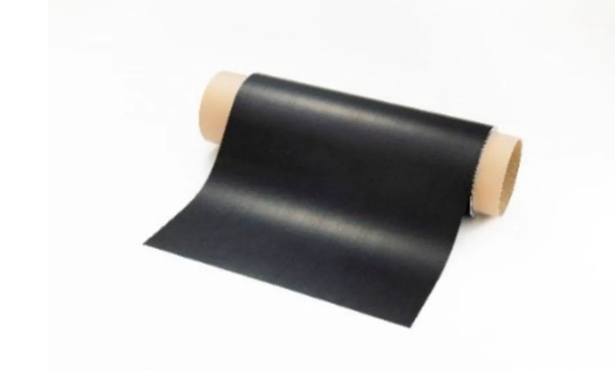
As global automotive manufacturers sprint toward higher energy density and extended range, the weight of traction batteries remains a critical engineering bottleneck. To address this challenge, material science pioneer Mitsubishi Chemical Corporation has expanded its Xlink Tech carbon fiber prepreg product line. This strategic move directly addresses the industry's need for high-performance carbon fiber prepreg EV lightweighting solutions that do not compromise on structural safety or manufacturing scalability.
The Critical Role of Carbon Fiber Prepreg EV Lightweighting
In the transition to electric mobility, battery packs add hundreds of kilograms to a vehicle's curb weight. Every kilogram saved through advanced structural materials translates directly into increased range and improved driving dynamics. Carbon fiber reinforced polymers (CFRP) have long been the gold standard for weight reduction, but high manufacturing costs and slow curing cycles have historically limited their use to low-volume supercars.
This is where carbon fiber prepregs—composite materials where the reinforcing fibers are pre-impregnated with a thermoplastic or thermoset resin matrix—come into play. By optimizing curing kinetics, Mitsubishi Chemical's Xlink Tech allows for rapid molding cycles suitable for mass-market automotive production lines. This is a critical technological lever for automakers working to optimize physical packaging without sacrificing performance.
Analyzing Xlink Tech: Speed, Strength, and Scalability
The expansion of the Xlink Tech series introduces advanced resin systems that cure in minutes while retaining exceptional mechanical properties, such as high glass transition temperatures (Tg) and robust impact resistance. This breakthrough solves a key operational headache for Tier 1 suppliers and OEMs alike: the cycle-time bottleneck.
Key Operational Advantages:
- Accelerated Cycle Times: Reduces curing times significantly compared to conventional epoxy resins, unlocking high-volume mass production compatibility.
- Excellent Resin Flow: Ensures defect-free impregnation of complex structural geometries, which is crucial for intricate battery enclosures and crash-absorption structures.
- Storage and Logistics Stability: Offers extended shelf life at room temperature, simplifying international supply chain logistics and reducing specialized cold-chain storage costs.
The table below highlights how the next-generation Xlink Tech prepregs compare to traditional composite manufacturing standards in automotive settings:
| Material Parameter | Traditional Carbon Fiber Composites | Mitsubishi Chemical Xlink Tech Prepreg |
|---|---|---|
| Typical Cure Time | 30 to 120 minutes | Under 5 minutes (depending on part geometry) |
| Storage Requirements | Requires strict sub-zero deep freezing | Extended stability at ambient temperatures |
| Primary EV Application | Aesthetic trim, low-volume body panels | Structural battery enclosures, chassis components, crash beams |
Strategic Sourcing and Global Supply Chain Integration
For Western OEMs and fast-moving global EV giants, integrating advanced composites is no longer an optional luxury. Through strategic sourcing alliances, automotive leaders are increasingly leveraging the expertise of specialized global suppliers like Mitsubishi Chemical to co-develop next-generation skateboard platforms.
Rather than relying solely on legacy steel or aluminum architectures, modern platform engineering utilizes a hybrid, multi-material approach. Incorporating fast-curing carbon fiber prepreg EV lightweighting technologies into structural battery packs (such as Cell-to-Chassis or Cell-to-Pack designs) allows manufacturers to meet stringent crash-safety regulations while optimizing the vehicle's localized regional footprint and life-cycle carbon footprint.
Furthermore, as trade dynamics and compliance standards evolve across the US, Europe, and Asia, having a material technology partner with robust, localized manufacturing capacity ensures reliable supply chain resilience. This development signals a broader transition in material science: carbon fiber is moving rapidly from premium niche customization to a core structural pillar of high-efficiency global EV platforms.