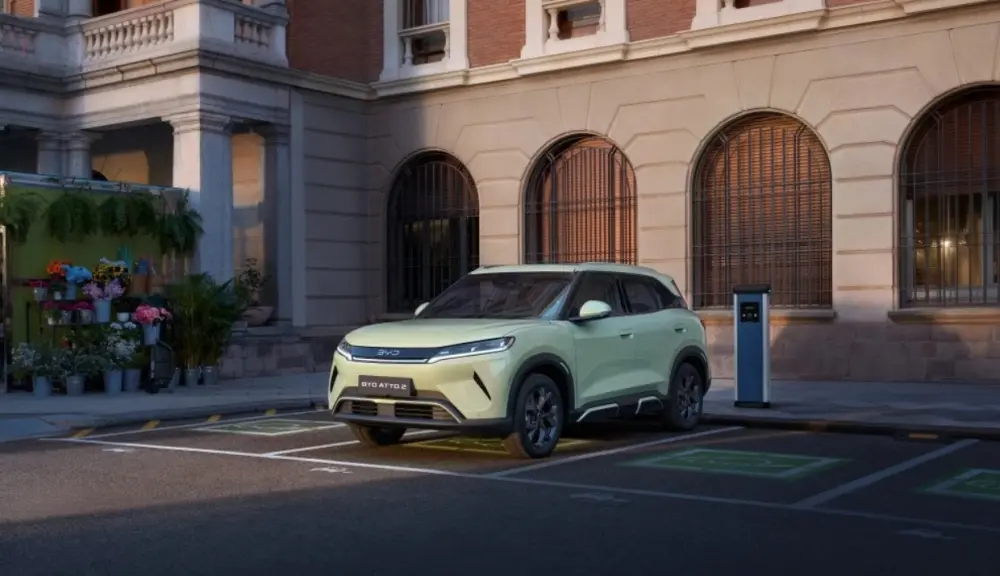
BYD Second European Factory: How the EV Giant is Outmaneuvering EU Tariffs
As Brussels tightens the screws with steep countervailing duties on Chinese electric vehicle imports, BYD is moving at 'China-speed' to future-proof its European expansion. Alfredo Altavilla, BYD's special adviser for Europe and former FCA Chief Operating Officer, recently confirmed that the company is close to securing a BYD second European factory. Rather than building another plant from scratch, the automaker is actively looking to acquire an existing European automotive assembly plant—a highly aggressive localization strategy designed to fast-track production and completely bypass trade barriers.
The Strategic Pivot: Greenfield vs. Brownfield
Establishing a localized supply chain is no longer a luxury for Chinese OEMs; it is an existential necessity in Europe. BYD's first European plant in Szeged, Hungary, is currently under construction and slated to start production before 2026. However, greenfield developments take years to scale. By aggressively targeting a BYD second European factory through the acquisition of an existing site (a 'brownfield' strategy), BYD can bypass the protracted environmental permitting, zoning, and construction phases.
This dual-track approach—building a bespoke mega-factory in Hungary while simultaneously acquiring an operational plant elsewhere—is a classic hedge. It allows BYD to rapidly transition from an exporter facing a 17.4% tariff surcharge (on top of the standard 10% import duty) to a localized European manufacturer exempt from these penalties.
Targeting Legacy OEM Assets: Who is at Risk?
Altavilla's confirmation that BYD is looking to buy an existing facility has sent shockwaves through the European automotive sector. Legacy OEMs like Volkswagen, Stellantis, and Ford are grappling with excess capacity and underutilized factories as they struggle with their own EV transitions. Ford's Saarlouis plant in Germany, for example, has been looking for an investor, and several idle or underutilized Stellantis facilities across Southern Europe could serve as prime targets for BYD's acquisition plans.
By taking over an existing plant, BYD not only inherits physical infrastructure but also gains access to an experienced local workforce and established regional logistics nodes. This represents a massive geopolitical shift: a leading Chinese tech giant stepping in to rescue or repurpose the legacy industrial assets of the West.
Comparing BYD's European Manufacturing Footprint
The table below highlights the operational contrast between BYD's two-pronged manufacturing strategy in Europe:
| Strategic Metric | Hungary Plant (Szeged) | Second European Plant (Acquisition) |
|---|---|---|
| Project Type | Greenfield (Built from scratch) | Brownfield (Acquisition of existing facility) |
| Production Timeline | Expected by late 2025/early 2026 | Accelerated (Expected to be finalized imminently) |
| Primary Advantage | Highly optimized, state-of-the-art layout | Rapid time-to-market; pre-existing labor pool |
| Regulatory Hedge | Secures long-term EU-compliant capacity | Short-term circumvention of provisional tariffs |
What This Means for Western Investors
For global institutional investors and automotive strategists, BYD's move signals that the 'China Information Gap' is closing. Western policymakers hoped that tariffs would slow the inflow of competitive Chinese EVs. Instead, they have catalyzed a structural shift toward localized assembly. BYD's ability to finance, source, and quickly pivot its global manufacturing footprint highlights its vast capital reserves and supply chain resilience. Legacy European OEMs will soon face a competitor that is not only highly vertically integrated but is now operating within their own borders, utilizing their former workforces, and free from tariff constraints.