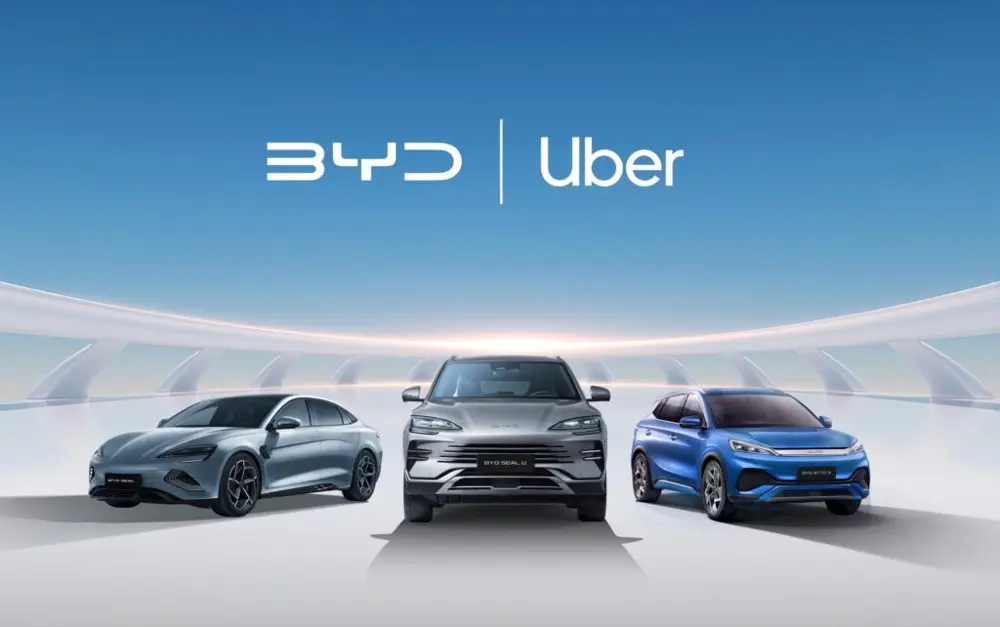
Just a few months ago, we analyzed BYD as a company teetering on a tightrope, burdened by a ‘$120 billion debt’ time bomb. The narrative was compelling: a predatory supply chain financing system known as ‘Di-lian’ (迪链), an abnormally long average payment period of 275 days, and even a damning report from GMT Research exposing hidden liabilities. Every signal seemed to point to a fatal ‘cash crunch’ at BYD.
But in July 2025, the latest BYD earnings were released, and the market was stunned into silence.
| | Metric | H1 2025 (or Q1) | YoY Change | Key Insight | | | Sales Volume | 2.14M units | +33% | Dominating China’s EV market | | | Q1 Revenue | ¥170.3B | +36.35% | All-time quarterly high | | | Q1 Net Profit | ¥9.15B | +100.38% | Profitability literally doubled |
Can a company whose profits just doubled, and which has now sold a cumulative 12.7 million new energy vehicles, truly be playing a “desperate game of survival”?
It’s time to ask a different question entirely. Was BYD’s debt ever a ‘crisis,’ or was it part of a grander strategy we all missed?
1. The Old Narrative vs. The New Truth: How ‘Crisis’ Became a ‘Weapon’
In our previous analysis, Beyond the ‘Genius Scam’: The Hidden Pressures That Might Explain BYD’s Big Gamble we pointed to three clear signals of a company in distress:
- 🚨 Alarm #1: The $120 Billion Debt Pressure – GMT Research warned that BYD’s real debt was 12 times its official figures.
- 🚨 Alarm #2: The Immense Sales Pressure – The company was under crushing pressure each quarter to meet its ambitious annual targets.
- 🚨 Alarm #3: The Quality & Trust Deficit – A persistent cloud of doubt, neatly summarized by the phrase, “There’s a reason it’s cheap.”
Our conclusion at the time was clear: “BYD is a desperate company suffering from a cash crunch, and its radical marketing ploys are a last-ditch effort to survive.”
But the 2025 data forces us to re-examine everything.
2. What We All Missed: 3 Discoveries Hidden in the Debt
💰 Discovery #1: The ‘Ability’ to Pay Was Overwhelming
The idea that BYD delayed payments because it lacked cash was a fundamental misunderstanding. As of 2024, BYD’s annual operating cash flow was a staggering 610 billion yuan (approx. €77B). This is enough to pay off its entire controversial Di-lian debt (244 billion yuan) 2.5 times over.
Furthermore, as of Q1 2025, the company’s cash on hand was 5.4 times the size of its actual interest-bearing financial debt (28.6 billion yuan). The critical truth is this: They had the ability to pay but were strategically choosing not to.
🔬 Discovery #2: 93% of the Debt Was ‘Free’ Leverage
A microscopic look at BYD’s debt structure reveals a shocking fact. Of its 397.6 billion yuan in total liabilities, only a tiny 7.2% (28.6 billion yuan) is actual interest-bearing financial debt. The other 93% is ‘operational debt’—primarily money owed to suppliers (accounts payable)—which accrues zero interest.
This wasn’t ‘debt’ from financial distress; it was ‘interest-free cash’ sourced from absolute market dominance. It was a strategic financial lever, a key weapon in the Global EV Supply Chain War.
🚀 Discovery #3: That ‘Free Money’ Was Buying the Future
Where did BYD channel all this cash it had effectively borrowed for free? The trail was clear. It was buying the future.
- Explosive R&D Investment: Pouring 40 billion yuan in 2023 and 20.2 billion yuan in H1 2024 to erase its technological weaknesses.
- Global Territory Expansion: Investing tens of billions annually to build factories in Indonesia, Hungary, and around the world to broaden its sales markets.
3. The Verdict: The Real Nightmare for VW, BMW & Daimler, Confirmed by BYD’s Earnings
Now, all the pieces fit together. What we mistook for a ‘desperate game of survival’ was, in fact, a sophisticated and ruthless strategy for global domination.
The H1 2025 BYD earnings prove this strategy is working. A 100% surge in net profit isn’t just growth; it’s a signal that economies of scale and the returns on technological investment are beginning to kick in.
For competitors like Volkswagen, BMW, and Daimler, this is a nightmare scenario.
A poor, desperate rival is predictable. But a wealthy, brilliant rival who identifies its own weaknesses and then spends tens of billions of ‘free money’ to erase them is a threat on a completely different level.
Ultimately, the message from BYD’s 2025 results is clear:
“We are no longer fighting to survive. We are now fighting to dominate.”
Deeper Dive: Recommended Reading for Deeper Insights
For those who want to gain deeper insights into the topics discussed today, here is a book I have personally vetted and recommend.
[The War for China’s Wallet: Profiting from the New World Order]
- Recommendation Reason: This book brilliantly explains how Chinese giants like BYD leverage state support, capital markets, and supply chain control not just for domestic growth, but as a weapon for global expansion, providing a crucial framework for understanding their strategy.
This post contains affiliate links, meaning we may earn a small commission if you make a purchase, at no additional cost to you.