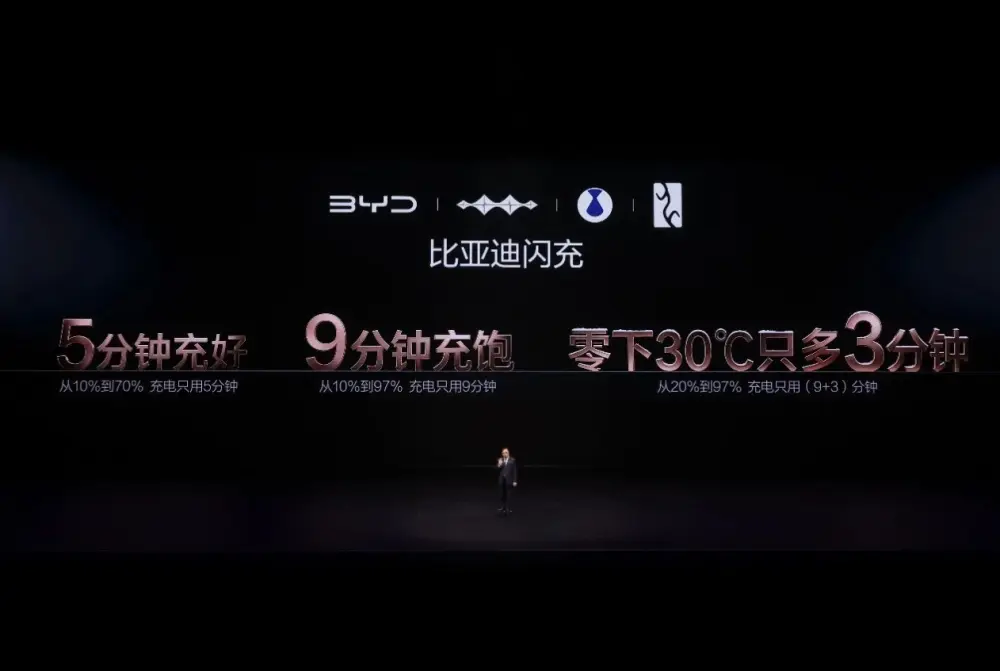
At the recent global launch event for the Seal 08, Chinese electric vehicle giant BYD made a massive announcement regarding its proprietary infrastructure: the BYD flash charging network has officially crossed 7,000 operational stations, with aggressive plans to scale to 20,000 stations by the end of 2026. This massive infrastructure push highlights BYD's shift from being a mere vehicle manufacturer to building a vertically integrated energy and mobility ecosystem.
The Scaling of the BYD Flash Charging Network
For years, Western analysts viewed BYD primarily as a battery and vehicle manufacturer that relied heavily on third-party state grid infrastructure in China. However, the rapid rollout of the BYD flash charging network signals a massive strategic pivot. By building out its own branded high-speed charging stations, BYD is creating an ecosystem lock-in effect, similar to Tesla's highly successful Supercharger playbook.
As of mid-2026, BYD has successfully deployed over 7,000 flash charging stations across mainland China. The target of 20,000 stations by late 2026 represents a nearly threefold increase in just over 18 months. This 'China-speed' execution is designed to support BYD's latest 800V high-voltage platforms, allowing drivers to add hundreds of kilometers of range in under 15 minutes.
Strategic Implications for Western Investors and OEMs
From an investment perspective, this infrastructure blitz represents a significant competitive moat. While Western legacy OEMs like Ford and General Motors are scaling back their EV targets due to slow public charging rollouts in the US and Europe, BYD is aggressively solving range anxiety at the source. This has profound implications for global market dynamics:
- Vertical Integration: BYD owns the battery manufacturing (FinDreams), the vehicle platforms, and now, a rapidly expanding charging network. This minimizes supply chain vulnerabilities.
- Data Monetization: Owning the charging network gives BYD access to invaluable real-time battery degradation and usage data, which can be fed back into their AI models for predictive maintenance.
- Brand Loyalty: Proprietary 'flash charging' stations offer preferential rates and seamless plug-and-charge experiences for BYD owners, increasing customer retention.
How BYD's Infrastructure Compares: A Strategic Breakdown
To put this expansion into perspective, let's examine how BYD's charging targets stack up against existing global benchmarks:
| Metric | BYD Flash Charging (Current) | BYD Target (2026) | Tesla Superchargers (China) |
|---|---|---|---|
| Station Count | 7,000+ | 20,000 | ~2,000+ (Est. dedicated) |
| Primary Market | China (Global expansion planned) | Global network expansion | Global |
| Key Technology | 800V Ultra-Fast / Liquid Cooled | Next-gen high-voltage flash tech | V3 / V4 Supercharging |
The Expert Take: What Lies Ahead
As an automotive market analyst focusing on the Asian supply chain, I see this as the final piece of the puzzle for BYD's global dominance. In overseas markets like Southeast Asia, Latin America, and Europe, charging infrastructure remains a massive pain point. If BYD exports its proprietary charging model alongside its highly competitive vehicles, it will establish a dual-revenue stream (energy sales plus automotive hardware) that Western OEMs will struggle to match.
Western investors should not view BYD solely as a car manufacturer. With the expansion of the BYD flash charging network, they are rapidly transitioning into a utility and grid-services powerhouse, laying the groundwork for long-term dominance in the transition to renewable transport.