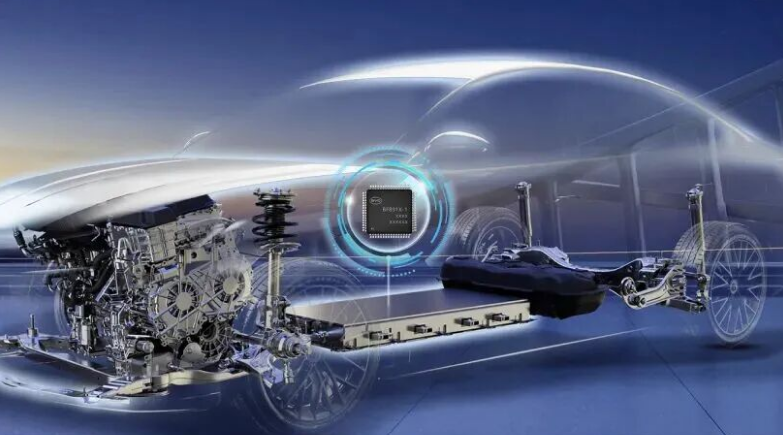
In the highly competitive electric vehicle landscape, vertical integration has transitioned from a strategic preference to an absolute necessity. BYD Semiconductor recently reached a watershed moment by announcing that its cumulative shipments of automotive-grade battery management system (BMS) analog front-end (AFE) chips have officially surpassed 100 million units. This milestone highlights the rapid growth of proprietary automotive BMS AFE chips and signals a structural shift in global automotive silicon sourcing.
The Strategic Role of Automotive BMS AFE Chips
The Analog Front-End (AFE) chip is the critical sensory organ of any electric vehicle's Battery Management System. It is tasked with monitoring cell voltage, temperature, and state-of-charge with millivolt-level precision. Inaccuracies in these metrics can directly impact driving range, battery life, and, most critically, thermal safety.
Traditionally, the automotive market relied heavily on established Western semiconductor giants like Texas Instruments (TI), Analog Devices (ADI), and NXP for these highly regulated, automotive-grade components. BYD's ability to design, qualify, and mass-produce 100 million of these chips in-house is a clear indicator that Chinese chipmakers are successfully climbing the complexity curve, moving beyond basic microcontrollers into highly precise analog silicon.
Why In-House Silicon Matters to Western Investors
From an investment and competitive intelligence standpoint, BYD's milestone reveals several key structural advantages:
- Unmatched Cost Control: By bypassing external silicon margins, BYD can optimize battery pack assembly costs, reinforcing its competitive pricing model globally.
- Supply Chain Resilience: Achieving self-sufficiency in critical analog ICs shields the OEM from global semiconductor supply volatility and shifting geopolitical trade dynamics.
- Rapid Iteration Speed: Direct feedback loops between the semiconductor division and the battery division allow for faster deployment of next-generation LFP and solid-state battery chemistries.
Silicon Sourcing Strategies: In-House vs. Traditional Tier-1
To understand the competitive dynamics, we can compare the traditional semiconductor supply chain with BYD's vertically integrated model:
| Metric | Traditional OEM Model (TI/ADI/NXP) | BYD Vertically Integrated Model |
|---|---|---|
| Supply Chain Control | Subject to distributor lead times and global allocation | Direct internal allocation, maximizing production uptime |
| Customization Speed | Dependent on standard supplier product roadmaps (2-4 years) | Rapid custom design iterations aligned with battery tech |
| Cost Structure | Subject to market pricing and supplier margin stacks | Highly optimized internal transfer pricing |
A Balanced Outlook on Global Semiconductor Cooperation
While this milestone marks a significant achievement for localized supply chains, the global automotive market continues to thrive on technology integration and cross-border collaboration. Leading Western OEMs are leveraging strategic sourcing alliances to match this pace of innovation. Ultimately, the rise of localized semiconductor footprints highlights a broader trend: the future of EV leadership belongs to those who can secure, optimize, and rapidly scale their critical silicon pipelines.