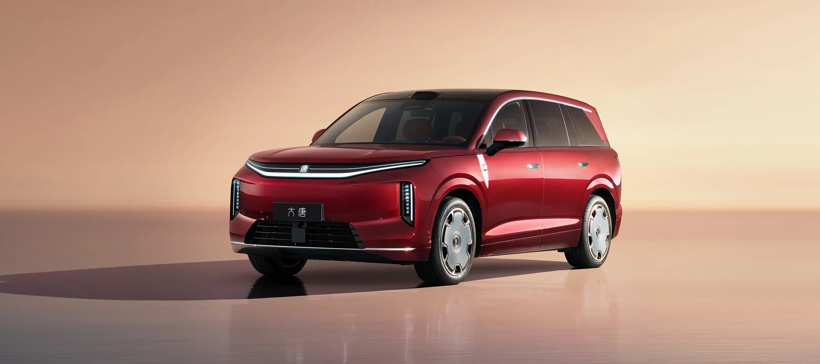
The global electric vehicle landscape is undergoing a massive shift as architecture transition accelerates from 400V systems to ultra-fast high-voltage systems. At the forefront of this evolution is the BYD 1000V EV platform, a flagship technological ecosystem debuted in the brand's latest full-size flagship SUV, the Grand Tang EV (大唐EV). Moving beyond previous milestones set by the Han and Tang series, this new platform drives advanced silicon carbide (SiC) power electronics, intelligent chassis control, and high-voltage efficiency to unprecedented heights.
The Strategic Shift to a Full-Domain 1000V+ Architecture
For global automotive analysts, the deployment of a full-domain 1000V+ architecture represents more than just a marketing metric. By scaling system voltage above the 1000V threshold, the Grand Tang EV minimizes current levels, which significantly reduces I²R resistive heating losses in the high-voltage wiring harness. This allows for lighter copper cabling, optimized thermal management systems, and superior efficiency gains under heavy loads.
Crucially, achieving full-domain 1000V+ capabilities requires a complete overhaul of the power electronics supply chain. Every component—from the traction inverter and onboard charger (OBC) to the air conditioning compressor and DC-DC converter—must be rated to handle these ultra-high operating voltages. This requires a transition from standard Silicon IGBTs to high-performance Silicon Carbide (SiC) MOSFETs, which offer superior breakdown voltage and switching frequencies.
Core Supplier Directory: Who Powers the Grand Tang EV?
To understand how BYD has optimized the performance and cost structure of its flagship platform, we must look at the underlying component ecosystem. By combining in-house vertical integration with highly specialized external suppliers, BYD has engineered a highly resilient supply chain.
| System Category | Key Component | Primary Supplier |
|---|---|---|
| Power & Energy | High-Voltage Blade Battery (LFP) | FinDreams Battery |
| Power Electronics | SiC Power Modules (Inverter) | BYD Semiconductor / StarPower |
| Chassis Control | DiSus-P Intelligent Hydraulic Suspension | FinDreams Chassis |
| Thermal Management | High-Voltage Heat Pump System | Sanhua Intelligent Controls |
| Intelligent Cabin | DiLink Connectivity System | BYD Electronics / Qualcomm |
How Vertical Integration Empowers BYD
Unlike many traditional Western OEMs that rely heavily on tier-1 system integrators, BYD's success with the 1000V platform is built upon extreme vertical integration. Through its subsidiary FinDreams, BYD produces its own battery cells, electric drive systems, and chassis components in-house. This closed-loop approach allows for unparalleled engineering speed, letting BYD iterate software and hardware concurrently to optimize the vehicle's thermal and electrical efficiency.
However, the Grand Tang EV also demonstrates a strategic openness to global supplier expertise. For advanced computing and specialized HVAC components, BYD partners with international and domestic leaders like Qualcomm and Sanhua. This blended strategy of self-reliance and external collaboration provides a robust framework for global supply chain compliance and risk mitigation.
Implications for Global OEMs and Market Strategy
For Western OEMs and strategic investors, the launch of the Grand Tang EV on the BYD 1000V EV platform acts as an essential benchmark. To remain competitive in international markets, automakers must prioritize global supplier partnerships and strategic sourcing alliances that can deliver comparable high-voltage componentry at scale.
As trade environments evolve, global automotive brands are focusing on strategic localization and expanding localized regional footprints. Benchmarking the rapid development of China's high-voltage SiC supply chain is crucial for Western manufacturers seeking to optimize their own EV platforms and accelerate global transition timelines toward zero-emission mobility.