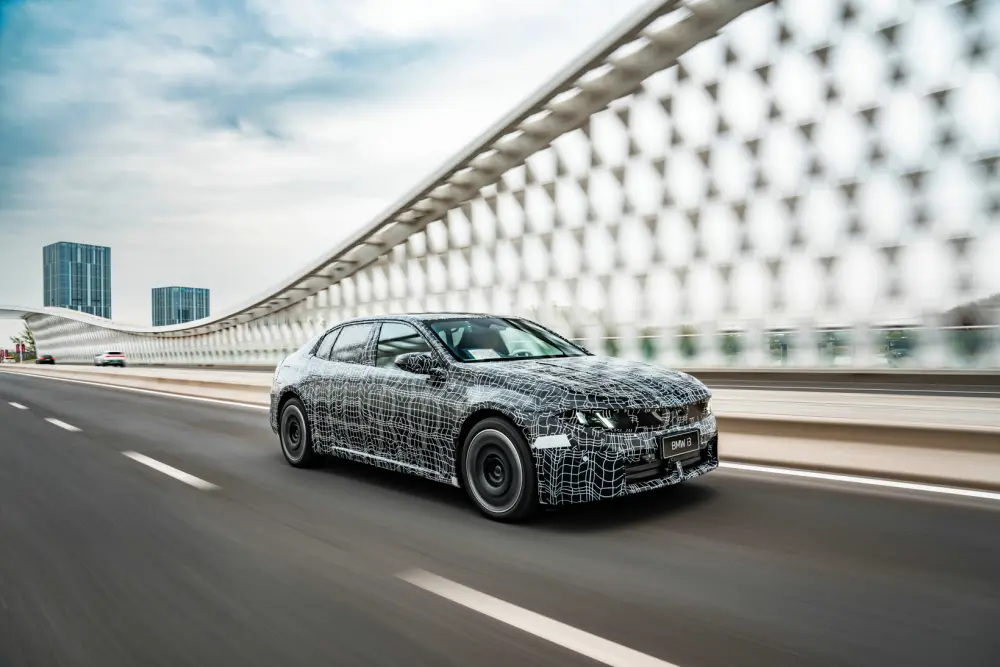
As an automotive strategist tracking Sino-German joint ventures, I see BMW’s latest production adjustment in China not as a retreat, but as a high-stakes tactical pivot. Recent reports suggest that BMW will halt production of its current Chinese-made electric vehicles—specifically the i3, i5, and iX1—starting in July. While BMW official channels downplayed this as a routine lifecycle and capacity adjustment rather than a market exit, the subtext is clear: the era of ‘converted gas cars’ (油改电) in China is officially over, and the BMW Neue Klasse China strategy is now entering its critical, aggressive acceleration phase.
Decoding the Shenyang Production Halt: Retreat or Tactical Triage?
To Western investors, a sudden production halt of electric models in the world's largest EV market looks alarming. However, when we analyze the sales performance and unit economics of BMW’s current Chinese EV portfolio—namely the i3 (based on the 3 Series) and the i5 (based on the 5 Series)—the rationale becomes clear.
These models are built on BMW’s flexible CLAR architecture. While CLAR allowed BMW to scale EV production quickly without massive upfront capital expenditure, it came with a heavy compromise. In China, tech-savvy consumers mockingly refer to these vehicles as 'converted gas cars.' They lack the native spatial efficiency, advanced digital cockpits, and rapid software iteration cycles offered by local rivals.
The Economic Reality of German Luxury in China
To keep assembly lines moving in Shenyang, BMW and its dealers had to resort to staggering discounts, sometimes slashing MSRPs by over 30% to 40% for the i3. This strategy did three things that alarmed BMW headquarters in Munich:
- It severely eroded BMW's hard-won luxury brand equity.
- It crushed the profit margins of its Chinese joint venture, BMW Brilliance Automotive (BBA).
- It failed to build a sustainable, tech-forward customer base.
By phasing out these stopgap models, BMW is choosing a temporary volume dip over persistent brand dilution.
Enter Neue Klasse: The Strategic Reset
The core of the BMW Neue Klasse China strategy is a clean-sheet design. Unlike the compromise-ridden CLAR platform, Neue Klasse is a dedicated 800V EV-first architecture. It promises revolutionary improvements that are specifically targeted to win back Chinese consumers:
| Feature | Legacy CLAR Platform (i3/i5) | Neue Klasse Platform (2026+) |
|---|---|---|
| Architecture | Multi-energy (ICE-derived) | Dedicated EV-first (800V) |
| Charging Speed | 400V standard, slower curves | Super-fast charging (300km in 10 mins) |
| Battery Tech | Prismatic cells | Gen 6 cylindrical cells (+20% density) |
| Digital Experience | Standard iDrive | Panoramic Vision & localized AI assistant |
BMW is investing billions in its Shenyang production hub, including a 10-billion-yuan ($1.4 billion) high-voltage battery project, to localize the Neue Klasse supply chain. Locally produced Neue Klasse models are scheduled to roll off the Shenyang assembly lines starting in 2026.
What This Means for Investors and Competitors
For Western OEMs and luxury competitors (Mercedes-Benz, Audi, and Porsche), BMW's move is a blueprint. Trying to compete in China with multi-energy platforms is a losing battle. The Chinese market demands rapid iteration and absolute technical parity in smart driving (ADAS) and digital cockpits.
For investors, keep a close eye on BMW's market share in China over the next 18 months. There will be a transition 'dead zone' where BMW's EV volumes will contract before the Neue Klasse ramp-up begins. The long-term upside depends entirely on whether BMW can execute this software-and-hardware reset at 'China-speed' or if local players will lock in premium EV buyers permanently before 2026.