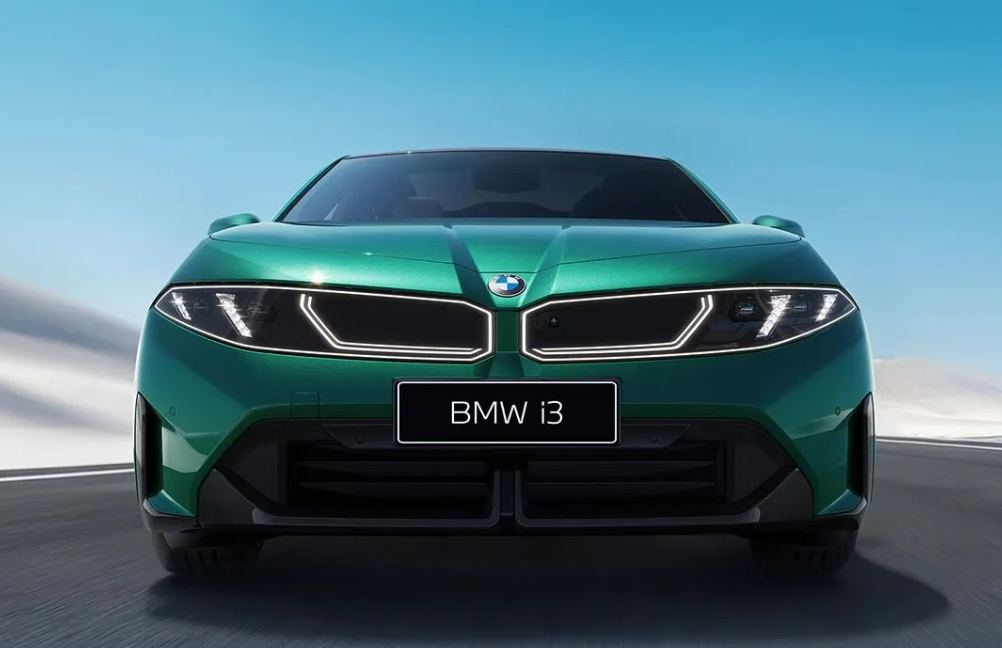
The global transition to electromobility has long been framed as a direct battle between agile pure-play EV startups and legacy automakers. However, BMW Group's latest delivery milestone demonstrates that premium legacy brands are mounting a highly resilient defense. By officially surpassing 2 million cumulative BMW global EV deliveries since the launch of the pioneering BMW i3 in late 2013, the Bavarian automaker has established a vital volume and strategic benchmark for global premium players.
A Decade-Long Journey: From the i3 to Broad Portfolio Scaling
When BMW launched the carbon-fiber-intensive i3 in late 2013, it was viewed as an eccentric, albeit visionary, experiment. Over the subsequent decade, BMW pivoted its strategy from specialized carbon frames to a highly flexible platform approach. This strategy allows the OEM to manufacture combustion engine vehicles (ICE), plug-in hybrids (PHEV), and pure electric vehicles (BEVs) on the same assembly lines.
While skeptics originally argued that 'shared platforms' would compromise EV efficiency, the market has validated BMW's pragmatic approach. By offering electric alternatives across its core portfolio—including the i4, iX3, iX, and i7—BMW has successfully captured traditional buyers who want familiar premium styling paired with modern powertrains. This strategy has fueled the rapid acceleration of BMW global EV deliveries, allowing the company to scale volume while avoiding the massive capital write-downs experienced by OEMs pursuing pure-play EV platforms prematurely.
How BMW Benchmarks Against Premium Chinese Competitors
For global investors, the 2 million delivery milestone offers an excellent opportunity to compare BMW's strategic positioning against rising premium Chinese EV players like NIO and Geely's Zeekr brand. While Chinese OEMs are renowned for their 'China-speed' software integration, legacy premium brands retain significant advantages in manufacturing scale, global dealership distribution, and brand equity.
| Brand | Cumulative BEV Deliveries | Key Platform Strategy | Primary Battery Partners |
|---|---|---|---|
| BMW Group | 2,000,000+ | Flexible Architecture (CLAR/FAAR) | CATL, EVE Energy, Northvolt |
| NIO | ~550,000 | Dedicated EV (NT2.0) with Battery Swap | CATL, WeLion (Semi-solid state) |
| Zeekr (Geely Group) | ~300,000 | Dedicated EV (SEA Platform) | CATL, In-house (Golden Battery) |
While premium Chinese brands are scaling fast domestically and expanding into Europe, BMW's established global dealer footprints and localized production strategies in markets like China, the US, and Germany offer strong defense mechanisms against sudden market disruptions.
Strategic Sourcing and Supply Chain Compliance
A key factor enabling BMW's scaling is its mature cross-border collaboration network. Instead of isolating itself from Chinese supply chain expertise, BMW has cultivated strong strategic sourcing alliances with industry-leading cell manufacturers. Partnerships with CATL and EVE Energy have secured the high-performance battery cells required to power its fifth-generation eDrive systems.
Furthermore, as trade regulations tighten globally, BMW's localized regional footprint is proving to be a massive competitive advantage. By manufacturing battery packs near regional vehicle assembly plants—such as in Munich (Germany), Spartanburg (USA), and Shenyang (China)—BMW maintains a high level of trade adaptability and supply chain compliance, effectively mitigating geopolitical headwinds that often restrict pure-play exporters.
Investor Outlook: Transitioning to the 'Neue Klasse'
With 2 million deliveries in the books, the next chapter for BMW lies in its highly anticipated 'Neue Klasse' platform, slated to debut around 2025-2026. Unlike the current flexible architectures, the Neue Klasse will introduce a dedicated EV platform featuring 800V architecture, cylindrical battery cells (similar to Tesla's 4680 format), and a massive leap in software-defined capabilities.
As a Shanghai-based market analyst, I view BMW's methodical scaling as a highly sustainable model. By utilizing flexible architectures to generate steady cash flows and build initial market volume, BMW has successfully self-funded its electrification journey. Investors looking at the global EV space should recognize that premium heritage, global logistical prowess, and robust supply chain compliance remain incredibly powerful moats in the race for long-term premium EV dominance.