When Bayerische Motoren Werke AG moves to eliminate up to 20% of its senior executive tier through artificial intelligence integration and structural consolidation, it signals far more than standard corporate belt-tightening. In Munich, the narrative is being framed as an enlightened leap into algorithmic enterprise efficiency. In the executive suites of Wolfsburg, Stuttgart, and Detroit, however, the maneuver is understood for what it genuinely represents: an emergency restructuring driven by eroding operating margins, software developmental paralysis, and an existential crisis engineered by Chinese electric vehicle manufacturers operating at triple the product cycle velocity.
Over the past three decades, German premium automaking was anchored in elaborate corporate hierarchies where engineering consensus, layered departmental authorizations, and matrix management structures were celebrated as quality safeguards. That administrative apparatus worked when internal combustion engine (ICE) calibration cycles ran on disciplined seven-year product rhythms. Today, as software-defined vehicles (SDVs), fast-iterating compute platforms, and localized Chinese infotainment stacks dictate market share in BMW's most critical profit pool, that same managerial architecture has become an anchor dragging down corporate survival.
The Munich Purge: Dissecting the Algorithmic C-Suite Pivot
The operational mechanics of BMW's corporate downsizing cut directly into what internal insiders have long referred to as the 'Abteilungsleiter' firewall—the multi-layered ranks of senior vice presidents, department chiefs, and operational directors who sit between board-level strategists and shop-floor engineering squads. By deploying enterprise-level generative AI agents, automated cross-departmental coordination systems, and consolidated digital toolchains, BMW aims to compress redundant administrative review loops that previously consumed months of vehicle development lifecycles.
BMW's executive pruning focuses heavily on three historically bloated operational interfaces: program management coordination, regional supply chain logistics reporting, and decentralized software integration committees. Historically, moving an electronic control unit (ECU) architectural update or an Advanced Driver Assistance Systems (ADAS) sensor suite revision from Munich engineering to Shenyang or Spartanburg assembly required sign-offs across multiple managerial hierarchies. Under the revamped framework, automated workflow orchestration engines take direct telemetry from virtual testing suites and supply chain enterprise resource planning (ERP) systems, reducing the human managerial overhead previously required to arbitrate functional specifications.
Yet, interrogating the engineering reality behind these corporate announcements reveals significant tension. While enterprise software vendors promise that AI copilots can seamlessly replace strategic middle managers, automotive program governance is not enterprise SaaS. An algorithm can aggregate defect ticket statistics or calculate logistics buffer variances, but it cannot negotiate the physical compromises required between battery cell pack packaging constraints, crash-structure thermal paths, and high-voltage busbar safety certifications. Replacing senior automotive engineers with algorithmic dashboards risks removing the institutional memory required to catch systemic validation errors before tooling sign-off.
| Metric & Operational Dimension | BMW (Restructured Target) | Mercedes-Benz Group | BYD Auto Group | Tesla Motors |
|---|---|---|---|---|
| Management Tiers (Board to Engineer) | 4–5 Tiers | 6–7 Tiers | 3 Tiers | 3 Tiers |
| Target Executive SG&A Reduction | 20% Senior Management Trim | Iterative 10–12% Overhead Cuts | Structurally Minimized (<4% Rev) | Flat Hierarchy (<5% Rev) |
| Average Software Iteration Cycle | 12–16 Weeks (Neue Klasse Goal) | 16–24 Weeks (MB.OS) | 2–4 Weeks (OTA Agile Sprints) | 1–3 Weeks (Centralized OS) |
| Corporate R&D Decision Speed | Consolidated AI Review (Hybrid) | Layered Committee Approvals | Founder-Led Matrix Directive | First-Principles Direct Directive |
| Domestic China Margin Defense | Under Severe Margin Pressure | E-Class / S-Class Segment Defended | High Vertical Integration Margin | Dynamic Pricing Elasticity |
Software Overhead and the Neue Klasse Bottleneck
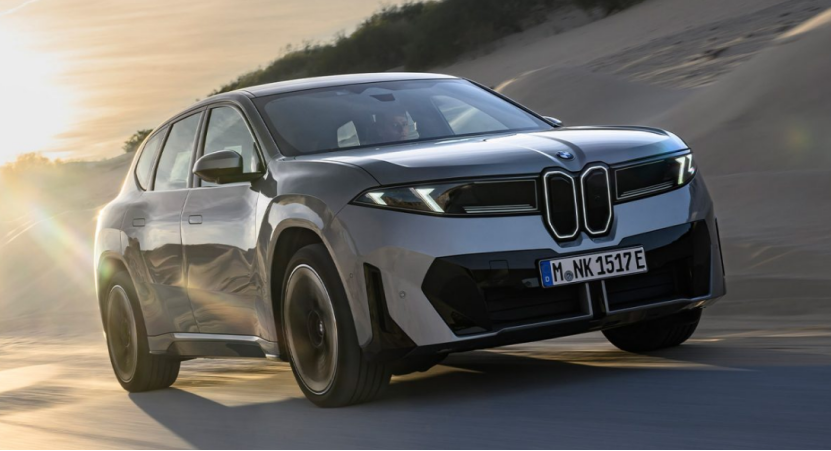
The timing of the BMW AI management restructuring directly coincides with the precarious ramp-up of its Neue Klasse architecture, scheduled for series production at the Debrecen plant in Hungary and subsequently at Munich and Shenyang. Neue Klasse represents BMW's multi-billion-euro gamble to transition from shared ICE/EV multi-energy underpinnings (such as the CLAR platform used on the i4 and i7) to a dedicated 800V software-defined electric architecture. The platform introduces high-performance computing clusters—referred to internally as 'Super-Brains'—designed to replace dozens of distributed ECUs with centralized domain controllers running in-house software code.
Herein lies the structural crisis that precipitated executive headcount reductions. While BMW committed vast capital to internal software centers like BMW CarIT, the organization has suffered from bureaucratic paralysis between legacy mechanical powertrain directors and newly recruited software architects. The software delivery milestones for Neue Klasse's automated driving and cockpit domains have experienced friction, forcing Munich to reconsider whether its traditional managerial governance could deliver software-defined vehicles at the speed demonstrated by Chinese challengers like XPeng, NIO, and Xiaomi.
By using the cover of artificial intelligence to eliminate 20% of senior management roles, BMW is attempting an organizational bypass. The company is actively cutting away legacy managerial checkpoints that historically prioritized mechanical over-engineering at the expense of digital agility. However, cutting personnel does not automatically resolve software architecture debt. A streamlined organizational chart running on AI-generated coordination summaries cannot mask underlying complexities in unifying Linux-based infotainment layers, AUTOSAR Classic safety domains, and silicon-carbide inverter control firmware into a cohesive compute environment.
The China Shock: Why German Margins Can No Longer Support Western Overhead
To understand why BMW is aggressively restructuring its white-collar executive expense pool, institutional investors must analyze the deteriorating economics of the Chinese automotive theater. For more than two decades, the BMW Brilliance Automotive (BBA) joint venture in Shenyang operated as an automated cash-printing machine. High-margin long-wheelbase 3 Series and 5 Series sedans, paired with premium X3 and X5 crossovers, funded Munich's extensive domestic German overhead, generous union collective bargaining agreements, and vast layers of departmental directors.
That financial flywheel has stalled. The Chinese domestic market, which accounts for roughly one-third of BMW's global sales deliveries, has decoupled into a vicious price war characterized by aggressive discounting and rapidly changing consumer preferences. Domestic competitors are not merely competing on price; they are matching or exceeding Western premium luxury interior appointments, active suspensions, and LiDAR-assisted urban navigation while pricing their vehicles between 200,000 RMB and 350,000 RMB ($28,000 to $48,000 USD)—a pricing bracket where BMW historically generated vast gross margins on entry-level executive sedans.
BMW's battery-electric offerings in China—primarily adapted CLAR platform vehicles such as the i3 sedan and iX3 SUV—have suffered from discounting exceeding 35% to 40% at dealership retail levels simply to sustain showroom floor velocity. This aggressive price erosion has compressed BMW's automotive operating margin (EBIT), pushing it closer to mid-single digits during turbulent quarters rather than the corporate target corridor of 8% to 10%. With retail vehicle revenues dropping in China and European consumer EV subsidies scaling back across key member states, Munich's SG&A (selling, general, and administrative) cost structure became structurally unsustainable. Cutting factory floor workers in Germany triggers fierce resistance from the powerful Works Council (Betriebsrat); trimming non-unionized or contract-negotiated upper management tiers under the modern banner of 'AI-driven transformation' represents the path of least political resistance.
The Reality Check: Algorithmic Efficiency or Corporate Damage Control?
Automotive industry observers and institutional equity strategists must interrogate the official narrative surrounding the BMW AI management restructuring with strict technical and organizational skepticism. Corporate press statements championing artificial intelligence as the driver of organizational consolidation often function as polished public relations shields designed to camouflage defensive retrenchment as cutting-edge innovation.
First, consider the engineering constraints of deploying enterprise AI in functional safety environments. Modern vehicle manufacturing is bound by rigorous ISO 26262 automotive safety integrity level (ASIL) mandates, UNECE WP.29 cybersecurity certifications, and complex homologation audits across global markets. These workflows demand traceable, individual human accountability. When a production vehicle encounters steering rack sensor calibration failures, battery thermal management runaways, or ADAS phantom braking phenomena, liability cannot be assigned to a synthetic machine-learning agent or an algorithmic management platform. The claim that AI can replace one in five upper-echelon automotive managers without eroding system-level validation rigor remains unproven in high-volume vehicle manufacturing.
Second, examine the timeline gap between management elimination and software competence. Slashing senior management delivers immediate, tangible reductions in operational expenditure on quarterly profit-and-loss statements—gratifying short-term institutional equity analysts in London and New York. However, organizational memory loss carries a compounding deferred cost. When mature premium automakers discard senior directors who understand the delicate balance between supplier tier-1 contract structures, stamping die tolerances, and long-term chassis durability, they risk inviting the very quality catastrophes that have plagued other fast-moving software-first EV entrants.
Third, there is the fundamental question of competitive parity. Does eliminating 20% of senior executives actually close the agility gap with Chinese pure-play OEMs? The competitive advantage held by Chinese automakers does not stem merely from leaner managerial charts; it is rooted in total vertical battery supply chain control, local access to 70% of global lithium refining and cathode capacity, sovereign software engineers working 60-hour weeks without legacy pension liabilities, and direct regulatory testing sandboxes that permit rapid urban autonomous driving iterations. Trimming management in Munich while maintaining disjointed legacy supply agreements in Europe fails to alter these underlying macroeconomic physics.
Supply Chain Realignment and Tier-1 Supplier Friction
The reverberations of BMW's corporate management flattening are rippling through the European automotive supplier ecosystem. Historically, German Tier-1 suppliers like Robert Bosch, Continental, and ZF Friedrichshafen maintained mirror-image managerial structures that corresponded directly to BMW's internal departmental directors. A BMW head of chassis electronics had an exact counterpart at Bosch; a BMW director of climate and thermal architecture worked directly with a Continental system executive.
As BMW collapses these intermediate managerial nodes and adopts consolidated digital workflow orchestration, Tier-1 suppliers are finding themselves locked out of traditional collaborative engineering arrangements. Instead, Munich is increasingly forcing Tier-1s into standardized, commoditized software and hardware specifications, attempting to mimic the aggressive procurement strategies pioneered by Tesla and refined by BYD. Furthermore, BMW is accelerating direct strategic sourcing alliances with Asian battery giants like CATL, Eve Energy, and SVOLT for its sixth-generation cylindrical battery cells (4695 and 46120 formats), systematically bypassing European battery consortia that have failed to achieve competitive scale or yield rates.
This shift creates friction throughout the European automotive industrial base. Tier-1 suppliers already operating on razor-thin operating margins of 2% to 4% are now facing a customer that is streamlining internal management while demanding steep price concessions to compete with Asian supply chain parity. As BMW automates procurement oversight and trims internal director-level champions for traditional Tier-1 components, long-standing supplier loyalties are giving way to transactional contract negotiations driven by cost-per-function metrics.
Geopolitical Headwinds and Regional Decoupling Pressures
The restructuring of BMW's executive ranks cannot be separated from the complex geopolitical crosswinds buffeting global automotive manufacturing. German automakers find themselves caught between competing regulatory regimes. In Brussels, the European Commission has implemented countervailing duties on Chinese-manufactured battery-electric vehicles, citing state subsidies. In Washington, the Inflation Reduction Act (IRA) and Section 301 tariff frameworks impose stringent Foreign Entity of Concern (FEOC) restrictions designed to decouple supply chains from Chinese battery chemistry and mineral processing.
BMW's traditional corporate governance was structured to manage an era of unfettered globalization, where a single vehicle architecture could be developed centrally in Munich, assembled across three continents, and sold worldwide with minimal regional software variance. Today, that unified model is dead. In the United States, BMW must localize battery supply chains around its Spartanburg, South Carolina hub to qualify for commercial and consumer incentives. In China, strict sovereign data security laws and localized consumer demand require BMW to partner with local tech giants like Tencent and Alibaba, developing completely isolated digital infotainment ecosystems and bespoke autonomous driving suites that cannot share compute code with European-spec vehicles.
Managing this fragmented tripartite global reality (Europe, China, North America) with a bloated, centralized Munich managerial hierarchy proved impossible. By deploying AI-driven operational reporting and flattening administrative management layers, BMW is attempting to construct a regionalized, decoupled operating model. Executive power is effectively being bifurcated: core platform hardware and crash structures remain anchored in Germany, while regional operational centers receive autonomy to adapt software stacks and sourcing compliance to local geopolitical mandates.
Strategic Outlook: Scenarios for the Post-Restructuring Era
As BMW executes this managerial reduction and transitions toward series production of the Neue Klasse, institutional investors and industry observers must monitor three distinct structural trajectories over the next 36 to 48 months.
Bull Case
BMW successfully deploys AI workflow automation to eliminate bureaucratic inertia, reducing new vehicle development cycles from 48 months down to 32 months. Operating margins in the automotive segment recover to 9.5% as white-collar SG&A expenses drop by 150 basis points. The Neue Klasse debuts in late 2025 with zero major software glitches, demonstrating energy efficiency of 12 kWh per 100 kilometers and class-leading charging speeds via its 800V silicon-carbide architecture. BMW successfully defends its premium pricing in Europe and North America while stabilizing its Chinese market share through localized software partnerships, proving that a legacy premium automaker can achieve software-defined agility without destroying operational execution.
Base Case
The 20% senior management trim generates targeted overhead cost savings, but organizational friction temporarily slows platform engineering handoffs. Administrative AI tools manage routine reporting but require ongoing human intervention to arbitrate critical supplier disputes. Neue Klasse launches on schedule but with localized software features delayed or rolled out gradually via post-delivery over-the-air (OTA) updates. BMW maintains an operating margin corridor between 6.5% and 8.0%, managing managed decline in entry-level Chinese EV volume while defending its high-margin luxury tiers (X7, 7 Series, M Division) to preserve consolidated cash flows.
Bear Case
The elimination of experienced middle and upper engineering managers leads to systemic integration blind spots within the Neue Klasse launch cycle. Unresolved software-hardware handshake failures trigger costly production bottlenecks and embarrassing recall campaigns, echoing the developmental delays experienced by peer German OEMs. Simultaneously, Chinese domestic luxury brands encroach directly into BMW's flagship segments, forcing further retail discounting in Asia. Operating margins compress below 5%, leaving Munich with diminished managerial capacity, alienated Tier-1 supplier partnerships, and an incomplete transition to software-defined mobility.
Executive & Investor Takeaways
- Corporate Overhead as a Structural Liability: The BMW AI management restructuring confirms that traditional European automotive management structures are economically unviable against the vertically integrated, flat-hierarchy operating models of leading EV manufacturers.
- AI as an Operational Cover: Investors should recognize that Munich's 'AI-driven' rhetoric functions partially as a mechanism to execute mandatory white-collar SG&A reductions without triggering explosive union confrontations over core shop-floor employment.
- Software Execution Remains the Decisive Moat: Trimming executive headcount does not solve software architecture deficits; the ultimate determinant of BMW's equity valuation over the next 36 months will be the functional stability and energy efficiency of the Neue Klasse compute platform.
- Supply Chain Commoditization Accelerates: As BMW flattens internal governance and shifts procurement authority toward automated cost-per-function metrics, traditional European Tier-1 component suppliers will face relentless margin compression, accelerating direct sourcing alliances with Asian battery and silicon providers.