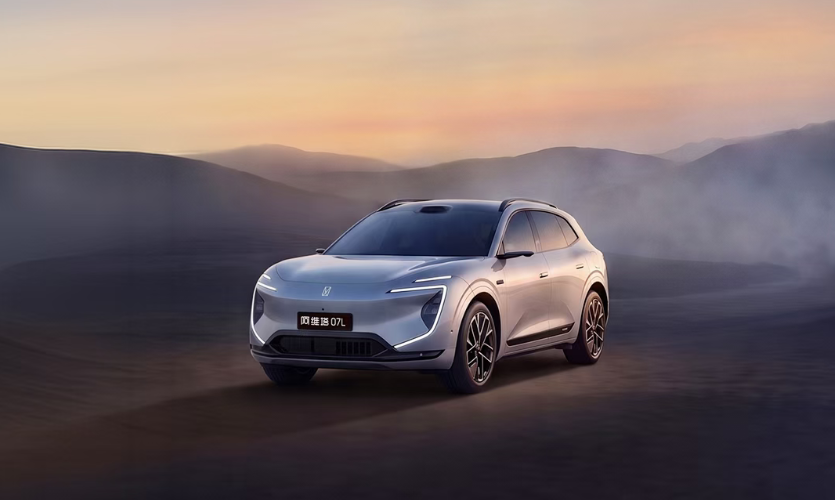
As global automotive analysts monitor the rapid consolidation of China's premium electric vehicle market, the strategic dynamics of the Avatr Huawei partnership have emerged as a critical case study in technological sovereignty. Recently, Avatr Vice President Yong Jun clarified that while Huawei is a vital strategic partner, the relationship is 'not a strict necessity,' signaling a broader industry pushback against the tech giant's dominance over the smart-car software stack.
The Strategic Boundaries of the Avatr Huawei Partnership
Avatr, a premium smart EV brand backed by state-owned Changan Automobile, battery giant CATL, and technology leader Huawei, has long been positioned as a technological showcase. However, during a recent media briefing, Avatr VP Yong Jun made it clear that maintaining a distinct brand identity is paramount. Cooperation with Huawei, while highly beneficial, should not come at the expense of an OEM's independent R&D and unique value proposition.
This statement highlights a growing tension in the Chinese EV market. As tech companies like Huawei and Xiaomi capture consumer attention, traditional and premium OEMs face the challenge of leveraging external tech stacks without losing control over their product roadmaps.
The Three Tiers of Huawei's Automotive Footprint
To understand the dynamics of the Avatr Huawei partnership, it is essential to analyze the three main cooperation models Huawei offers to the automotive industry. This structure dictates how much control an OEM retains over its product:
| Cooperation Model | Huawei's Role | Control Level | Key Examples |
|---|---|---|---|
| HIMA (Smart Selection) | Deep involvement in product design, software, and sales distribution. | Huawei-dominated | Aito (Seres), Luxeed (Chery), Stelato (BAIC) |
| Huawei Inside (HI) | Provides full-stack smart vehicle solutions (ADAS, cockpit) as an integrated partner. | Shared / OEM-led | Avatr, Deepal (partially) |
| Tier 1 Supplier | Provides standard hardware components and software licenses. | OEM-dominated | Various domestic and global OEMs |
By opting for the Huawei Inside (HI) model rather than joining the Huawei Intelligent Mobility Alliance (HIMA), Avatr keeps the primary responsibility of vehicle development and brand strategy in-house. Yong's comments underline that Avatr wants to be recognized for its own design and engineering, rather than being perceived merely as a physical manufacturing shell for Huawei's software.
The Fight for Smart EV Software Sovereignty
As smart driving features, such as Advanced Driver Assistance Systems (ADAS) and intelligent cockpits, become primary selling points, the question of 'who owns the software soul' of the vehicle has intensified. For premium brands, outsourcing the entire intelligent stack to a single provider risk commoditizing their hardware, reducing them to low-margin contract manufacturers.
Avatr's strategic pushback is representative of a broader industry trend where top-tier Chinese OEMs are pursuing 'co-opetition'—cooperating on core hardware or generic software but keeping proprietary control over user interfaces, brand-specific driving dynamics, and customer data ecosystems.
Strategic Implications for Global Investors and Western OEMs
For global investors and Western automakers tracking the China-speed innovation cycle, these dynamics offer two key strategic insights:
- Diversification of Smart Tech Sourcing: The reluctance of premium Chinese OEMs to fully surrender to Huawei's ecosystem shows that software diversification is a major priority. Strategic alliances are becoming more multi-faceted, with automakers seeking multiple partnerships rather than a single-supplier lock-in.
- Collaborative Tech Integration: Rather than viewing technology partnerships as binary (in-house vs. outsourced), leading companies are embracing hybrid integration. This provides a valuable template for Western legacy OEMs engaged in global cross-border collaboration and localized regional footprint development.
Ultimately, the Avatr Huawei partnership demonstrates that even in the world's most hyper-competitive EV market, brand equity, design sovereignty, and independent R&D remain the true currency of premium automotive brands.