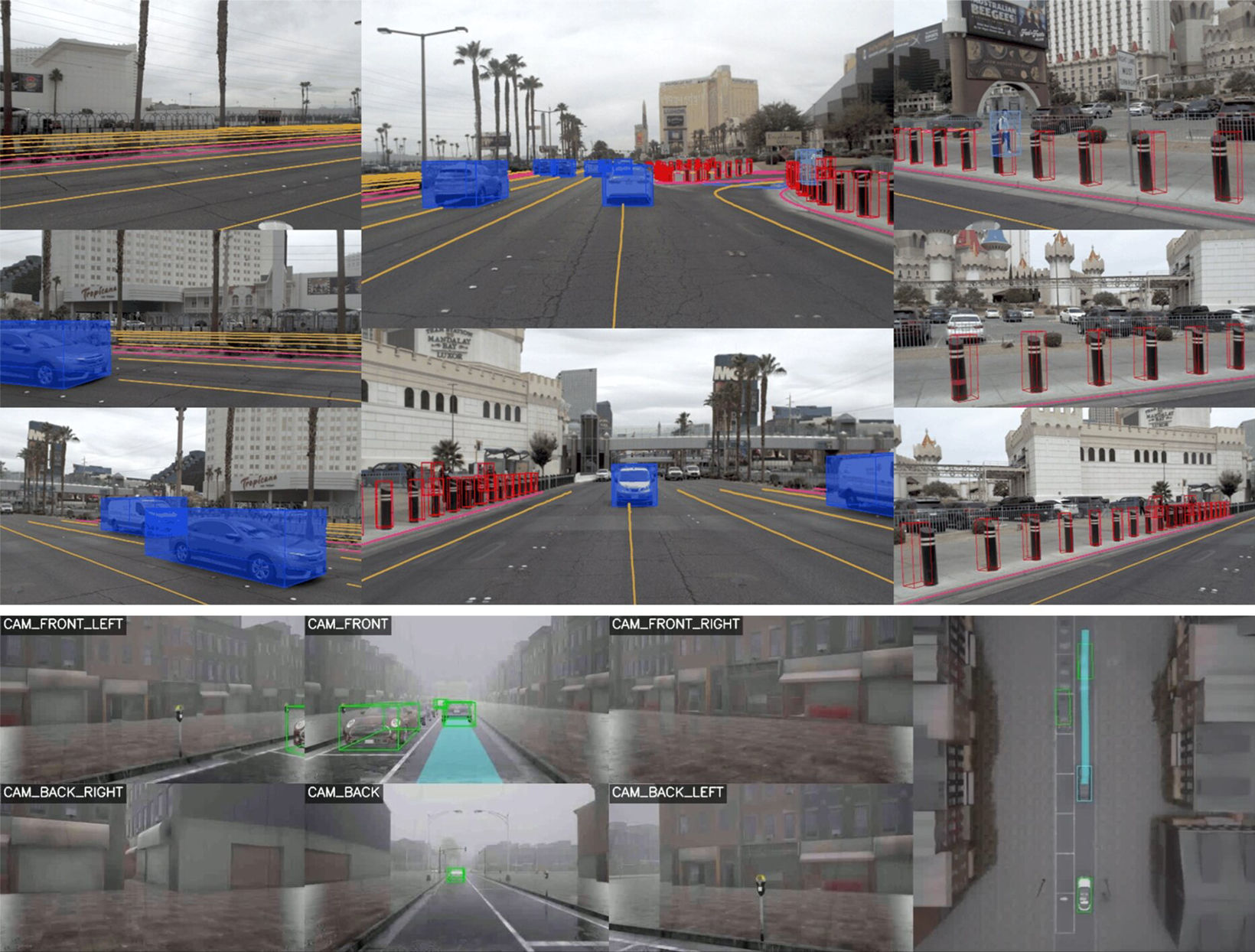
As global automotive markets race toward higher levels of autonomy, solving the unpredictable nature of edge cases remains the ultimate frontier. A major breakthrough in autonomous driving AI decision-making has emerged from South Korea. A research team led by Professor Jun Won Choi from the Department of Electrical and Computer Engineering at Seoul National University (SNU) has developed a novel artificial intelligence model that ranks possible driving routes. This innovation targets the precise safety and predictability bottlenecks that currently limit the widespread commercialization of Level 3 (L3) and Level 4 (L4) autonomous vehicles.
The Structural Bottleneck in Current Autonomous Driving AI
Most contemporary ADAS and autonomous driving platforms rely on predictive models that output a single, optimized trajectory. While highly efficient in standard highway environments, these systems frequently struggle in highly dynamic urban settings—such as sudden pedestrian crossings or aggressive lane cut-ins by other vehicles. When a single calculated path becomes non-viable, the system must recalculate from scratch, causing latency or triggering abrupt disengagements that require human intervention.
This dynamic creates a significant hurdle for Western and Asian automakers seeking global safety certifications. Without clear, explainable, and multi-layered fallback paths, achieving the safety profiles required for true driverless operations remains elusive. The SNU research addresses this exact gap by shifting from a 'single-path prediction' approach to a 'ranked-multi-path evaluation' framework.
How SNU's Route-Ranking Model Implements Safe Redundancy
The core innovation of Professor Jun Won Choi's model lies in its ability to generate a diverse set of candidate trajectories and rapidly rank them based on safety, compliance, and passenger comfort. Instead of relying on a singular deep learning guess, the system maintains a structured list of fallback paths that are pre-vetted for safety hazards.
| Feature | Standard Predictive Models | SNU Route-Ranking Model |
|---|---|---|
| Path Generation | Single optimal trajectory output | Multiple diverse trajectory candidates |
| Fallback Execution | Requires recalculation on path failure | Instantaneous switch to the next highest-ranked path |
| Explainability | Low ('Black box' deep learning decision) | High (Mathematical ranking based on quantifiable risk) |
By employing a probabilistic ranking mechanism, the autonomous system can evaluate which route offers the highest margins of safety while navigating obstacles. If a pedestrian suddenly steps into the primary path, the AI does not panic or lag; it immediately executes the second-ranked trajectory, which was already mapped and calculated as the optimal alternative.
Strategic Implications for Global OEMs and Technology Integration
For global automotive players, including Western OEMs and Tier 1 suppliers, this academic breakthrough highlights the ongoing evolution of software-defined vehicles (SDVs). Rather than developing entirely closed-loop proprietary stacks, the industry is moving toward cross-border technological collaboration and strategic sourcing of cutting-edge research. Incorporating advanced decision-making frameworks developed by leading global institutions like SNU helps OEMs improve their safety metrics, lower R&D costs, and meet stringent regulatory requirements in markets like the US, Europe, and Asia.
Furthermore, as investment firms assess the valuation of autonomous driving pure-plays, the focus is rapidly shifting from raw computational power to algorithm efficiency. Models that can operate with low latency on standard automotive-grade chips, while offering high explainability, are highly likely to lead the next wave of ADAS deployment.