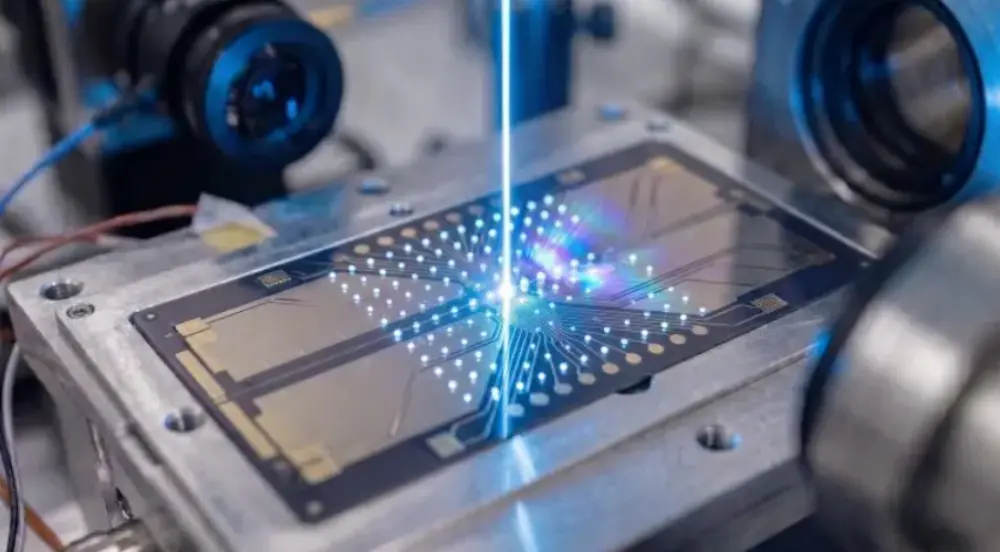
In the high-stakes theater of electric vehicle manufacturing, profitability does not live in high-profile vehicle reveals or glossy marketing campaigns; it is ground out inside the microscopic melt pool of high-power laser optics. As battery architectures shift toward structural cell-to-body designs, high-nickel chemistries, and ultra-fast 800V busbars, a single micro-fissure, cold weld, or porosity defect across thousands of electrical connections can condemn an entire pack to the scrap heap or, far worse, trigger catastrophic thermal runaway in the field. Yet, for decades, quality control in industrial laser welding has remained largely reactive, relying on delayed optical coherence tomography (OCT), acoustic emission sensing, or destructive post-mortems after millions of dollars of materials have already been fed through the line.
The strategic stakes could hardly be higher. With battery cell scrap rates running between 4% and 9% on newly commissioned lines in Europe and North America, Tier-1 cell manufacturers and Western OEMs are desperate for process control breakthroughs. The joint initiative between Zurich-based Terra Quantum and Empa claims to crack the foundational barrier of manufacturing physics: predicting complex melt-pool hydrodynamic behavior and thermodynamic phase changes instantaneously using neural operators rather than multi-hour finite element simulations. But before institutional investors and automotive chief technology officers celebrate the end of gigafactory yield losses, an engineering interrogation of operator learning, inference latency, and industrial integration realities is urgently warranted.
The Microscopic Physics of Battery Cell Assembly and the Limits of Classical Quality Control
To understand why AI laser welding EV battery applications have become a technological holy grail, one must examine the metallurgical nightmare of modern cell assembly. In a standard prismatic or 4680 cylindrical cell line, laser processing handles everything from the hermetic sealing of 0.3 mm aluminum can-to-cap assemblies to the delicate joining of up to 80 layers of ultra-thin (6 to 10 micron) copper and aluminum current collector foils. At 800-volt pack levels, where internal resistance must be kept microscopically uniform across hundreds of series-parallel cell junctions to prevent localized Joule heating, the margin for error is effectively zero.
Industrial fiber lasers operating at standard 1,070 nm near-infrared wavelengths face severe physical constraints when joining highly reflective, thermally conductive materials like pure copper (Cu-ETP) or joining dissimilar metals such as copper to aluminum. At room temperature, solid copper reflects over 90% of incident 1,070 nm laser energy. Once the energy threshold breaches the material's latent heat of fusion and creates an open keyhole—a narrow, vapor-filled cavity through the melt pool—energy absorption spikes unpredictably to over 60%. This violent, non-linear shift causes extreme keyhole instability, keyhole collapse, metallic spatter, and entrapment of volatile metal vapor pockets that freeze into sub-surface voids.
Traditional process monitoring relies on secondary sensing: photodiode arrays collecting back-reflected light, pyrometers measuring broad surface thermal signatures, or in-line acoustic sensors. While these devices capture telemetry at high acquisition rates, they deliver only post-hoc diagnostic flags. They inform an automated supervisory control and data acquisition (SCADA) system that a defect has already occurred; they do not possess the forward-looking predictive capacity to modulate laser power, wobble frequency, or focal position dynamically to stabilize the keyhole before the defect nucleates.
Inside LP-FNO: How Fourier Neural Operators Challenge Classical Finite Element Analysis
The core computational innovation introduced by Terra Quantum and Empa is the deployment of a Fourier Neural Operator (FNO) tailored specifically for laser processing (LP-FNO). Traditional physics simulations rely on numerical solvers for the Navier-Stokes equations, radiative heat transfer, and Marangoni convection. While high-fidelity finite element analysis (FEA) and computational fluid dynamics (CFD) packages can accurately reproduce keyhole thermodynamics, they demand astronomical compute times—often requiring 12 to 48 hours of high-performance computing (HPC) cluster runtime to simulate just 100 milliseconds of physical laser travel.
Neural operators fundamentally change this computational paradigm. Unlike standard convolutional neural networks (CNNs) that learn discrete mappings tied to specific pixel resolutions or finite-difference grids, Fourier Neural Operators learn continuous operators between infinite-dimensional function spaces. By parameterizing the integral kernel in Fourier space and computing convolutions via the Fast Fourier Transform (FFT), LP-FNO solves the governing partial differential equations (PDEs) orders of magnitude faster than classical solvers. The model is zero-shot super-resolution capable, meaning it can be trained on coarse numerical simulation meshes or empirical sensor data and evaluated on infinitely fine continuous spatial-temporal grids without retraining.
| Metric / Architecture Parameter | Classical FEA/CFD (e.g., Ansys/OpenFOAM) | Standard Deep Learning (Vision CNN/Transformer) | LP-FNO (Terra Quantum & Empa) | In-Line Hardware Sensing (OCT / Pyrometry) |
|---|---|---|---|---|
| Prediction Latency per Time-Step | 10 seconds to several minutes | 5 to 25 milliseconds | Sub-millisecond (claimed) | Real-time (0.01 ms capture, no forward prediction) |
| Mesh Independence / Resolution Scaling | Rigid discrete mesh; recalculation required | Fixed grid/resolution; loses fidelity out-of-distribution | Continuous function space; mesh-independent | N/A (direct optical/spatial measurement) |
| Governing Physical Mechanics | Fully explicit Navier-Stokes & heat transfer PDEs | Purely statistical/correlative (data-blind to physics) | Operator-learned continuous PDE approximations | Empirical diagnostic telemetry only |
| Closed-Loop Modulation Capability | Zero (strictly offline engineering verification) | Marginal (too slow for dynamic beam modulation) | Theoretically viable for fast-steering mirrors | Restricted to simple go/no-go abort triggers |
| Computational Infrastructure Burden | Massive multi-node HPC clusters | High-end edge GPUs (Nvidia Orin/RTX) | Quantum-inspired hybrid classical edge runtime | Embedded DSPs / low-power FPGAs |
According to research data emerging from the Empa-Terra Quantum collaboration, LP-FNO maps the complex interaction between laser beam parameters (power density, beam shaping, scanning speed) and temperature field evolution with exceptional fidelity. The model directly tracks the thermal gradients that dictate solid-liquid interface velocities, Marangoni shear stresses, and subsequent microstructure grain solidification. By accurately predicting these thermodynamic states ahead of the physical melt front, the operator framework creates a theoretical pathway toward true deterministic, closed-loop laser modulation.
The Bill of Materials Reality: What Scrap Rates Cost Modern Gigafactories
To quantify why institutional investors must track laser process innovations, one must dissect the financial anatomy of battery cell manufacturing lines. A typical modern battery gigafactory operates with an annual production capacity between 20 GWh and 40 GWh. On an operational 30 GWh line producing prismatic cells, the manufacturing throughput translates to hundreds of millions of individual weld operations annually. At this operational scale, yield loss is the single largest determinant of unit-level gross margin divergence.
When a battery cell is rejected at the end-of-line tab-to-terminal or can-to-cap welding station, the lost cost is not merely the electrical energy or the laser cycle time; it is the fully accumulated bill of materials (BOM) value baked into the cell. By the time a cell reaches the final hermetic sealing and pack interconnection stage, it already contains:
- High-purity synthetic graphite and silicon-doped anode active materials.
- Expensive high-nickel cathode formulations (NMC 811 or advanced LFP/LMFP chemistries).
- Precision-engineered wet-process battery separators with ceramic or PVDF coatings.
- Formulated non-aqueous electrolyte salts (LiPF6) and proprietary performance additives.
Industry financial models demonstrate that the BOM represents between 72% and 80% of the total manufacturing cost of a finished lithium-ion cell. Scrapping a cell at the final module busbar interconnection stage means discarding pristine, capital-intensive raw materials that can only be reclaimed through complex, margin-diluting hydrometallurgical or pyrometallurgical recycling processes. An unoptimized laser welding station that experiences an intermittent 3% failure rate on a 20 GWh line can directly vaporize between $25 million and $45 million in annual EBITDA. If LP-FNO can prove robust closed-loop yield stabilization that reduces final welding defect density by even 1.5 percentage points, the technology would recover its capital expenditure across a single production corridor in less than eight months.
Western OEM Competitiveness vs. The Chinese Battery Manufacturing Hegemony
The introduction of deep-tech process optimization software like LP-FNO must be contextualized within the brutal geopolitical landscape of global battery manufacturing. Chinese battery giants—commanded by CATL, BYD, Gotion, and CALB—have developed a virtually unassailable competitive advantage rooted in brutal manufacturing scale, extensive vertical integration, and hyper-optimized physical equipment design. CATL's proprietary 'PPB' (parts per billion) quality doctrine across its automated 'Lighthouse' gigafactories was achieved through iterative, brute-force operational telemetry gathered across hundreds of gigawatt-hours of live production capacity.
In contrast, Western OEMs (including Volkswagen's PowerCo, Stellantis-backed ACC, and Northvolt) and US-based manufacturers scaling under Inflation Reduction Act (IRA) incentives have struggled profoundly with launch yields. New greenfield installations across Europe and North America have repeatedly suffered prolonged commissioning phases, with early-stage scrap rates stubbornly hovering in double digits. The structural labor cost differentials between Central Europe or the American Midwest and Chinese manufacturing hubs mean that Western facilities cannot simply rely on manual rework, intensive offline inspection corridors, or high scrap tolerances.
Consequently, Western manufacturing strategy is aggressively leaning into software-defined automation and physics-informed AI modeling to bridge the operational experience gap. If European and American battery ventures cannot match CATL’s decades of physical line iterations, their only viable alternative is to leapfrog classical empirical tuning through predictive digital physics. Software architectures like LP-FNO represent an attempt by European research institutes (Empa) and commercial deep-tech developers (Terra Quantum) to equip Western Tier-1 tooling providers with software defenses against Chinese scale. However, without access to the vast, continuous telemetry pipelines that Chinese mega-factories generate every minute, training generalizable operator models poses a significant asymmetric challenge.
Inside the Physics: Why Lab-Demo AI Faces Steep Production Hurdles in Gigafactories
The theoretical sub-millisecond inference speed of LP-FNO collapses under the physical constraints of high-speed welding, where keyhole dynamics oscillate at 10 to 50 kHz. While Empa's controlled lab environments eliminate vibration and optical noise, commercial gigafactories introduce aggressive EMI, metallic vapor deposition on sensors, and thermal lensing that degrades signal fidelity. Bridging the gap between a research prototype and a 40 GWh/year production line requires proving the model generalizes across variable material batches (e.g., high-nickel cathode foils) without catastrophic failure rates during commissioning.
A genuine paradigm shift demands verified inference latency under 100 microseconds on industrial edge hardware, not just HPC clusters. Western OEMs cannot simply license software; they require co-design with laser integrators like Trumpf or IPG to ensure actuation commands reach the optics before the melt pool destabilizes. Without independent validation of closed-loop control reducing scrap rates by even 1.5 percentage points on live lines, LP-FNO risks remaining an academic curiosity rather than a yield-saving asset.
Regulatory Pressures, Battery Passports, and Traceability Mandates
The push toward deterministic real-time welding intelligence is further catalyzed by tightening global regulatory frameworks. Under the European Union's Battery Regulation (Regulation EU 2023/1542), manufacturers selling electric vehicles within the EU single market will be legally required to implement digital Battery Passports by 2027. This framework mandates full lifecycle traceability, strict carbon footprint ceilings, and verified durability benchmarks across individual cell architectures.
Manufacturing yield and process stability are directly intertwined with these regulatory metrics. A battery pack that contains sub-surface welding defects—even if they pass superficial end-of-line electrical resistance tests—faces an accelerated probability of internal short circuits, uneven localized degradation, and premature cell retirement. Furthermore, high production scrap rates mathematically inflate the embedded carbon intensity per usable kilowatt-hour of battery pack capacity, putting Western producers at risk of breaching EU environmental compliance thresholds.
Simultaneously, automotive safety standards such as UN 38.3, UL 2580, and China's mandatory GB 38031 are enforcing increasingly stringent mechanical shock and thermal runaway mitigation audits. In a pack design utilizing structural cell-to-chassis (CTC) integration, the physical weld seams of the enclosure and the high-voltage busbars double as structural load-bearing components. Defective laser joins degrade not only electrical transport efficiency but also the structural integrity of the passenger safety cell during side-pole impact collisions. As regulatory compliance transitions from statistical batch audits to continuous, per-cell digital traceability, real-time physics-informed validation will shift from an operational luxury to an indispensable regulatory prerequisite.
Strategic Outlook and Investor Implications
The development of LP-FNO by Terra Quantum and Empa represents a critical milestone in the convergence of theoretical computational physics, operator learning, and automotive manufacturing intelligence. However, the path to industrial monetization and widespread gigafactory integration will be dictated by engineering execution rather than theoretical elegance. Market participants and institutional investors should evaluate the technology across three potential multi-year development paths:
Bull Case
Terra Quantum and Empa successfully compress LP-FNO inference architectures into highly optimized TensorRT or FPGA edge deployment packages, driving deterministic latency under 200 microseconds. Global laser system integrators (such as Trumpf, Precitec, or Coherent) license the software to provide proprietary, real-time closed-loop wobble and power control on their cutting-edge optics. Scrappage rates on Western gigafactory pilot lines fall by 30% to 50%, saving automotive joint ventures tens of millions of dollars annually and establishing operator learning as an indispensable layer of the modern manufacturing technology stack.
Base Case
The architecture proves too computationally intensive for instantaneous, microsecond-level closed-loop beam modulation on live lines, but finds rapid commercial adoption as an in-line, sub-second virtual metrology and diagnostic engine. Instead of actively steering the laser beam mid-pulse, LP-FNO replaces costly physical post-weld CT scanning and slow ultrasonic inspection by predicting internal porosity and weld depth with 98% accuracy based on surface thermal data. Western OEMs integrate the platform across 2026–2028 to drastically reduce testing cycle times and streamline Battery Passport quality documentation.
Bear Case
The model struggles with generalized performance when exposed to the harsh environmental variations, material batch discrepancies (e.g., variable surface oxidation on copper foils), and optical noise of operational high-volume gigafactories. Chinese battery giants continue to outpace Western competitors using physical automation, proprietary empirical recipes, and capital-intensive machine vision systems, leaving LP-FNO largely confined to academic settings and specialized low-volume aerospace or medical device joining applications.
- Capital Allocation Insight: Institutional investors should track whether Terra Quantum monetizes LP-FNO as a standalone enterprise SaaS layer or forms joint ventures with established Tier-1 industrial automation and laser hardware players (e.g., Trumpf, IPG Photonics). Pure software plays face steep integration hurdles on proprietary factory floors.
- Western Greenfield Hedge: For investors exposed to capital-intensive Western battery startups, software-defined yield optimization tools represent a crucial lever to mitigate prolonged ramp-up yield drag against entrenched Asian incumbents.
- Critical Technical Metric to Watch: Scrutinize whether future benchmark announcements report end-to-end inference latency under 100 microseconds on standard industrial edge compute—anything slower indicates diagnostic monitoring, not closed-loop control.
- The AI-to-Physical Gap: Treat initial lab performance figures from research institutions with healthy analytical skepticism until independently validated under high-speed, 40-parts-per-minute commercial production velocities.